Chronic Wound Care in Dallas: Advanced Options That Actually Work
Key takeaways
- A wound that has not healed in 4 to 6 weeks is considered chronic and usually needs more than dressings and antibiotics.
- The most common causes are diabetes, poor circulation, ongoing pressure, lymphedema, biofilm-resistant infection, and unaddressed underlying conditions.
- Basic wound care is built for short-term injuries. Specialty wound care is built for the stalled ones — debridement, HBOT, cellular tissue allografts, and offloading.
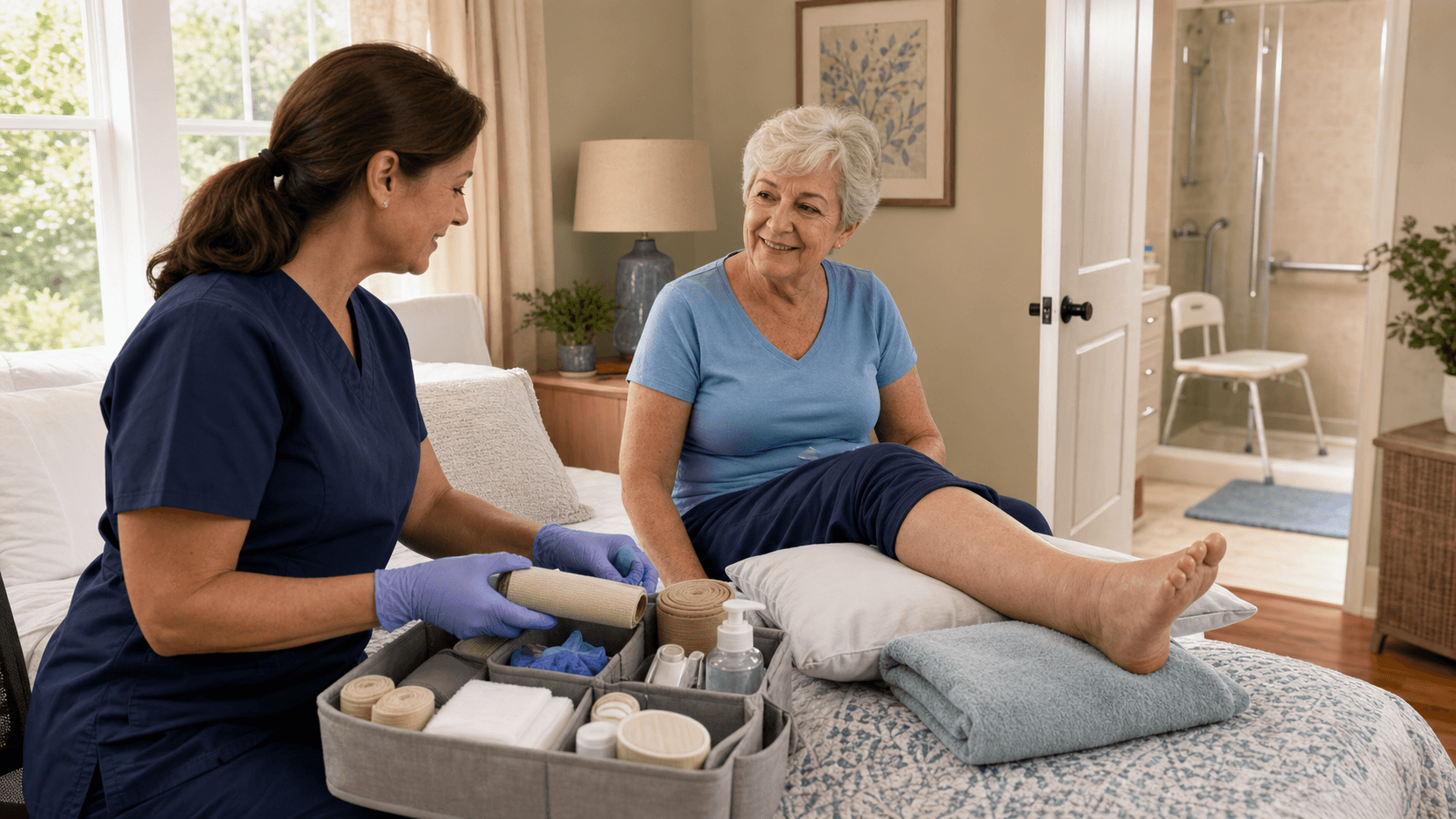
- For Dallas patients who can't easily travel, Anchor Wound Management provides bedside chronic wound care across the DFW area.
- The earlier a chronic wound is evaluated by a specialist, the more treatment options are still on the table.
A small sore on a leg or foot can look simple at first. After two or three weeks of bandages, it should be closing. When it isn't — when each new dressing feels like a guess and the wound looks the same or worse — that's the moment to think about specialty wound care.
A wound that hasn't healed in 4 to 6 weeks is considered chronic. Chronic wounds are common across Dallas–Fort Worth because the underlying drivers are common here: diabetes, vascular disease, an aging population, and limited mobility. Basic wound care wasn't designed for these wounds, and continuing it without escalation usually means the wound stays open — or gets worse.
This guide walks through why some wounds stall, what specialty wound care actually does differently, and when to bring in a wound specialist.
What makes a wound "chronic"?
The standard definition is a wound that hasn't progressed through the normal stages of healing after 4 to 6 weeks. But the more useful question is why — because that's what determines whether the wound will close at all.
The most common reasons a wound becomes chronic:
- Poor circulation that starves the tissue of oxygen and nutrients
- Diabetes, which damages both nerves and blood vessels
- Sustained pressure or friction on the same spot (pressure ulcers, foot ulcers under callus)
- Swelling from lymphedema or venous insufficiency, which compresses small vessels
- Biofilm-resistant infection that won't clear with standard antibiotics
- Nutritional gaps — especially protein, vitamin C, and zinc
- Smoking or obesity, both of which slow tissue repair
- Medications that suppress healing (steroids, some chemotherapy drugs, immunosuppressants)
Most chronic wounds have more than one of these working at the same time. That's why "just change the dressing" doesn't work — the dressing isn't what's blocking the heal.
Why some wounds in Dallas don't heal
Across the DFW area, a few patterns drive most chronic wound cases:
Diabetes is the biggest single factor. Texas has one of the highest diabetes rates in the country, and diabetic foot ulcers are the leading cause of chronic, non-healing wounds nationally. Around 25% of people with diabetes will develop a foot ulcer in their lifetime, and many of those wounds become chronic without specialty care.
Vascular disease is the second. Venous insufficiency causes the persistent lower-leg ulcers that often look like flat, weeping wounds around the ankle. Arterial disease causes painful, slow-healing wounds on the toes and feet. Both are common in the older adult population and both require specific treatments — venous wounds need compression; arterial wounds need circulation restored before they can heal.
Limited mobility is the third. Pressure injuries (formerly called bedsores) develop when prolonged pressure on the same area cuts off blood flow to the skin. They're common in senior living, hospice, and post-hospital settings — exactly where bedside wound care matters most.
Waiting too long to address any of these can lead to:
- Deep infection requiring IV antibiotics
- Hospital admission for wound control or sepsis
- Bone infection (osteomyelitis)
- In severe cases, amputation
When basic wound care isn't enough
Standard wound care in a primary care office or urgent care typically includes:
- Cleaning the wound with saline or a basic solution
- Topical ointment or antiseptic
- A simple dressing or bandage
- Short courses of oral antibiotics
- Occasional sharp debridement (removing dead tissue with a scalpel)
For minor cuts, scrapes, and uncomplicated wounds, this is usually fine. For chronic wounds, it isn't — because the wound is fighting on multiple fronts at once: biofilm bacteria, poor oxygenation, ongoing pressure, swelling, or all of the above.
Signs basic care isn't working:
- No visible improvement after 2 to 4 weeks
- Worsening odor, drainage, or color
- Redness or warmth that's spreading outward
- Repeated antibiotic courses without lasting change
- The wound keeps reopening in the same spot
- Pain that's increasing, not decreasing
If any of these are happening, the wound has outgrown standard care. Continuing basic dressings at that point usually wastes weeks and lets the wound get worse.
Basic wound care vs. specialty wound care
The two approaches treat the same wound differently. Here's the side-by-side:
| | Basic wound care | Specialty wound care | |
|---|---|---|
| Built for | Short-term, uncomplicated wounds | Stalled and complex wounds |
| Debridement | Occasional, surface-level | Routine, including enzymatic and surgical |
| Dressings | Gauze, basic adhesive | Foam, alginate, silver, hydrocolloid, matched to wound stage |
| Infection control | Oral antibiotics | Cultures, targeted IV antibiotics, biofilm management |
| Tissue support | None | Cellular tissue allografts, growth factor therapy |
| Oxygen delivery | None | Hyperbaric oxygen therapy (HBOT) |
| Pressure management | Verbal advice | Custom offloading devices, total contact casting |
| Swelling | Elevation advice | Compression bandaging, lymphedema therapy |
| Care coordination | Usually limited | Coordinated across PCP, endocrinology, vascular, podiatry |
| Setting | Office visits | Office, clinic, or bedside as needed |
The point isn't that basic care is wrong. It's the right tool for the right wound. For a chronic wound, specialty care is the right tool — and earlier escalation almost always leads to faster healing and fewer complications.
Advanced therapies that change the trajectory
When specialty wound care is brought in, the toolkit expands considerably. Most chronic wounds respond to a combination of the following.
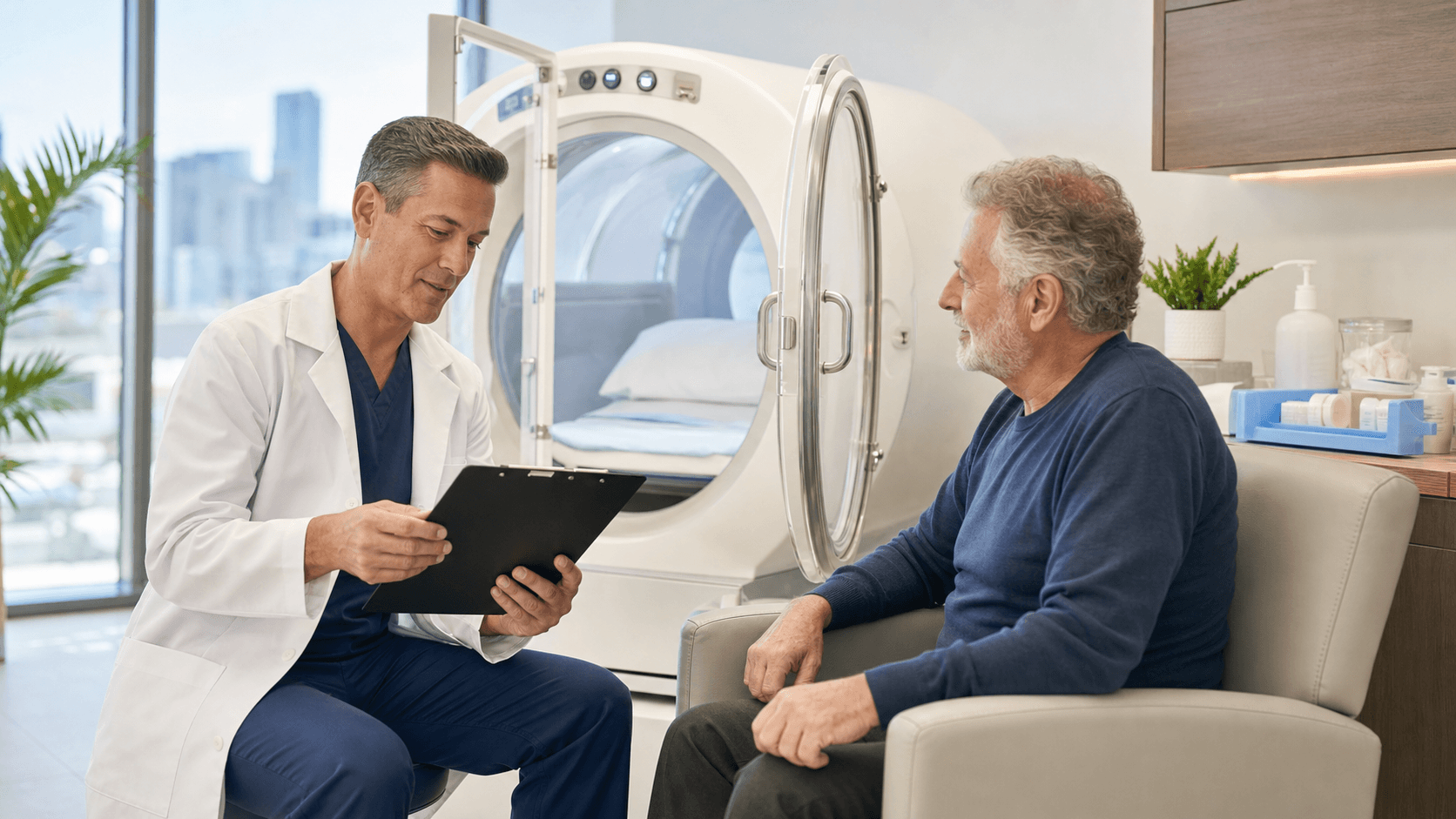
Hyperbaric oxygen therapy (HBOT)
A patient breathes 100% oxygen inside a pressurized chamber. The higher pressure drives far more oxygen into the bloodstream, which reaches tissue that ordinarily gets too little flow. HBOT supports new blood vessel growth, improves the immune system's ability to fight infection, and accelerates healing in wounds that have stalled. It's most often used for Wagner grade 3+ diabetic foot ulcers, radiation injuries, chronic refractory osteomyelitis, and compromised skin grafts.
(For a detailed breakdown of HBOT cost and Medicare coverage, see:HBOT in Irving — costs and coverage.)
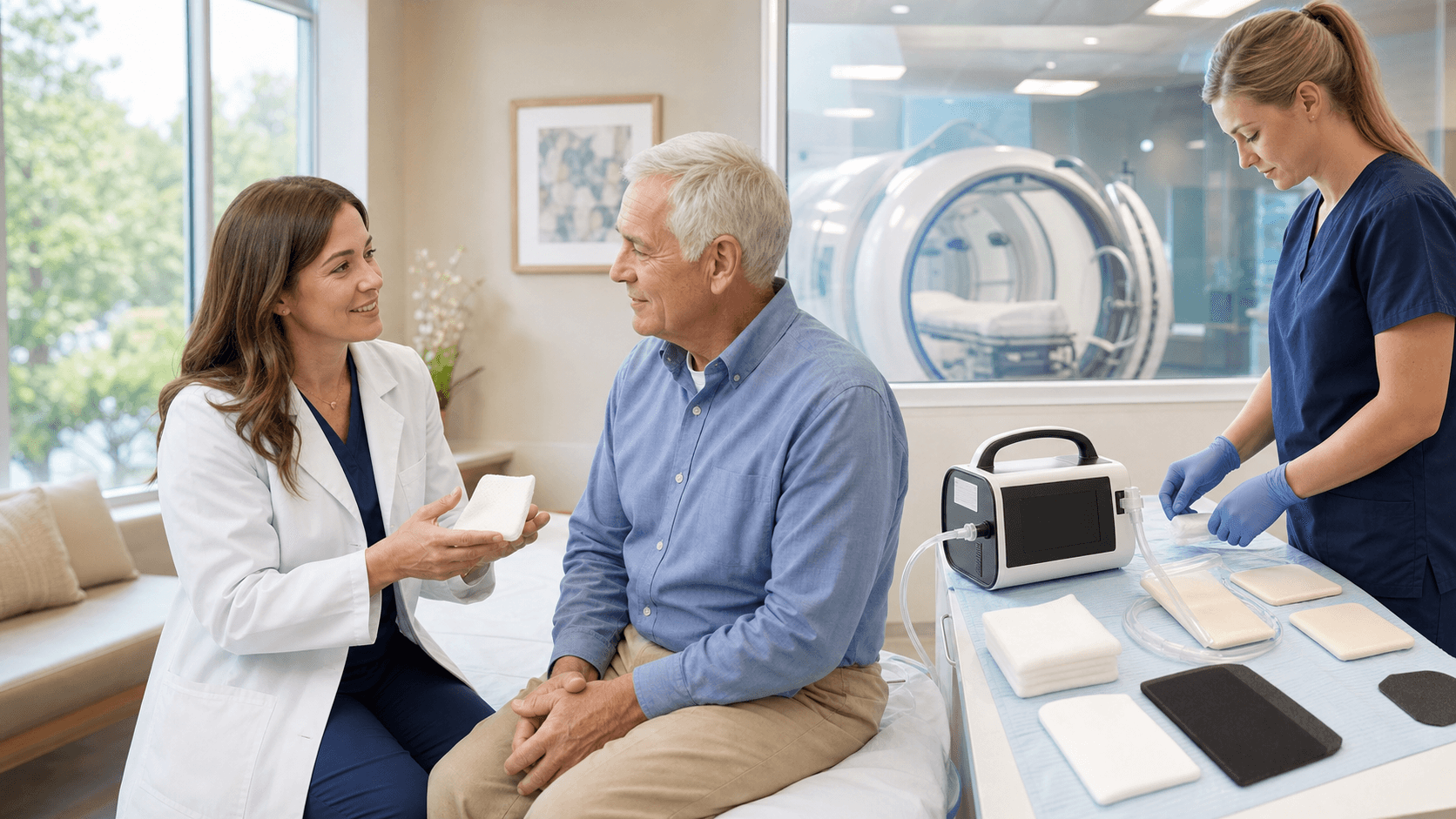
Cellular tissue allografts
These are advanced biologic dressings — including placental and amniotic membrane products — that act as a scaffold for the body's repair process. They contain growth factors and cellular signals that help "wake up" a stalled wound bed and guide new tissue to grow in healthier patterns. Allografts work especially well on wounds that have been open for months without progress.
Compression and lymphedema management
For wounds caused or worsened by swelling, getting the swelling under control is often the single most important intervention. That includes multilayer compression bandaging, custom compression garments during the maintenance phase, and manual lymphatic drainage for patients with confirmed lymphedema. (See:Lymphedema therapy in Dallas.)
Advanced dressings and biofilm management
Modern wound dressings are matched to the wound's specific characteristics: silver-impregnated for infection control, alginate for high drainage, hydrocolloid for autolytic debridement, foam for cushioning. Biofilm-disrupting cleansers help break up the bacterial layer that resists standard antibiotics.
Coordinated medical management
Chronic wounds rarely exist in isolation. The most effective wound specialists coordinate with the patient's primary care doctor, endocrinologist (for diabetes control), vascular team (for circulation issues), and podiatry — so the wound gets treated alongside the conditions driving it.
Bedside and mobile chronic wound care across DFW
Many patients with chronic wounds have limited mobility — which is part of the reason the wounds developed in the first place. Repeated clinic visits aren't realistic for everyone.
Anchor Wound Management offersmobile and bedside wound care across Dallas, Plano, Irving, Carrollton, Frisco, Allen, Addison, and the wider DFW area — including in senior living communities and hospice settings. Most of a chronic wound care plan can be delivered at the bedside: assessment, debridement, dressing changes, compression, monitoring, and coordination with your other providers. HBOT is the main exception — those sessions happen at our Irving clinic. Medicare Part B typically covers in-home wound care when it is medically necessary.
Anchor Wound Management was founded byDr. Brandon Elrod, DO, FAPWCA, a former US Army Captain and Field Surgeon. The team's focus is the wounds other providers find most challenging — the ones complicated by diabetes, vascular disease, lymphedema, or limited mobility.
How to know when to call a wound specialist
Call a wound specialist if any of the following applies:
- A wound has been open more than 3 weeks without clear improvement
- A previously healing wound has stalled or reopened
- You're on a second round of antibiotics for the same wound
- The wound looks worse than it did a week ago (more drainage, more redness, more pain)
- You have diabetes, vascular disease, or a history of past ulcers — earlier referral is better
- You're caring for a family member at home and the wound is becoming hard to manage
Most patients don't need a formal referral to be evaluated. At Anchor Wound Management, we accept self-referrals and coordinate with your primary care doctor afterward.
Frequently asked questions
How long should a wound take to heal?
A small, healthy wound usually closes within 2 to 3 weeks. A wound that's still open after 4 to 6 weeks is considered chronic and should be evaluated by a wound specialist. Larger or deeper wounds take longer — but they should still show steady, visible improvement week to week.
What's the difference between a wound clinic and a hospital wound center?
Hospital-based wound centers are usually part of a larger health system and tend to focus on the most complex inpatient and post-discharge cases. Specialty wound clinics like Anchor Wound Management work with patients across the spectrum — from chronic outpatient wounds to in-home care — and often have shorter wait times and more direct access to advanced therapies like HBOT, allografts, and bedside care.
Does Medicare cover specialty wound care?
Yes. Medicare Part B covers evaluation by a wound specialist, debridement, advanced dressings, HBOT for approved conditions, and medically necessary in-home wound care. Medicare Advantage plans must cover at least the same benefits.
Will I need surgery to heal my chronic wound?
Most chronic wounds heal without surgery when the right combination of debridement, dressing strategy, infection control, and advanced therapies is applied. Surgery (skin grafting, flap reconstruction, or vascular intervention) becomes part of the conversation only when conservative options haven't worked, and even then, many wounds close without it.
Can chronic wounds be treated at home?
Most of a chronic wound care plan can be delivered at home or at the bedside, including assessment, debridement, dressing changes, compression, and monitoring. Anchor Wound Management offers bedside wound care across DFW. HBOT and certain in-chamber treatments are the main exceptions — those happen at our Irving clinic.
What should I bring to my first wound care appointment?
Bring your medication list, photos of the wound over time (if available), notes from any previous wound care or hospital visits, recent lab results (especially A1c if you have diabetes), and your insurance card. If you're caring for a family member, bring information about their daily care routine and any mobility limitations — both shape the treatment plan.
Take the next step
If a wound has been open for more than three weeks — or you're caring for someone whose wound isn't healing — early evaluation gives you the most treatment options. Call Anchor Wound Management at (940) 843-1455 orrequest an appointment online. Our team can see you in our Irving or Plano clinic, or come to your bedside anywhere across the DFW area.
Learn more aboutadvanced wound treatments orDr. Elrod's approach to complex wound care.