DFW Home Setup to Keep Lymphedema Wounds Stable
The real question we hear from people with leg swelling and open wounds is simple: how do I set up my home so my leg does not get worse between nurse visits? When you live with lymphedema and wound care, small details at home can change how your leg looks at the end of the week.
Where you sit, how you sleep, how you bathe, and how you store supplies all matter. Our goal is to help you heal at home, lower infection risk, avoid ER trips, and protect your limb.
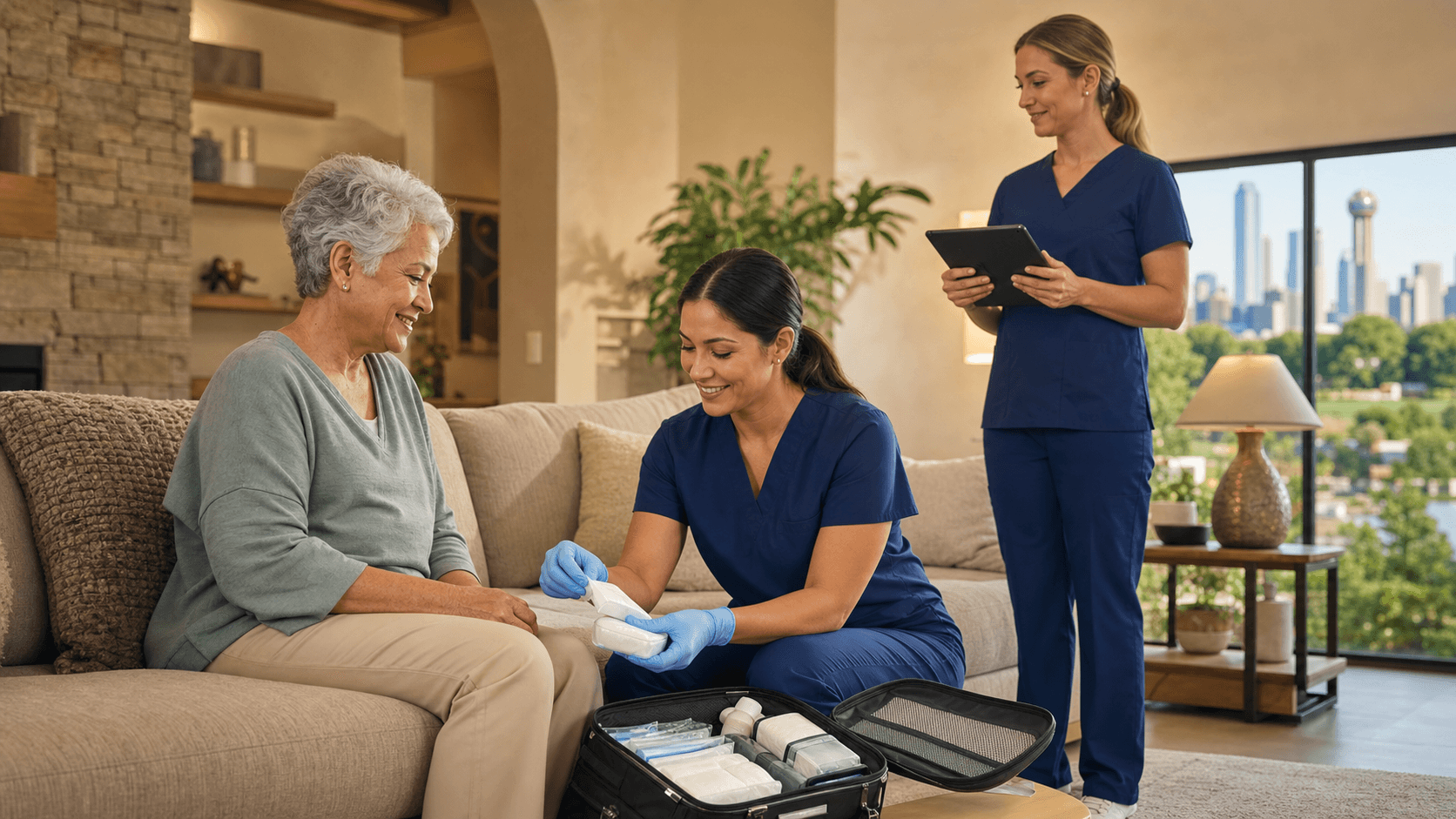
In this guide, we walk room by room through a typical DFW home: bedroom, bathroom, living room, car or entryway, and a bedside mini-clinic. Along the way, we point out when mobile wound care with a board-certified wound specialist can step in the same week if your home routine is not enough.
Key Takeaways
- A simple, organized home setup can make dressing changes faster, safer, and less painful.
- Lymphedema and wound care need daily habits: elevation, skin protection, and careful compression use.
- A bedside wound station keeps supplies ready and cuts down on missed steps.
- Call for same-day or same-week help if you see spreading redness, new odor, sudden pain, or soaked-through dressings.
- Many mobile wound visits can be Medicare Part B-covered when medically necessary and ordered by a physician.
How Lymphedema Changes Wound Care at Home
Clinical fact: In lymphedema, lymph fluid does not drain well, so legs or arms swell and skin is stretched and weaker. Research from the National Institutes of Health links this trapped fluid to lower oxygen in the skin and slower repair (for example, see NIH reviews on chronic edema and skin microcirculation).
Plain-English translation: what looks like "water weight" is really heavy fluid that limits oxygen and nutrients to your skin. Your skin then has a harder time closing wounds.
What to do:
- Measure limb size at the same spot once a week.
- Weigh yourself on the same scale.
- Tell your wound provider if you notice fast changes or pitting swelling that keeps fingerprints.
Clinical fact: Studies on chronic edema show higher risk of cellulitis, delayed healing, and repeat hospital stays when swelling is not controlled (peer-reviewed data in journals such as Phlebology and the Journal of Wound Care support this).
Plain-English translation: if you have lymphedema plus a wound, your leg has a higher chance of infection and slow healing when swelling is not managed.
What to do: do not skip compression or dressing changes for more than 24 hours without talking with your wound team.
Clinical fact: Guidelines from groups like the Wound Healing Society and International Lymphedema Framework support combined care: compression, decongestive therapy, offloading, and sharp debridement when needed.
Plain-English translation: there is no single magic dressing. Your routine, plus the right compression and cleaning, does most of the healing work.
What to do: ask your board-certified wound specialist to write a clear bedside plan with step-by-step dressing and compression instructions.
Bedroom and Bathroom: Base for Elevation, Clean Hands, and Skin Protection
Clinical fact: Elevating legs at or above heart level helps move fluid back to the body core and supports lymphedema and wound care plans. This is consistent with vascular and lymphedema guidelines.
Plain-English translation: the more time your legs spend higher than your heart, the less they swell and leak.
What to do:
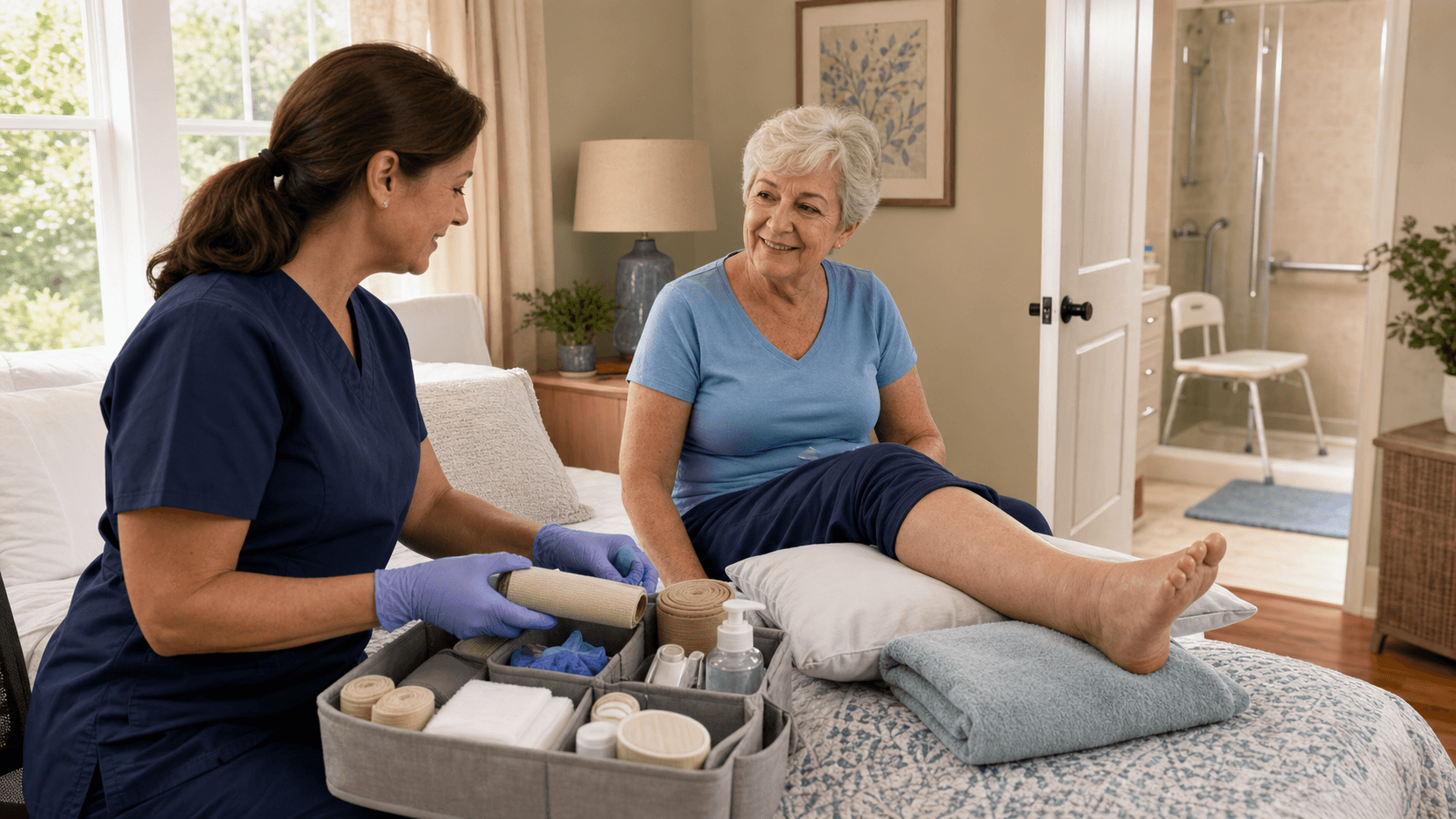
- Set up a recliner or bed with 2 or 3 firm pillows or a wedge.
- Pick set times for elevation, for example mid-day and evening.
- Keep a phone or call button nearby so you do not rush and risk a fall.
Build a bedside mini-clinic so you do not hunt for supplies. Treat a nightstand or rolling cart as your wound station.
What to do:
- "Clean supplies" bin: gauze, ordered dressings, tape, prescribed ointments.
- "Compression" bin: wraps, Velcro garments, liners, donning aids.
- "Trash" bin: a small lined can with a lid for used dressings.
- Add a bright lamp and a stable chair for dressing changes.
Clinical fact: Poor lighting and awkward body positions raise fall risk and can contaminate dressings, according to fall-prevention and infection-control research.
Plain-English translation: if you are twisting or standing on one leg to reach your wound, that increases your fall and infection risk. It is not a sign of strength.
What to do: use a chair with arms, add a reading lamp, and use a mirror or grabber tool for heels and the back of the leg. If you cannot safely reach the wound, mobile wound care at your bedside may be safer.
In the bathroom, handwashing is your first treatment. CDC guidance shows proper hand hygiene cuts infection risk in hospitals and at home.
Plain-English translation: how you wash your hands matters as much as the brand of dressing.
What to do:
- Keep liquid soap and clean towels ready.
- Wash before and after each dressing change.
- Use alcohol-based hand sanitizer if you cannot reach the sink.
Clinical fact: Showers are often safe once your wound team okays them, but soaked dressings trap excess moisture against the skin and can promote bacterial growth.
Plain-English translation: a wet wrap can turn the area under the bandage into a warm, moist space where germs grow faster.
What to do: use cast covers or plastic wrap with tape, check edges after bathing, and tell your wound provider if a dressing gets fully wet.
Clinical fact: Dry, cracking skin around swollen areas raises infection and new wound risk. Studies show that intact skin is a key barrier to bacteria.
Plain-English translation: the good skin around your wound is your armor. Once it dries and cracks, problems can spread.
What to do: keep fragrance-free moisturizer in the bathroom, apply to intact skin after bathing (not on the open wound itself), and scan for redness, blisters, or weeping spots every day.
Living Room, Entryway, and Compression Stations
Clinical fact: Gentle movement pumps lymph fluid and helps blood flow, but falls can cause new wounds or fractures. This balance is emphasized in many lymphedema and fall-prevention programs.
Plain-English translation: your legs need some motion, but not at the cost of another injury.
What to do:
- Clear clutter and cords from common paths.
- Secure rugs and add nightlights.
- During TV breaks, try ankle pumps or seated marches if your provider says movement is safe.
Clinical fact: Compression is central in lymphedema and wound care, but devices that are too hard to use often lead to poor adherence and worse outcomes.
Plain-English translation: if it is a wrestling match to get wraps on, they are less likely to be used consistently.
What to do:
- Set up a compression station with a stable chair and good lighting.
- Use donning aids like stocking butlers, rubber gloves, or sliders.
- Ask your wound specialist to show hands-on techniques at your bedside.
Clinical fact: Long car rides with legs hanging down increase swelling, and entry obstacles like stairs raise fall risk, especially in people with neuropathy or weak muscles.
Plain-English translation: sometimes just getting to clinic can undo hours of elevation and add new risks.
What to do:
- Support legs in the car with pillows when possible.
- Use handrails and non-slip mats at doors.
- Ask if mobile wound care is an option so more visits happen at home and travel is saved for key tests.
Supplies, Mobile Care Options, and When to Call for Help
Clinical fact: Consistent use of the right dressings, chosen by your wound provider, supports healing by controlling moisture and protecting new tissue.
Plain-English translation: the right size and type of bandage keeps leaks in check and shields new skin as it grows.
What to do:
- Store 1 to 2 weeks of ordered dressings in a dry container.
- Put older supplies in front so they are used first.
- Note when you get low so your wound provider or equipment company has time to refill.
Clinical fact: Compression tools go beyond wraps. Options include Velcro garments, liners, foam padding for contour areas, and donning tools, and the safe pressure level depends on arterial blood flow tests such as ankle-brachial index or toe pressures.
Plain-English translation: compression comes in many forms, but not every level is safe for every person.
What to do: ask your board-certified wound specialist which compression level is safe for your arteries and label garments by leg so you do not mix them.
Clinic vs. Mobile Wound Care for Lymphedema
| Factor | Clinic wound care | Mobile wound care (at your bedside) |
|------------------------------|----------------------------------------|-------------------------------------------------------------|
| Travel required | Needs rides and time in waiting rooms | No travel; care happens at your bedside at home |
| Leg elevation time preserved | Hours with legs down during trips | You can stay elevated before and after the visit |
| Visit timing | Often weekly or more, fixed schedules | Same-week adjustments often possible around home needs |
| Help with compression | Teaching during clinic visits | Team can watch you don and doff in your real chair/bed |
| Infection exposure | More contact with other patients/staff | Usually limited to your home care team |
| Who it may suit best | People who walk safely and have rides | Homebound, high fall risk, or recently hospitalized |
Medicare.gov explains that medically necessary home wound visits and some supplies may be covered under Medicare Part B when criteria are met. Always check your specific plan details on Medicare.gov or with your insurer.
That coverage can reduce hard choices between your budget and your limb.
Clinical fact: CDC and NIH guidance note that early skin infection or poor blood flow can worsen quickly if not treated, especially in people with diabetes or vascular disease.
Plain-English translation: if your leg suddenly acts differently, waiting for your next routine visit can let a small problem grow.
What to do right away:
- Seek urgent or emergency care for fever, chills, streaking redness, sudden severe pain, foul odor, black or gray tissue, or rapid swelling.
- Call 911 for chest pain or new shortness of breath.
Clinical fact: Increasing drainage, changes in compression fit, or new blisters often signal that swelling or infection is not controlled.
Plain-English translation: leaks, blisters, and painful wraps are warning signs, not just annoyances.
What to do: ask for same-week mobile wound care if you see dressings soaked more than once a day, new blisters or weeping skin, wraps leaving deep grooves or numb toes, or trouble walking safely at home.
As one of our physicians, Dr. Brandon Elrod, DO, FAPWCA, often reminds patients, lymphedema and wound care are a team effort, not a solo mission. A veteran physician and Captain, US Army (Ret.), he focuses on clear home plans so you know what to do between visits and can heal at home when possible.
FAQs: Lymphedema, Wounds, and Home Care in DFW
Q: Can I still use compression if I have open wounds on my leg in DFW?
A: Many people do, but only with proper dressings and medical guidance. In some cases of severe infection or poor arterial flow, strong compression can be unsafe. A board-certified wound specialist should examine your leg and decide what level and type of compression is right.
Q: How often should I change my wound dressing at home?
A: It depends on how much fluid comes out and which dressing is ordered. Some dressings are changed daily, others every 2 or 3 days, but no dressing should stay on once it is fully saturated, leaking, or lifting at the edges. Follow the schedule written by your wound provider.
Q: What if I live alone and cannot reach my wounds?
A: This is exactly when mobile wound care or home health can help. Your team can also pick simpler dressings, train a trusted helper, or adjust compression so you are not forced into unsafe positions. Tell your provider if reach is a problem, not just an annoyance.
Q: Do I need a lymphedema pump at home?
A: Pneumatic compression pumps can help some people, but they are not right for everyone. You need arterial testing, skin checks, and careful supervision to be sure they are safe and used in the right order with wraps, not instead of them. Your wound specialist can guide insurance paperwork and pre-authorization if a pump is appropriate.
Q: How do I know if my compression is too tight or too loose?
A: Too tight looks like numb toes, color turning pale or blue, severe pain, or deep grooves in the skin. Too loose looks like sliding, rolling, or leaks at the top or bottom. If you are unsure, remove it and contact your wound team for same-week guidance.
Q: Can mobile wound care really help prevent amputation?
A: No service can promise an outcome, but regular monitoring, early infection checks, bedside debridement, and help with compression and offloading can reduce risk. Your daily routines plus timely medical support work together to protect your limb and help you heal at home.
Get Same-Week Mobile Wound Care Near You in DFW
If you live in DFW and need help keeping lymphedema wounds stable at home, mobile wound care can bring a board-certified wound specialist to your bedside. Call us at ()-X or book online at for a same-week visit when medically appropriate.
Most visits are Medicare Part B-covered when criteria are met, and our team, led by Dr. Brandon Elrod, handles prior authorizations and paperwork with your insurer whenever possible so you can focus on healing at home.
Get Expert Support For Lasting Wound Healing
If you or someone you care for is struggling with lymphedema and wound care, our team at Anchor Wound Management is ready to come to the bedside with specialized support. We focus on personalized treatment plans that fit your medical needs and daily routine so you can heal more comfortably and confidently at home. To schedule a visit or ask questions about your specific situation, please contact us today.