Hyperbaric Chambers Near You: How to Choose Safely
Many patients in the Dallas area ask a simple question: How do I know which hyperbaric chamber therapy in Dallas is safe and right for my wound? That is a smart place to start, because not every center is the same, and not every wound needs time in a chamber. Choosing the right place can affect how fast you heal, how many trips you make, and how safely you can stay at home.
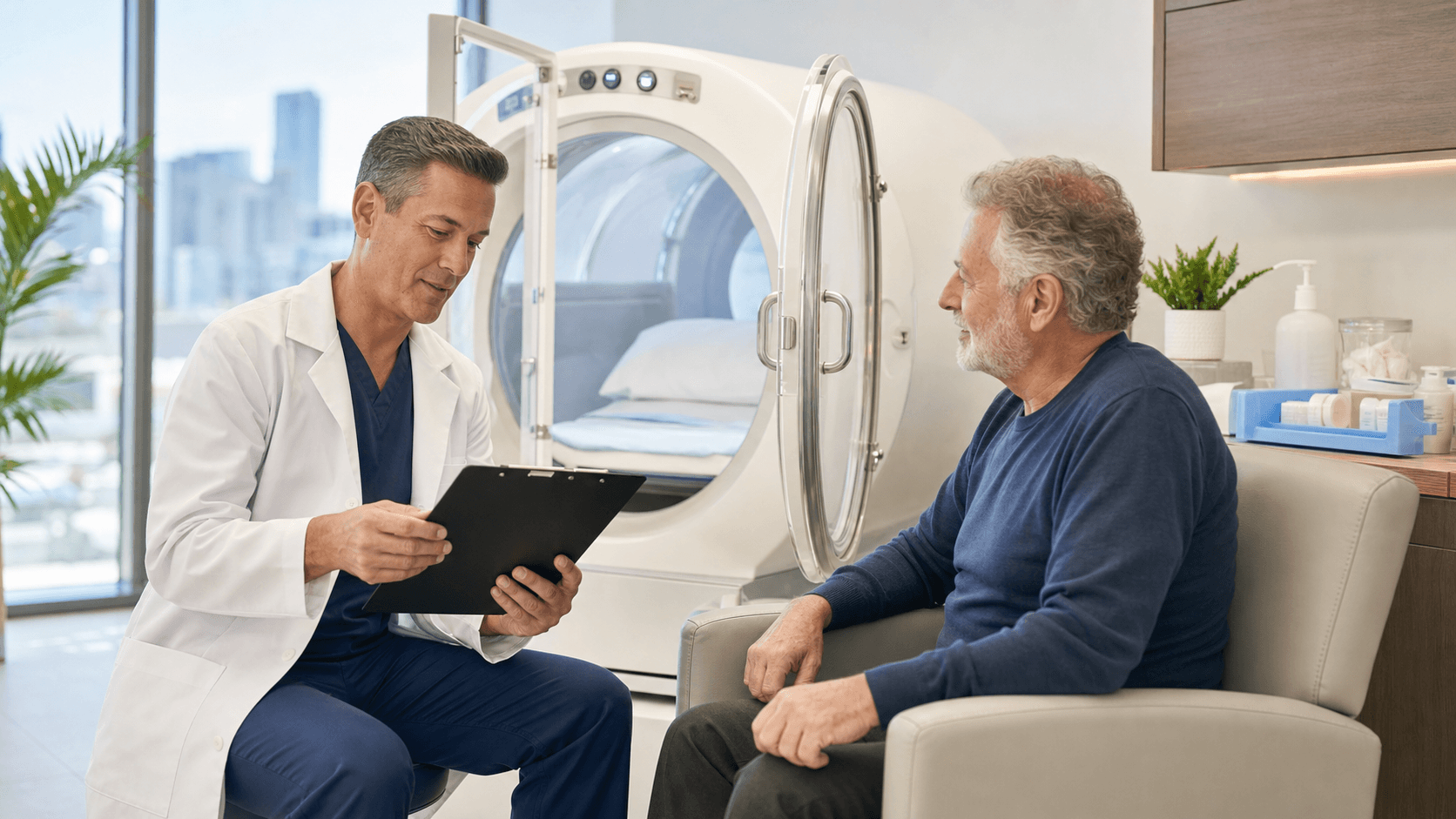
Clinically, hyperbaric oxygen therapy, or HBOT, means breathing 100 percent oxygen while you sit in a pressurized chamber. In plain English, it is more oxygen, under pressure, to help stubborn wounds finally close. Research from the National Institutes of Health and guidelines from the Undersea and Hyperbaric Medical Society (UHMS) say HBOT can help certain chronic and radiation-related wounds heal faster and can help lower the risk of amputation, but it is not a magic cure for every wound.1,2
You may see three main options near you: hospital-based chambers, outpatient centers, and mobile wound care teams that come to your bedside and coordinate HBOT when you truly need it. By the end of this article, you will know how to compare these choices, which safety standards to ask about, and what questions to bring to any clinic so you can heal at home whenever it is appropriate.
Key Takeaways
- Compare centers by accreditation, staff training, emergency readiness, and how they coordinate bedside wound care.
- Ask about Medicare Part B covered diagnoses, pre-authorization, and whether a board-certified wound specialist runs your overall plan.
- Mobile wound care can handle most visits at your bedside and arrange same-week hyperbaric chamber therapy in Dallas when needed.
- Safe centers will tell you when HBOT will not help and offer other ways to help you heal at home.
When Hyperbaric Therapy Actually Helps Chronic Wounds
Clinical fact: HBOT is FDA-approved and Medicare Part B covered for certain problems like some diabetic foot ulcers, radiation tissue injury, and a few deep infections, based on Medicare and UHMS guidelines.2,3 Plain-English translation: insurance usually helps pay only when the wound is deep, at risk for amputation, or damaged by radiation, and when regular care alone has not worked.
What to do: before you call any center, write down:
- Your main diagnosis, such as diabetes or past radiation
- How long the wound has been open
- Treatments already tried, like debridement, antibiotics, or offloading
Clinical fact: HBOT works best as one part of a full wound care plan that includes cleaning dead tissue, controlling infection, taking pressure off the area, and checking blood flow.1,2 Plain-English translation: simply sitting in the chamber, without good bedside wound care, rarely leads to lasting healing.
What to do: ask each facility who will handle:
- Your dressing changes and offloading devices
- Infection checks and blood flow testing
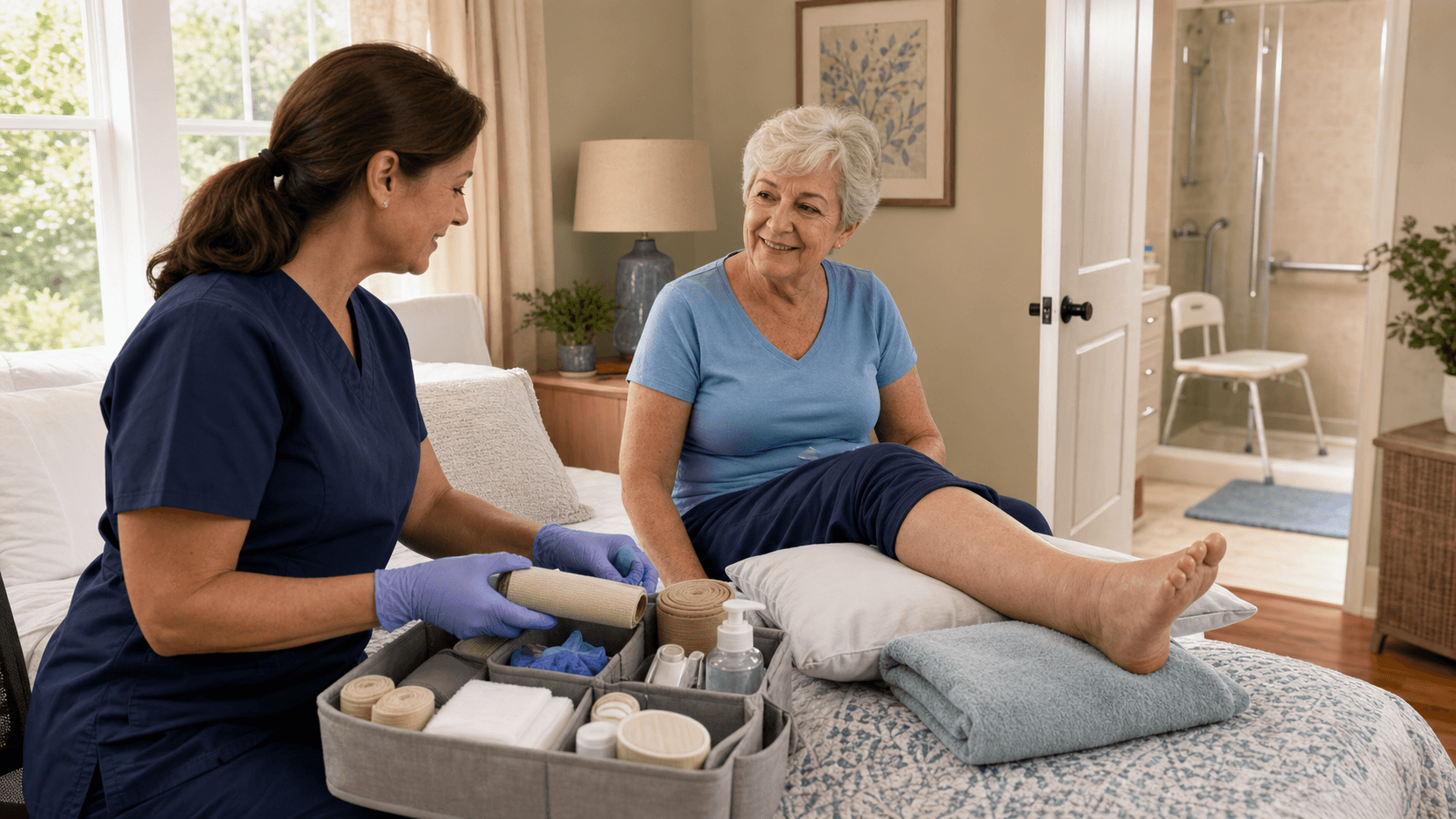
- Mobile wound care at your bedside between chamber visits
Clinical fact: most HBOT plans include many sessions in a row, often 5 days a week for several weeks.2 Plain-English translation: HBOT is a serious time commitment, so choosing a location that fits your daily life matters a lot.
What to do: be honest about travel. Can you safely go back and forth every weekday, or would you do better with a team that provides mobile wound care at home and sends you to a chamber in the least disruptive setting?
Hospital vs. Outpatient: How to Compare HBOT Centers
Many people search for hyperbaric chamber therapy in Dallas and see both big hospital units and smaller outpatient centers. Both can be safe, but they serve different types of patients.
In general:
- Hospitals fit people who are medically fragile, on oxygen, or bouncing in and out of the ER.
- Outpatient centers often fit people with stable vital signs who can travel and want to heal at home when they can.
- Mobile wound care teams can plug into either setting, so your dressings and bedside checks stay consistent.
Here is a simple comparison:
Factor | Hospital-based HBOT | Outpatient HBOT center
Ideal patient | Medically fragile, on oxygen, recent surgery, frequent ER visits | Stable vitals, able to travel, wants to heal at home when possible
Emergency support | Rapid access to ER, ICU, and many specialists | Basic emergency protocols, transfer to hospital if needed
Scheduling | Possible wait lists, schedule changes linked to hospital flow | Often more predictable slots, sometimes same-week openings
Care coordination | Strong for inpatients, but after discharge can feel choppy | Often works closely with mobile wound care at your bedside
Environment | Busier, more exposure to sick patients | Smaller setting, easier parking, quicker in and out for many patients
What to do:
- If you are medically unstable or were just in the hospital, ask your current doctors if hospital-based HBOT is safer for you.
- If you are stable but your wound is stubborn, ask any outpatient center how they coordinate imaging, dressings, and follow-up, and if they can partner with a board-certified wound specialist who sees you at your bedside.
Safety, Accreditation, and Staff Training You Should Expect
Clinical fact: strong HBOT programs follow UHMS guidelines and may seek outside accreditation that reviews their safety and quality processes.2 Plain-English translation: an independent group checks that the center maintains the chambers, trains staff, and runs regular safety drills.
What to do: ask:
- Are you UHMS accredited or following UHMS standards?
- When was your last safety inspection?
- How often do you practice emergency drills?
Clinical fact: HBOT has real but manageable risks, like ear pressure injuries, oxygen-related seizures, and temporary vision changes, especially if screening is rushed.1,2 Plain-English translation: a chamber is usually safe, but it is medical treatment under pressure, not a spa service.
What to do: ask:
- Who will be in the room with me, and how will you monitor me?
- How do you handle anxiety, mobility limits, or implanted devices?
- What is your plan if I get short of breath or feel pain in my ears?
Clinical fact: results improve when a board-certified wound specialist leads the plan, not just the chamber schedule. Plain-English translation: you want someone thinking about blood flow, infection, diabetes control, and dressings, not only about time in the tube.
What to do: ask whether a board-certified wound specialist will:
- Review your full record, including imaging and vascular tests
- Oversee both HBOT and bedside wound care
- Arrange mobile wound care visits at your bedside if travel is hard
"Hyperbaric oxygen therapy is powerful, but it works best when it is wrapped in good wound care, nutrition, and blood flow management. The safest centers will tell you honestly when HBOT will not help and focus on getting your wound healed, not just filling a chamber slot." , Dr. Brandon Elrod, DO, FAPWCA
Dr. Elrod's service as a Captain, US Army (Ret.) informs a disciplined, stepwise approach to risk and safety, which carries over into how HBOT plans are designed.
Smart Questions to Ask Before You Schedule HBOT
Before you commit to weeks of treatment, use a simple checklist when you call any center.
Medical and safety questions:
- Is my diagnosis one that Medicare Part B covered HBOT is usually approved for, according to Medicare guidelines?3
- Who decides if I am safe for the chamber, and how will you coordinate with my other doctors?
- Will the same clinician follow me, and can they examine my wound through mobile wound care at my bedside if I cannot travel?
Logistics and outcome questions:
- About how many treatments do you expect for a wound like mine?
- How will we know by week 2 or 3 if HBOT is helping?
- Can you start therapy the same week if my wound is urgent?
- What is parking like, how long am I in the building, and what happens if I miss a session?
Financial and insurance questions:
- Do you accept my insurance, including Medicare Part B?
- Do you help with pre-authorization and medical notes for coverage?
- Can you coordinate with my wound doctor or mobile wound care team so visits in clinic and at my bedside are documented correctly?
What to do: write down answers from 2 or 3 centers, then compare them side by side. Choose the team that makes it easier to complete the full course and still lets you heal at home as much as possible.
How Anchor Wound Management Fits Into Your HBOT Decision
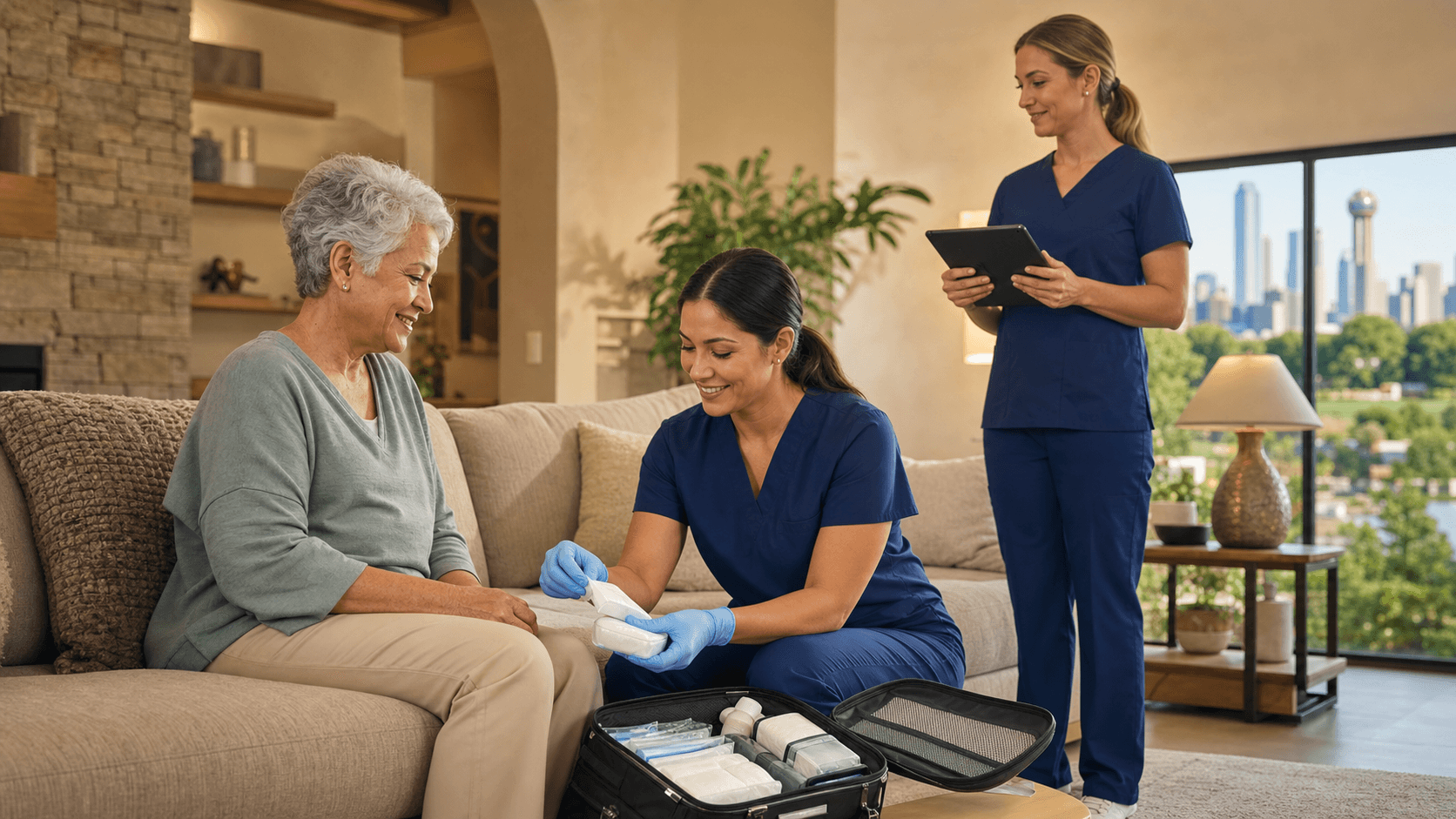
Anchor Wound Management focuses on advanced wound care and mobile wound care at your bedside across the Dallas, Fort Worth area, then coordinates HBOT referrals when that is truly the right step. In simple terms, a team comes to you at home for most wound visits, and when needed, helps you plug into safe hyperbaric chamber therapy in Dallas near you.
Our care model includes:
- Oversight from a board-certified wound specialist for both clinic and bedside care
- Partnerships with local hospital and outpatient HBOT centers that follow strong safety standards
- Close monitoring between chamber sessions at your bedside so dressings, blood sugars, and infection control stay on track
The goal is simple: patient-first decisions, using HBOT only when guidelines and evidence support it, and always talking through options if HBOT is not the right fit. Often, the best first step is a full wound evaluation, many times done at your bedside, to decide if hyperbaric therapy belongs in your plan at all.
Frequently Asked Questions
Q: Is hyperbaric oxygen therapy covered by Medicare Part B for wounds?
A: Medicare Part B covers HBOT only for certain diagnoses, such as some non-healing diabetic foot ulcers, chronic bone infections that have not responded to standard care, and specific radiation-related tissue injuries, based on Medicare policy and UHMS guidance.2,3 You usually must receive regular wound care first and meet clear guideline criteria. A board-certified wound specialist can review your records and help coordinate the documentation your insurer asks for.
Q: How many hyperbaric treatments will I need for a chronic wound?
A: Many chronic wound patients need a series of sessions spread over several weeks, often 5 days per week.2 UHMS practice guidance says progress should be checked at set points, such as after a group of treatments. If your wound is not improving despite good bedside care plus HBOT, your doctor should rethink the plan instead of simply adding more sessions.
Q: Can I receive mobile wound care and still go to a hyperbaric center?
A: Yes. In fact, combining mobile wound care at your bedside with HBOT at a hospital or outpatient center often gives strong coverage. Your home wound team can manage dressings, watch for infection, and update your HBOT center so everyone is working from the same plan.
Q: Is outpatient HBOT as safe as hospital-based treatment?
A: For medically stable patients who pass careful screening, accredited outpatient centers that follow UHMS guidelines can be as safe as hospital-based units.2 Patients with unstable heart or lung disease, recent major surgery, or frequent ER visits may be safer in a hospital. Your wound physician should help you choose based on your medical history, not just convenience.
Q: What if I am claustrophobic or have trouble lying still in the chamber?
A: Many people worry about this. Modern centers often have larger chambers, clear communication during treatment, and simple relaxation strategies. In some cases, they can coordinate with your doctor about safe medicines to help you tolerate the sessions, or they may discuss other options if HBOT is not realistic for you.
Take the Next Step
If you have a stubborn wound and are wondering whether hyperbaric chamber therapy near you is safe or necessary, the next step is a focused wound evaluation, often available at your bedside. Call us at (XXX) XXX-XXXX or book online at [Anchor Wound Management scheduling link] to see if mobile wound care plus HBOT can help you heal at home while Dr. Elrod's team handles insurance questions and pre-authorizations.
- Heyboer M 3rd, et al. Hyperbaric oxygen therapy and chronic wounds. Undersea Hyperb Med. 2017.
- Undersea and Hyperbaric Medical Society (UHMS). Hyperbaric oxygen therapy indications manual.
- Centers for Medicare & Medicaid Services. National Coverage Determination (NCD) for Hyperbaric Oxygen Therapy (20.29), Medicare.gov.
Take The Next Step Toward Better Wound Healing Today
If you or a loved one is struggling with a hard-to-heal wound, we are here at Anchor Wound Management to help you explore effective options. Our specialized hyperbaric chamber therapy in Dallas is designed to support your healing and improve quality of life. Reach out so we can review your situation, answer your questions, and recommend a personalized treatment plan. To schedule a visit or request more information, please contact us today.