When Leaving Home Hurts More Than Your Wound
Many people with slow-healing wounds in Dallas and Fort Worth ask the same question: "Do I really have to keep going to the wound clinic every week?" When every trip means traffic, waiting rooms, and hours in a wheelchair, the travel can hurt more than the wound.
Think of an older adult with a foot ulcer who needs help just getting to the car. By the time they reach the clinic, their blood pressure and blood sugar are up, and they are exhausted for the rest of the day. That kind of strain is not good for healing.
Clinical fact → plain English → what to do
Clinical fact: The CDC and NIH report that missed wound visits increase the risk of infection, hospitalization, and even amputation (CDC; NIH).
Plain English: Every skipped visit is a chance for the wound to stall or get worse.
What to do: Ask if mobile wound care can bring a board-certified wound specialist to your bedside so you can heal at home when it is safe.
At Anchor Wound Management in the Dallas, Fort Worth area, we provide both mobile wound care at your bedside and clinic-based wound care, including hyperbaric oxygen treatment. That means we can help you decide when remote wound care services can safely replace clinic trips, and when a clinic or hospital visit is still the better choice.
Key takeaways
- Some Dallas, Fort Worth patients actually heal faster and avoid hospital stays when wound care comes to them at home.
- Remote wound care services and mobile wound care are Medicare Part B, covered in many cases when ordered by your doctor and when criteria are met (Medicare.gov).
- At-your-bedside care can reduce missed visits, improve dressing changes, and catch infections earlier.
- Clinic and hospital care are still critical for emergencies, surgery needs, or unstable infections.
- A board-certified wound specialist can help you decide when you can heal at home and when you need in-clinic treatment.
Why wounds stall when care is hard to reach
Chronic wounds like diabetic foot ulcers, venous leg ulcers, and pressure injuries rarely heal well without frequent monitoring and adjustment. Research in peer-reviewed journals such as Wound Repair and Regeneration supports this need for close follow-up.
Clinical fact: Chronic wounds act like "moving targets" that need regular course corrections.
Plain English: What worked for your wound last month might not work this month.
What to do: Stretching visits from weekly to "whenever I can get a ride" usually slows healing.
For many people in Dallas, Fort Worth, getting to clinic-based care is the hardest part. Barriers often include:
- Long drives in heavy DFW traffic
- Relying on family or paid transportation
- Difficulty with stairs, transfers, and wheelchairs
- Heat, storms, or mobility problems that make travel risky
When visits are missed, debridement is delayed, dressings stay on too long, and early infection signs get missed. That is how small problems turn into bigger ones that sometimes require the hospital.
Clinical fact: Physically exhausting trips can raise blood pressure, blood sugar, and pain levels, and these changes are linked with slower wound healing in research from groups like the NIH and American Diabetes Association (ADA).
Plain English: If every clinic trip leaves you wiped out and your body stressed, your wound pays the price.
What to do: If you skip or delay wound appointments more than every month or two because of transportation or fatigue, it may be safer to ask about mobile wound care.
When remote wound care services beat the clinic
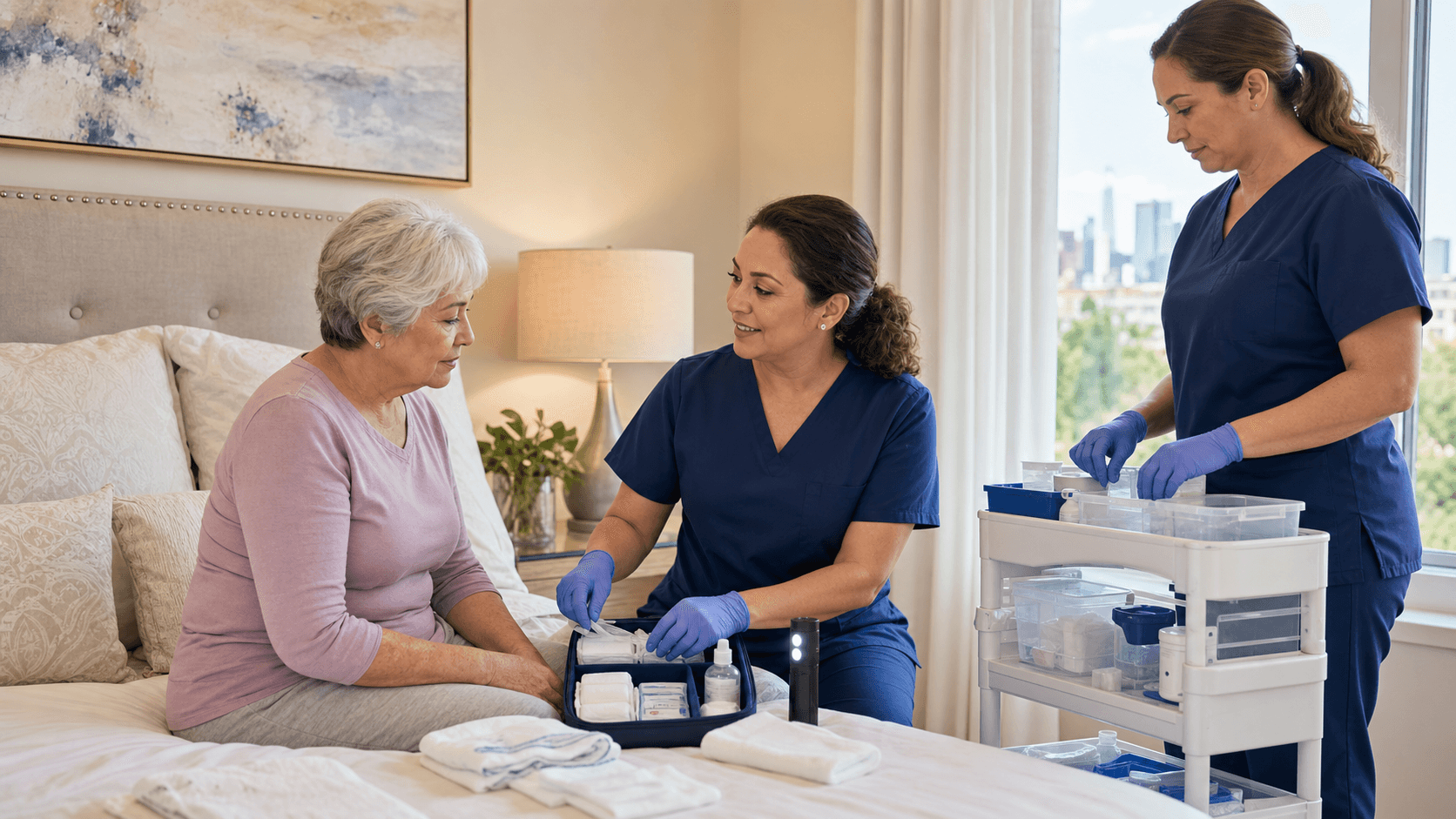
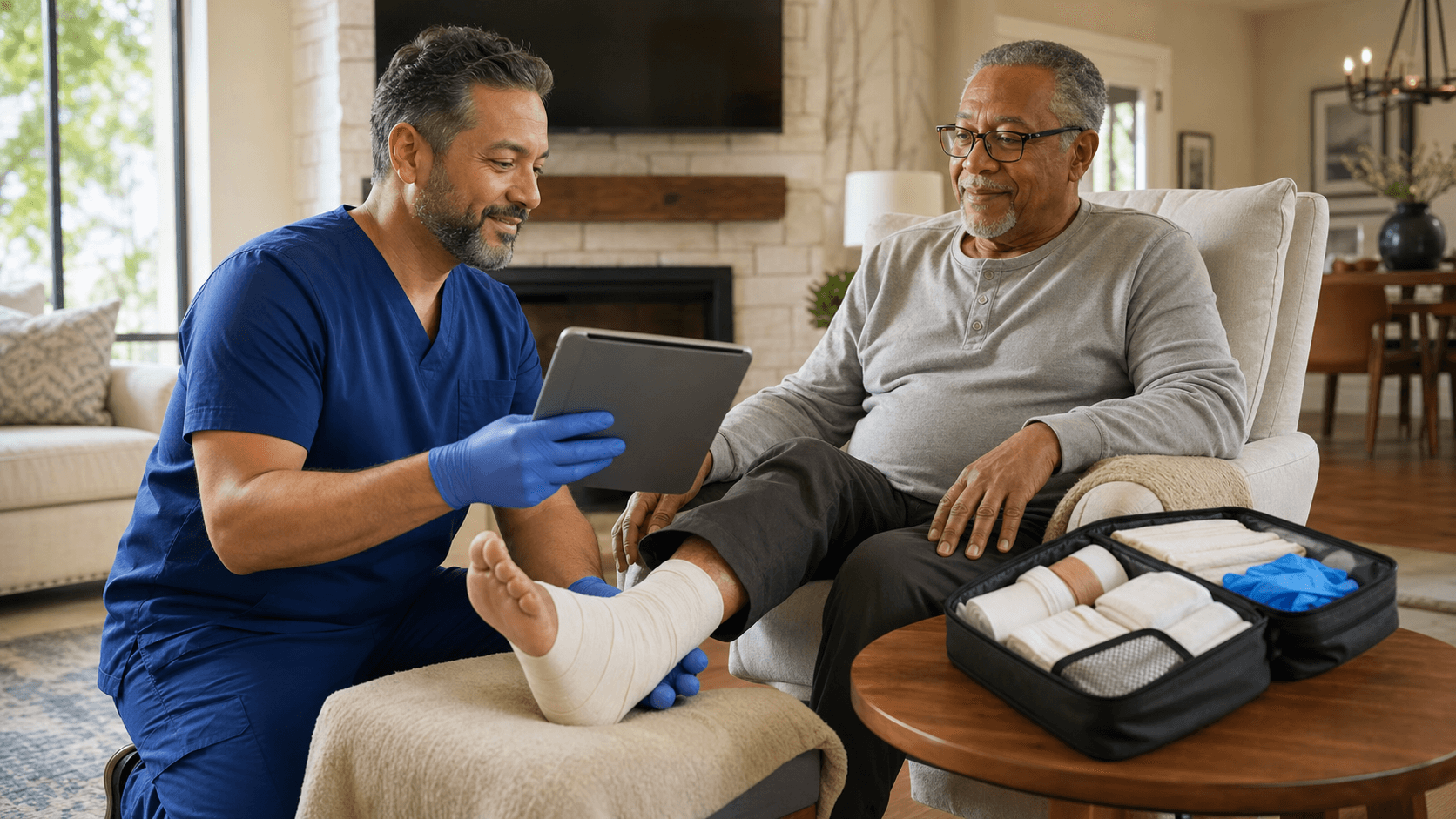
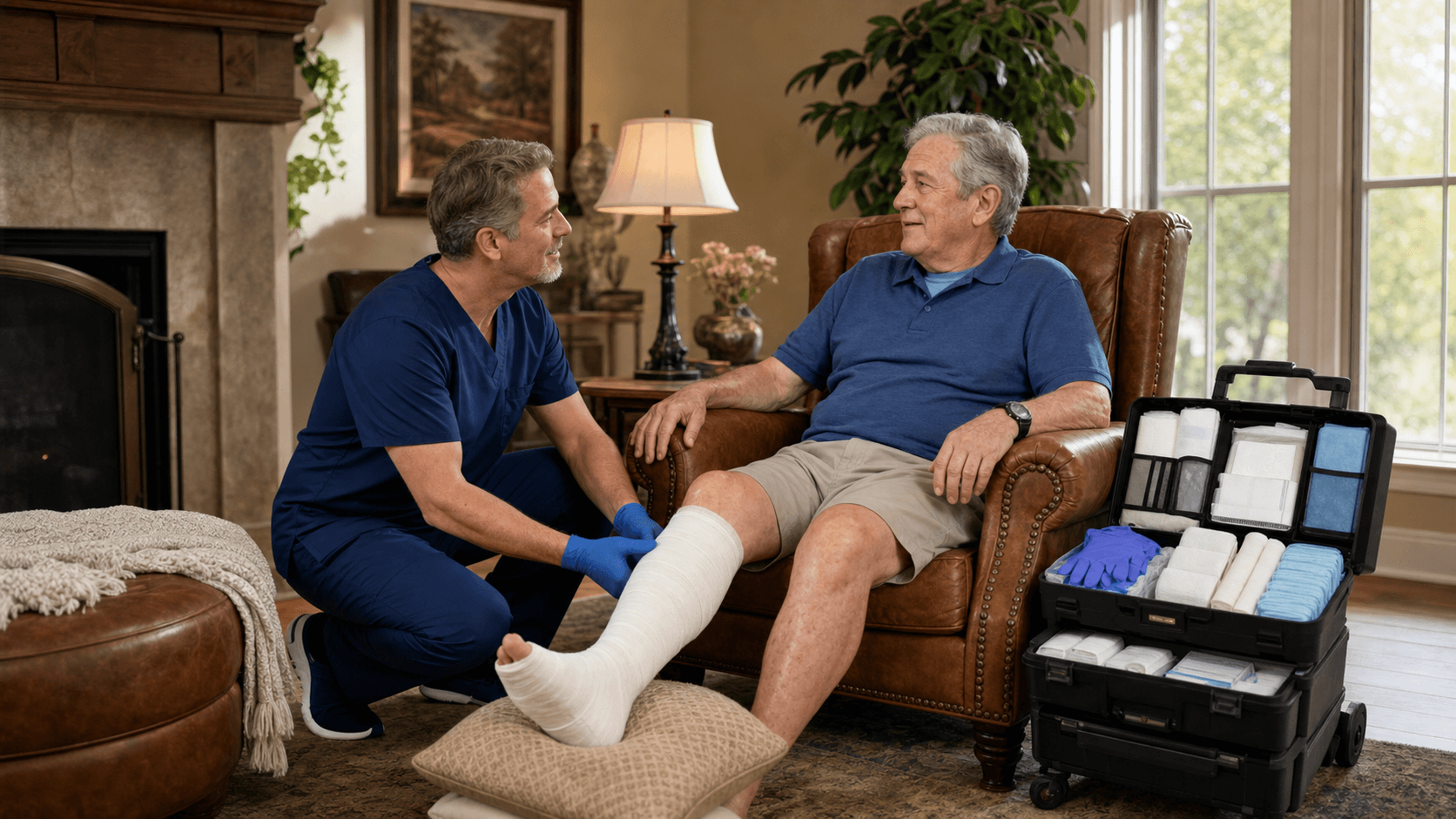
Mobile wound care brings a board-certified wound specialist to your bedside, whether that is at home, assisted living, or another facility.
Clinical fact: In-home visits can include full wound assessments, debridement when appropriate, advanced dressings, and coordination of labs, imaging, and prescriptions.
Plain English: Most of what happens in the wound clinic can often happen at your bedside.
What to do: Ask your doctor if in-home visits can provide the same level of procedures you receive in the clinic, including sharp debridement when needed.
Telemedicine adds another layer of safety. Studies in peer-reviewed journals like International Wound Journal describe how video check-ins plus hands-on visits help catch problems early, especially for high-risk diabetic or post-surgical wounds.
Clinical fact: Combining video visits with in-person care supports closer monitoring between procedures.
Plain English: Sometimes a quick video call can keep a problem from turning into a late-night ER trip.
What to do: Use remote wound care services for medication questions, dressing troubleshooting, and early infection signs between live visits.
Home-based care can outperform clinic visits when:
- You have limited mobility, oxygen dependence, heart failure, or dementia and travel leaves you worse off.
- You live in assisted living or a group home where staff can help with daily dressing changes once a plan is set.
- Every clinic visit leaves you exhausted for the rest of the day.
What to do: If clinic trips are so draining that you need a full day to recover, talk with your wound provider about a heal at home plan that mixes mobile wound care, telehealth, and clinic support.
Many of our care systems at Anchor Wound Management come from the military background of our medical director, Dr. Brandon Elrod, DO, FAPWCA, who served as a Captain, U.S. Army (Ret.). As Dr. Elrod often tells patients, "Our mission is to protect your function and your limbs while using the least stressful setting that is still safe for you."
Home vs. clinic: how a wound expert chooses
Here is a simple comparison of common settings for Dallas, Fort Worth patients:
Care Setting | Best for | Key Advantages | Important Limits
Mobile wound care at your bedside | Stable but complex wounds where travel is a major barrier | Same-week visits, less travel stress, easy family help, real view of home risks and supports | Not for life-threatening infections, active sepsis, or wounds needing OR procedures
Telehealth remote wound care services | Follow-up checks, dressing or device troubleshooting, frequent monitoring | No travel, quick access, easy to include family, faster response to early warning signs | No procedures, needs good video, lighting, and sometimes a helper at home
Clinic- or hospital-based wound care | Wounds that may need surgical debridement in the OR, advanced imaging, IV antibiotics, or hyperbaric oxygen with close monitoring | Full equipment, multiple specialists, rapid move to surgery or admission if needed | Higher exposure to hospital germs, harder transportation, and possible scheduling delays
Clinical fact: Signs of systemic infection like fever, chills, fast heart rate, confusion, or rapidly spreading redness require urgent ER or inpatient care according to CDC sepsis guidance.
Plain English: If your wound suddenly looks or feels "way worse," you do not wait for a home visit.
What to do: Ask your wound provider for a written "go to ER now" list. Keep it on the fridge and review it with family or caregivers.
A board-certified wound specialist looks at more than just the wound. They check circulation, infection risk, blood sugar control, nutrition, and support at home.
What to do: At your first evaluation, be ready to talk about who helps you, how often dressings can be changed, and what technology you have for telehealth. This helps your provider decide if you can heal at home safely or need more clinic-based care, including services like hyperbaric oxygen.
Coverage, same-week starts, and how Anchor Wound Management works
Clinical fact: Medicare Part B often covers medically necessary wound care visits, procedures, and some telehealth services when ordered by a treating clinician and when coverage criteria are met (Medicare.gov).
Plain English: If your doctor says you need wound care as part of a treatment plan, there is usually a path to Medicare Part B, covered visits, including mobile wound care in many situations.
What to do: Before changing your plan, ask your provider's office or insurance to review your benefits for both home and clinic visits.
At Anchor Wound Management, our team works with your primary care clinician and other specialists to document medical need and handle required paperwork. We gather your wound history, medications, and prior records so we can move quickly once a plan is set.
Many patients in the Dallas, Fort Worth area are seen within the same week for new or worsening wounds, whether that is at your bedside or in our clinic, depending on how urgent and complex things are.
Clinical fact: Evidence-based wound care guidelines often recommend a closer look if a wound has not improved after several weeks of standard treatment.
Plain English: You should not sit at home for weeks watching an open sore go nowhere.
What to do: If your wound has not improved after about a month of usual care, ask for a referral to a board-certified wound specialist who can tell you if a heal at home plan with remote wound care services is safe for you.
Call to schedule wound care near you
If you or a loved one in Dallas, Fort Worth has a wound that is new, worsening, or just not healing, you do not have to face it alone. Mobile wound care at your bedside can often help you heal at home while still keeping you connected to clinic or hospital care when needed.
To schedule a same-week evaluation with a board-certified wound specialist, call our office at [PHONE NUMBER] or book online at [BOOKING LINK]. We work with Medicare Part B and most major insurers, and Dr. Elrod's team helps handle pre-authorization and paperwork so you can stay focused on healing.
FAQ
Q: Is remote wound care safe for diabetic foot ulcers?
A: Clinical fact: Guidelines from groups like the ADA and Infectious Diseases Society of America (IDSA) note that many diabetic foot ulcers can be managed outside the hospital when blood flow is adequate and infection is controlled.
Plain English: If your circulation is okay and infection is under control, a lot of your care can happen at your bedside with a board-certified wound specialist watching you closely.
What to do: Ask for a vascular check and talk with your provider about whether your ulcer meets criteria for home-based care.
Q: How Do I Know If I Need the ER Instead of a Home Visit?
A: Clinical fact: Fever, chills, red streaks, fast-spreading redness, foul-smelling drainage with feeling "sick all over," or sudden confusion are warning signs of possible sepsis, according to the CDC.
Plain English: If you feel generally ill and your wound looks much worse, do not wait for a scheduled visit.
What to do: Follow the emergency plan your wound provider gives you and keep that sheet where family can find it fast.
Q: Are Home Wound Visits Medicare Part B Covered?
A: Clinical fact: Medicare Part B often covers medically necessary wound care visits, procedures, and certain dressings when properly ordered and documented (Medicare.gov).
Plain English: If your doctor says you need wound care, there is usually some coverage for visits, including mobile wound care in many cases.
What to do: Let the office review your specific benefits, including copays and deductibles, before your first home visit.
Q: What Should I Have Ready for My First Mobile Wound Care Visit?
A: Clinical fact: Having accurate information about your medical history and home setup helps reduce complications and delays.
Plain English: The more of your story we can see, the safer and more focused your treatment plan will be.
What to do: Prepare a current medication list, prior wound records, hospital or rehab discharge summaries, and any photos that show how the wound has changed. Clear a space at your bedside with good lighting so your clinician can work safely and efficiently.
Q: Can Home-Based Care Replace Hyperbaric Oxygen Therapy?
A: Clinical fact: Hyperbaric oxygen therapy must be done in a controlled clinic setting with specialized equipment and monitoring.
Plain English: The chamber time happens in the clinic, but much of the support work before, between, and after sessions can happen at your bedside.
What to do: Ask if your wound meets evidence-based criteria for hyperbaric oxygen and how mobile wound care visits can fit around those treatments.
Q: How Quickly Can I Be Seen in the Dallas, Fort Worth Area?
A: Clinical fact: Earlier assessment for non-healing wounds is linked with better limb salvage and fewer hospitalizations in multiple studies.
Plain English: If your wound is new, worsening, or just not healing, you should not wait long.
What to do: As soon as you notice a problem or stalled healing, contact a wound expert so triage can place you in the right time slot and in the safest care setting for your situation.
Get Faster, Expert Support For Complex Wounds
If you or your facility needs reliable wound care without waiting for the next clinic visit, our team at Anchor Wound Management is ready to help. Explore our bedside and remote wound care services to bring advanced clinical expertise directly to your patients, wherever they are. We collaborate closely with your existing care team to improve healing, reduce complications, and support better outcomes. To discuss your specific needs or schedule a consultation, please contact us today.