How mobile wound care changes the amputation equation
A common question we hear from people with diabetes in Dallas is simple and heavy at the same time: "Is this small sore on my foot how I lose my leg?" When you already struggle to get a ride, climb into a car, or sit in long waiting rooms, that fear can keep you awake at night. Foot wounds feel scary because they can move from "no big deal" to "big problem" faster than many people expect.
Diabetes raises the risk of foot ulcers and amputation. Clinically, high blood sugar can damage nerves and blood vessels. In plain English, you may not feel a small cut, blood flow is not great, and that slow-healing spot becomes a doorway for infection. When infection is not treated early and consistently, tissue can die and amputation can become the only safe choice.
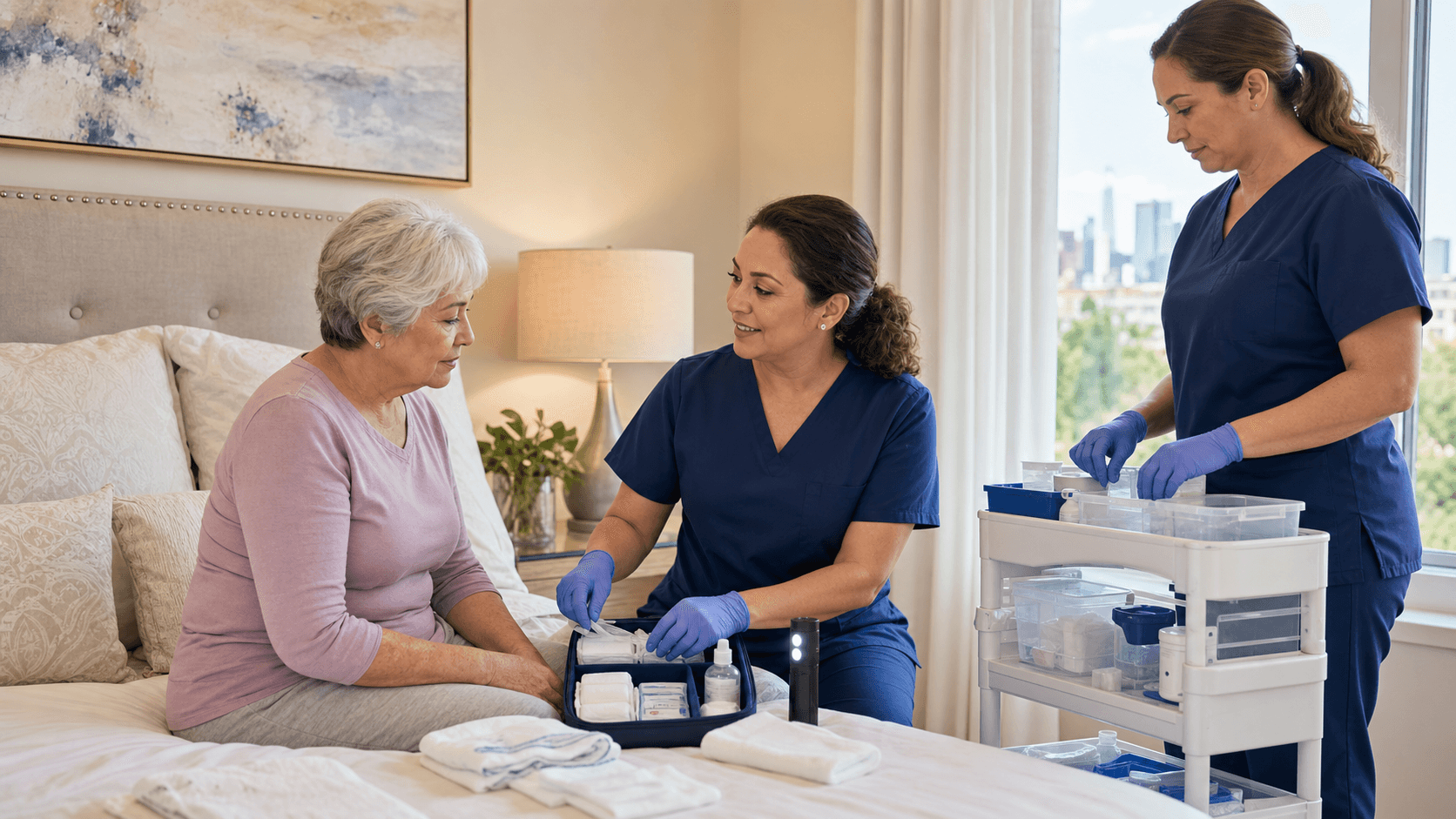
Mobile wound care changes part of that equation. Instead of you struggling to reach a clinic, a board-certified wound specialist comes to your bedside. Same-week visits, careful wound checks, and steady follow-up at home can help catch trouble before it reaches the emergency stage. It does not erase all amputation risk, but it can give you better odds and more control and help you heal at home.
Key takeaways
- Mobile wound care can bring a board-certified wound specialist right to your bedside.
- Same-week visits and close monitoring can catch problems before they lead to amputation.
- Many services are Medicare Part B covered for qualifying patients, which can make at-home care more accessible.
- Not every amputation can be avoided, but consistent, expert care can lower your risk and help you heal at home.
Why diabetic feet in Dallas are at higher risk
Over time, diabetes often causes peripheral neuropathy and poor circulation. Clinically, nerves stop working well and arteries stiffen. In daily life, that means:
- You lose feeling in parts of your feet.
- You may not notice cuts, blisters, or rubbing from shoes.
- Blood flow is weaker, so wounds do not heal quickly.
In plain words, that "little spot" on a toe, heel, or side of the foot can be more dangerous than it looks. Calluses, blisters, and ingrown toenails can break the skin, then deepen into ulcers or even bone infections. The small area you ignore today can turn into tomorrow's emergency surgery.
What to do:
- Check your feet every day, including between toes and under the arch.
- Look for new redness, swelling, drainage, or odor.
- If something looks "off," do not wait for it to get worse. Ask about mobile wound care for a same-week check if you see changes.
Dallas, Fort Worth adds its own challenges. Heat can increase swelling. Long drives for appointments are hard when walking is painful or you do not drive anymore. Some people are homebound because of oxygen, wheelchairs, or caregiving duties. Mobile wound care at your bedside is one way to bridge that gap when frequent clinic trips are not realistic and you want to heal at home.
How mobile wound care in Dallas actually works
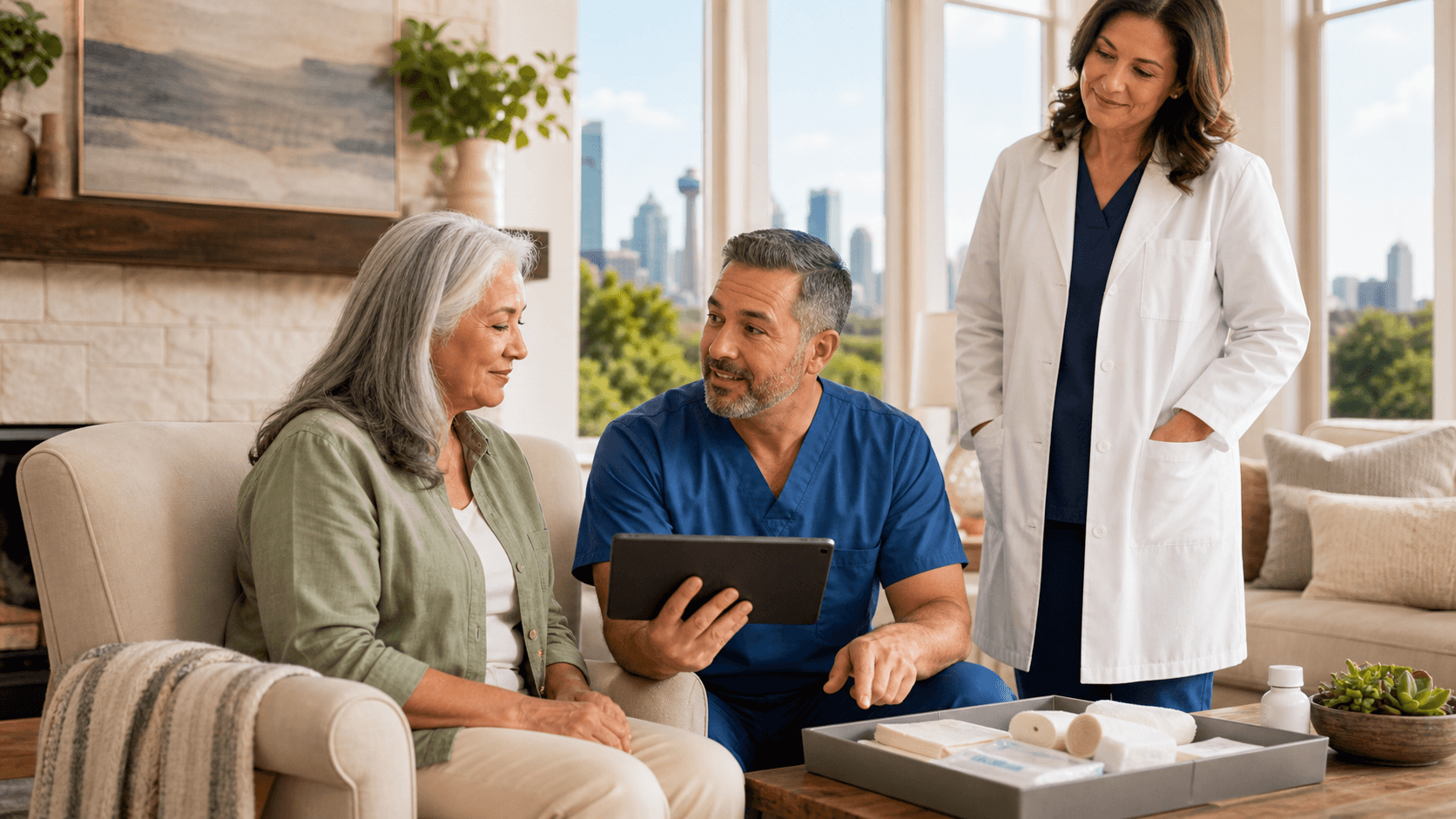
Mobile wound care means your home becomes the exam room. During an at-home visit, a typical flow might look like this:
- Review your medical history, diabetes control, and medication list.
- Examine your wound, measure it, and check for signs of infection.
- Check circulation as able, and review shoes, socks, and pressure points.
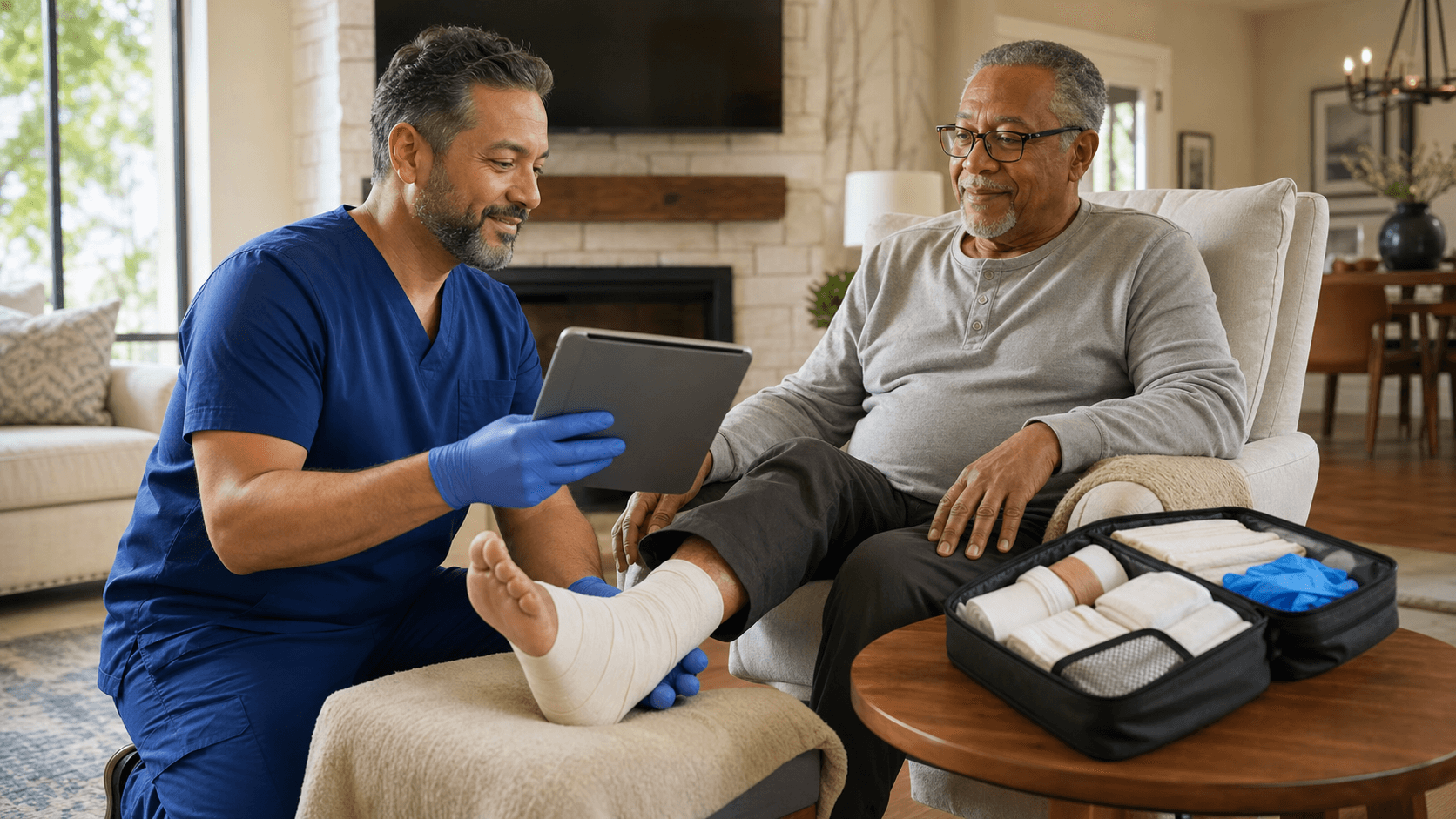
- Take photos to track progress over time.
- Build a clear treatment plan you can follow between visits.
In plain English, the board-certified wound specialist brings the tools, dressings, and medical skill to you. Mobile wound care is not just a quick bandage change. It is ongoing medical management aimed at helping you heal at home and stay out of the hospital.
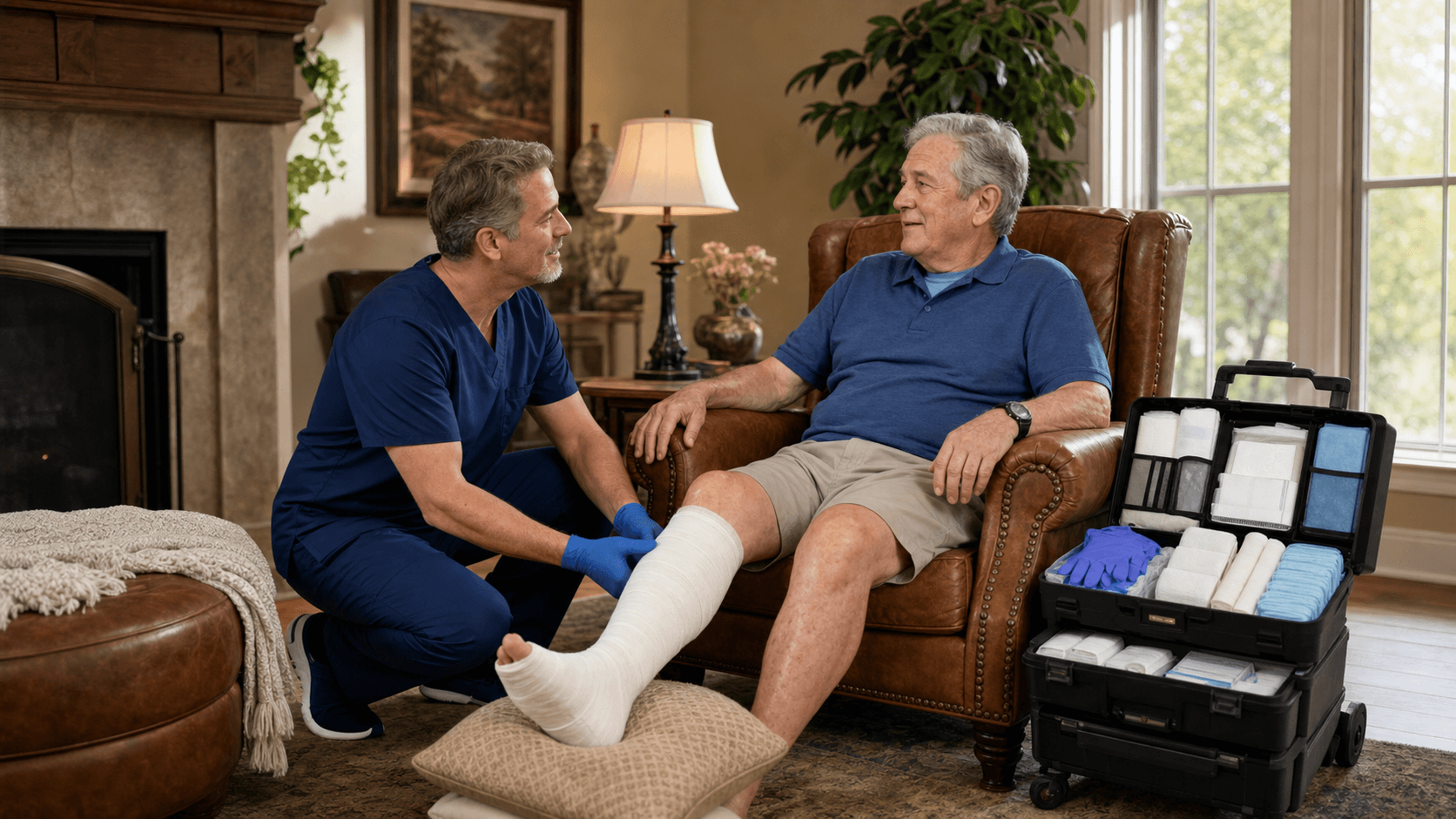
At your bedside, many services are possible:
- Debridement, gently removing dead or infected tissue so healthy tissue can grow.
- Advanced dressings that control moisture and protect the wound.
- Infection monitoring and coordination for antibiotics when needed.
- Offloading, which means taking pressure off the wound with special padding or devices.
- Compression and support for lymphedema and leg swelling when appropriate.
Clinical fact: some things still require a clinic or hospital, such as hyperbaric oxygen therapy (HBOT), skin grafts, surgeries, and some imaging. Plain-English translation: not every tool can safely fit into your living room. What to do: a strong mobile wound care team will be clear about those limits and help coordinate when you do need to travel.
Access and timing matter. Many patients can be seen the same week a new ulcer appears, sometimes faster when there are warning signs. For patients who are considered homebound, some at-home services may be Medicare Part B covered. The safest step is to ask directly about Medicare Part B covered mobile wound care when you call for help.
Clinic visits vs at-home wound care
Clinic-based wound care still has an important role. Some treatments, like HBOT and certain grafts, can only be done with large equipment inside a wound clinic. In those cases, you will still need to travel because that equipment cannot come into a living room or bedroom.
Mobile wound care at your bedside is often a strong option when:
- You have limited mobility or a high fall risk.
- You depend on oxygen or a wheelchair.
- You have recently been in the hospital and are weak.
- You keep missing appointments due to transportation or caregiving duties.
Clinic and mobile care do not have to compete. They can work together, with mobile wound care handling frequent checks and dressings, and the clinic handling advanced procedures.
Here is a simple comparison table:
| Aspect | Clinic-based wound care | Mobile wound care at home |
|--------------------------------|---------------------------------------|-----------------------------------------------|
| Travel required | You travel to the clinic | Clinician comes to your bedside |
| Frequency of visits | Often weekly or every few weeks | Can be adjusted to your needs and homebound status, often same week for new issues |
| Access to HBOT | Available in clinic | Not available at home |
| Convenience for caregivers | Time off work and driving needed | Less travel and easier scheduling at your bedside |
| Infection exposure | Waiting rooms and shared spaces | Your own home environment |
| Ability to see home risks | Limited view of shoes and walking space | Full view of flooring, stairs, and bathroom setup |
| Typical payer coverage | Office- or hospital-based | Often Medicare Part B covered when criteria are met |
Both approaches share one main goal: reduce infection, protect circulation, and lower amputation risk so you can heal at home when it is safe.
How mobile wound care can lower amputation risk
One important advantage of mobile wound care in Dallas is catching trouble early. Frequent measurements, photos, and skin checks help the clinician see when a wound is stalling, deepening, or showing early infection. In plain English, more trained eyes on your wound, more often, means fewer surprises and better odds of staying out of the operating room.
Lowering amputation risk is not only about the wound itself. A mobile wound care team can:
- Coordinate with your primary care doctor on blood sugar control.
- Work with podiatry on safe nail and callus care.
- Communicate with vascular surgery when blood flow is a concern.
- Support plans to manage swelling, pressure, and walking safety.
When everyone shares information, care tends to be safer and more focused on healing faster and avoiding amputation. We encourage patients to give clear permission for information sharing so all of your clinicians know what is happening.
There are honest limits. Severe circulation blockages, deep bone infections, or rapidly spreading tissue damage may still lead to surgery or even amputation. The goal is not to scare you. The goal is to act long before you get to that stage.
As Dr. Brandon Elrod, DO, FAPWCA, says, "Our mission is simple: see the wound sooner, treat it more precisely, and keep you in your living room instead of the hospital." That is the blend of military precision and bedside focus that mobile wound care at your bedside can bring.
Choosing a mobile wound care team
If you are thinking about mobile wound care in Dallas, it helps to ask a few clear questions:
Are you led by a board-certified wound specialist?
- What treatments can you provide at home, and when would you send me to a clinic or hospital?
- Are any of my services likely to be Medicare Part B covered, and what out-of-pocket costs should I prepare for?
Look for green flags such as:
- Clear communication and written care plans.
- Photo documentation of your wound over time.
- Regular contact with your current doctors.
- Realistic timelines that avoid big promises.
Be cautious about red flags:
- Vague treatment plans with no written instructions.
- No documentation or photos of progress.
- Pressure to stop seeing your primary doctor or podiatrist.
- Promises to "guarantee" no amputation.
Mobile wound care also supports caregivers. Fewer long trips mean less missed work and less lifting in and out of vehicles. Family members can see the care at the bedside, ask questions, and learn how to help with daily dressings so you can heal at home whenever it is safe.
FAQ
Q: Is Mobile Wound Care Safe for Serious Diabetic Foot Ulcers?
A: Mobile wound care can be safe for many serious ulcers when there is close monitoring, clear communication, and a plan for rapid transfer if things worsen. Sudden high fever, spreading redness, or strong odor can be signs that you need urgent ER care instead of waiting at home.
Q: How Fast Can I Get an at-home Visit If a New Wound Appears?
A: Many mobile wound care teams aim for same-week visits for new ulcers, with triage based on how the wound looks and your symptoms. While you wait, keep pressure off the area, keep it covered as instructed by your clinician, and watch for signs of fast change.
Q: Will Medicare Part B Cover My at-Home Wound Care?
A: Some mobile wound care services are Medicare Part B covered for patients who meet homebound and medical need criteria. Coverage details vary, so it is important to have your insurance cards ready and ask for a benefits check when you call a mobile wound care provider.
Q: Can You Provide Advanced Treatments Like Grafts or HBOT Bedside?
A: Some grafts and advanced dressings can be used at home, but HBOT and certain procedures require a clinic setting. A good mobile wound care team will coordinate those visits and then continue your ongoing care at home.
Q: What If I Already See a Podiatrist or Primary Care Doctor?
A: Mobile wound care is meant to add hands and eyes, not replace your existing doctors. With your permission, the team can share notes and photos so everyone works from the same plan.
Q: How Will I Know If My Amputation Risk Is Going Down?
A: Signs of progress include a wound that slowly gets smaller, cleaner, and less painful, more stable blood sugar, and better swelling control. If the wound suddenly gets larger, deeper, or more painful, or if you feel generally sick, that is a signal to speak up quickly so your mobile wound care team can reassess.
Take the next step
If you see a new sore, redness, or drainage and wonder about your amputation risk, do not wait. Reach out to mobile wound care and ask about a same-week, at your bedside evaluation so you can start a clear plan to heal at home whenever it is medically safe.
Get Personalized Mobile Wound Care Without Leaving Home
If you or a loved one needs expert wound treatment but transportation is a challenge, our team is ready to come to you. Learn how our mobile wound care in Dallas service delivers hospital-level care right at your bedside. At Anchor Wound Management, we coordinate with your existing providers to create a focused, effective treatment plan. Have questions or need to schedule a visit soon? Contact us so we can help you get started.