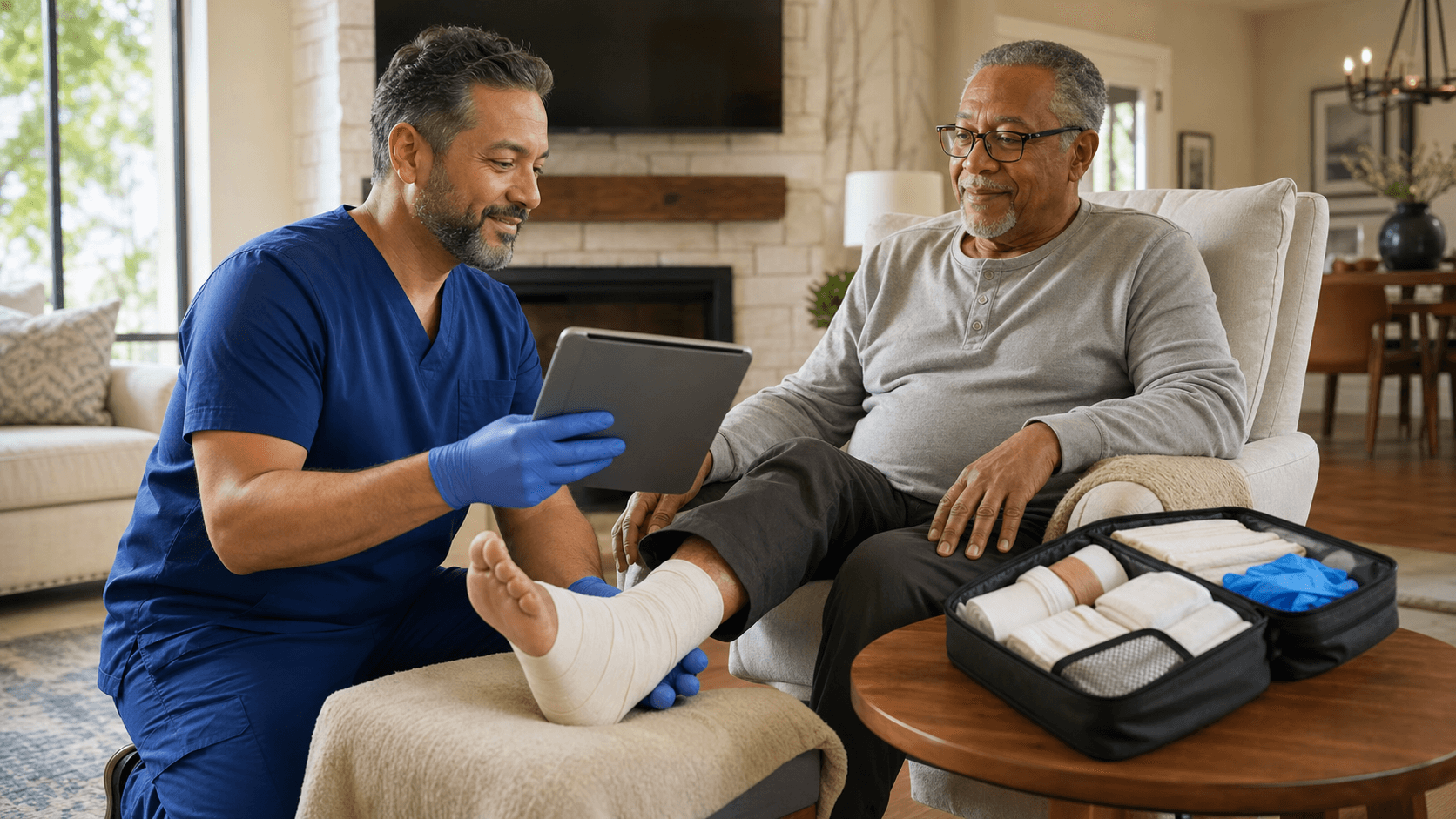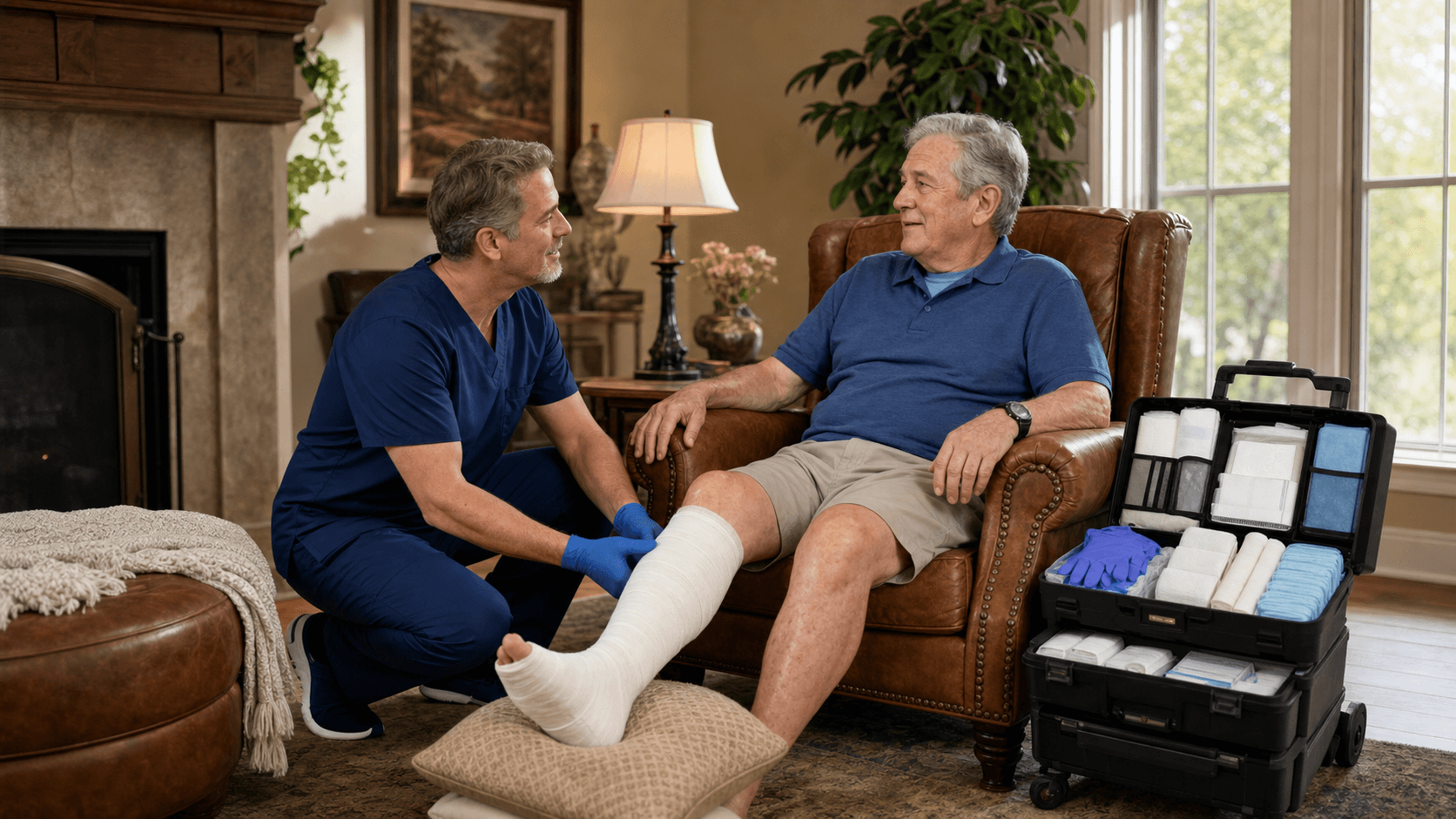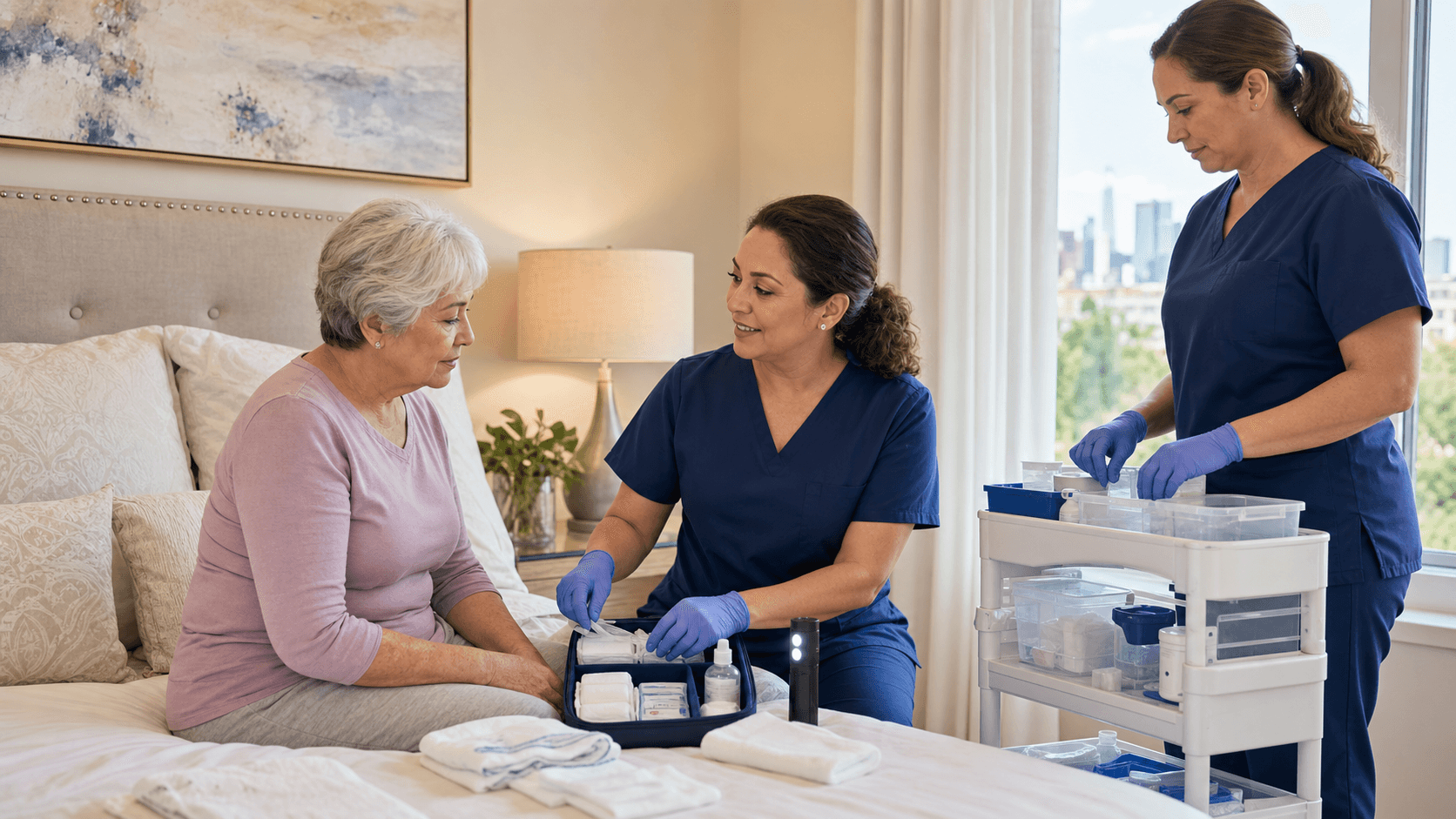
What Bedside Wound Care Really Looks Like Week to Week
If you are living with a hard-to-heal wound, you might be asking a simple question: what will my week actually look like if I choose bedside wound care instead of going to a wound clinic? That is the right question to ask. Your routine, your comfort, and your safety all depend on what happens from week to week, not just on one visit.
Bedside wound care is often helpful for people with diabetes, poor circulation, pressure injuries, venous leg ulcers, post-surgical wounds, or any wound that is slow to heal. Research from groups like the CDC and NIH shows that consistent, protocol-based care lowers the risk of infection and amputation compared to care that is delayed or skipped. In plain English, when a Board-certified wound specialist sees your wound the same week, every week, problems tend to be caught earlier and treated faster. [CDC; NIH]
Think about your current routine. Are you missing clinic visits because of traffic, weather, or pain when you sit in the car? Are you going to the ER when things suddenly get worse? Mobile wound care can replace that chaos with predictable visits at your bedside so you can heal at home.
At Anchor Wound Management, led by Dr. Elrod, Board-certified wound specialist and Captain, US Army (Ret.), we bring that same sense of structure and calm to your weekly care plan. The goal is simple: steady progress with fewer surprises.
Key Takeaways
- Bedside wound care brings a Board-certified wound specialist to you so you can heal at home.
- Same-week, at-your-bedside visits help catch infection earlier and can lower amputation risk.
- Medicare Part B-covered services can reduce ER trips, clinic travel, and stress for you and your family.
- A clear weekly plan makes it easier to stick with treatment and protect your independence.
Who Bedside Wound Care Helps and When to Ask for It
Bedside wound care means advanced mobile wound care that comes to your home, assisted living, skilled nursing, or long-term care setting. Care comes to where you live, instead of making you come to it.
Clinical studies and national health groups report that people with diabetes, peripheral artery disease, chronic vein problems, and limited mobility are more likely to have chronic, nonhealing wounds and higher amputation risk. In plain English, if your blood flow is poor, your nerves are damaged, or it is hard for you to get out, your wounds need extra attention right where you are. [NIH]
Warning signs that it is time to ask for bedside wound care include:
- A wound that is not smaller after 2 to 4 weeks
- New or stronger odor from the wound
- More drainage or a change in color
- New or sudden pain, or pain that feels different
- Black or gray tissue on or around the wound
- Multiple missed clinic visits for any reason
Bedside care is most helpful when you are stable but struggling with healing or access. If you have a high fever, shaking chills, confusion, spreading redness, or sudden severe pain, that may be an emergency that needs the ER or hospital. Some wounds still need surgery, imaging, or hospital-based care, and bedside care can work alongside those teams, not replace them.
Your First Same-Week Bedside Wound Care Visit
When you contact a mobile wound care team, the goal is a same-week visit when it is clinically safe. That first at-your-bedside visit is not just a quick dressing change; it is a full review.
A proper first assessment includes your medical history, wound measurements, photos, blood flow checks, and risk scoring based on standard wound care guidelines. In plain English, the Board-certified wound specialist is building a battle plan for how your wound can heal at home and how to keep you out of the hospital.
Here is what usually happens:
- Before the visit: referral or self-call, basic intake questions, insurance and Medicare Part B-covered checks, and any needed prior authorizations started by our team.
- During the visit: review of your medications, blood sugar patterns if you have diabetes, circulation, pressure points, shoes or devices, and safety in the space where you spend most of your time.
- Wound care: gentle cleansing, debridement if needed to remove dead tissue, picking the right dressing, ordering supplies, and teaching family or caregivers what to watch for between visits.
As Dr. Elrod, Board-certified wound specialist, often says, "Every first visit, I am asking two questions: why is this wound not healing, and what do we need to change today so it can?" This physician mindset keeps each visit focused on real progress and clear next steps.
Mobile wound care and at-your-bedside checks can cut down on long drives and help avoid repeat ER visits. In plain English, the care comes to you, so you can heal at home with fewer disruptions.
What Week-to-Week Bedside Wound Care Really Includes
After that first visit, your care settles into a rhythm. Same-week follow-ups are focused on progress, not just repeating the same steps.
Clinical research shows that wounds that do not shrink by a meaningful amount within the first month of care are less likely to heal without a change in treatment. In plain English, if your wound is not shrinking on schedule, the plan should change quickly, not months later. [Peer-reviewed wound care journals]
A typical week-to-week bedside wound care plan can include:
- Wound reassessment with pictures and measurements
- Infection checks and pain control
- Debridement when needed to clear dead tissue
- Compression for venous disease, offloading for foot ulcers, or new positioning for pressure injuries
- Coaching on blood sugar, protein intake, and how to keep pressure off the wound
When standard care is not enough, advanced therapies can be added. Hyperbaric oxygen therapy can help selected diabetic foot ulcers and other wounds that meet clear medical and coverage rules from groups like Medicare and the NIH. Cellular tissue allografts may be considered after several weeks of standard care if the wound is still not on track. [Medicare.gov; NIH]
Not every person qualifies for these treatments, and insurance rules matter. Our team handles the paperwork and preauthorizations, explains your choices in plain language, and adjusts the plan the same week we see a change. Mobile wound care lets you receive these updates at your bedside instead of bouncing between facilities.
Comparing At-Your-Bedside Care and Clinic Wound Visits
Many people are not sure whether bedside wound care or clinic care is right for them. Each has benefits. What matters is how well the plan fits your life and your safety risks.
Here is a simple comparison:
Aspect
At-your-bedside / mobile wound care
Clinic wound visits
Travel
No car rides, no arranging transport, and less pain from sitting.
Regular trips and time in waiting rooms.
Visit pattern
Predictable same-week visits in your living space.
Schedules may be harder to match with family work and transport.
Who provides care
Plan led by a Board-certified wound specialist at your bedside.
May see different staff members each time.
Infection exposure
Lower exposure to crowded rooms and sick people.
Many patients cared for in one place.
Advanced therapies
Many advanced dressings and cellular tissue allografts coordinated at home; hyperbaric oxygen therapy done at partner centers, with home visits between sessions.
Some advanced therapies delivered on site; still may need separate centers for hyperbaric oxygen.
Family involvement
At-your-bedside visits make it easier for family or caregivers to watch, ask questions, and learn daily care.
Family may not be present or may have less time with the wound team.
Research on chronic disease care shows that missed visits and delayed follow-up are linked with more infections and hospital stays. In plain English, if getting to a clinic makes you skip visits, your wound plan is already at risk. Homebound people, those with frequent falls, those on oxygen or dialysis, or those living in assisted living or skilled nursing are often good candidates for mobile wound care. [NIH]
Insurance, Medicare Part B, and What It Really Covers
Many people worry that bedside wound care will feel like a luxury service that insurance will not support. That is not always the case. For many patients, it is simply a different way to deliver medically needed care.
Public sources like Medicare.gov explain that many wound care services provided in the home or as outpatient care may be covered under Medicare Part B when medical need is documented. In plain English, if you qualify, bedside wound care may be covered in a way that is similar to clinic-based care. [Medicare.gov]
Coverage may include:
- Professional visits by a Board-certified wound specialist
- Wound assessments, debridement, and care planning
- Certain advanced dressings and some advanced therapies when rules are met
If you have Medicare with a Medigap plan, or a Medicare Advantage plan, your coverage rules will be specific to that plan. Many commercial plans follow similar patterns. Co-pays and deductibles can still apply, just like clinic visits.
At Anchor Wound Management, our team checks benefits, requests preauthorizations for things like hyperbaric oxygen or cellular tissue allografts, and explains your choices before treatment changes. Not every service is covered, and sometimes the safest choice is a hospital stay. When that is the case, we say so clearly.
FAQs About Bedside Wound Care in Dallas
Q1: Who is a good candidate for bedside wound care at home or in a facility?
A: People with diabetes, venous leg ulcers, pressure injuries, post-surgical wounds, or any nonhealing wound who also have trouble getting to a clinic are often good candidates. A Board-certified wound specialist can help decide if home-based or facility-based care fits your needs and safety.
Q2: How fast can I get a same-week appointment?
A: Same-week mobile wound care is often possible when your wound is stable and we have enough medical details to plan a safe visit. Timing depends on how urgent your wound is, where you live, and how quickly referral information arrives.
Q3: Is bedside wound care Medicare Part B-covered and covered by my insurance?
A: Many bedside wound care services are Medicare Part B-covered when medical need is documented. Other insurers often follow similar rules. Our office checks your benefits and handles preauthorizations when they are required so you understand what is covered.
Q4: What if my wound suddenly gets worse between visits?
A: New fever, chills, spreading redness, confusion, or severe pain can be signs of a medical emergency that needs ER care right away. Other changes like more drainage or mild odor should prompt a same-week mobile wound care reassessment. Safety always comes first.
Q5: Can you really do advanced treatments like cellular tissue allografts or hyperbaric oxygen if I start with bedside wound care?
A: Many advanced dressings and cellular tissue allografts can be coordinated through bedside wound care when coverage and clinical rules are met. Hyperbaric oxygen therapy takes place in partner centers, while at-your-bedside visits continue between sessions to protect progress.
Q6: Will bedside wound care replace my other doctors?
A: No. Bedside wound care focuses on the wound while working with your primary care provider, vascular and heart doctors, podiatry, endocrinology, and home health teams. The goal is a clear plan that helps you heal at home without losing contact with the rest of your care team.
Ready to Heal at Home?
If you have a hard-to-heal wound and getting to appointments is putting your plan at risk, mobile wound care can bring a Board-certified wound specialist to your bedside. To schedule a same-week assessment when clinically safe, call us at [PHONE NUMBER] or book online at [ONLINE BOOKING LINK]. Our team confirms your insurance, checks Medicare Part B-covered options, and Dr. Elrod's office handles needed preauthorizations so you can focus on healing at home.
Get Personalized Bedside Wound Care Without Leaving Home
If you or a loved one needs expert bedside wound care in Dallas, TX, we bring compassionate, evidence-based treatment directly to you. At Anchor Wound Management, we create tailored care plans that prioritize comfort, healing, and safety in your home or facility. To discuss your situation and schedule a visit, contact us today.