When a Stubborn Wound Becomes a Serious Warning
A scrape, blister, or cut should slowly look better week by week. When it does not, that is a serious warning your body needs extra help. A wound is often called "non-healing" or "chronic" when it is not clearly improving after 2 to 4 weeks, or when it still has not closed by 6 to 8 weeks.
In the Dallas, Fort Worth area, non-healing wounds are a big concern. Many people here live with diabetes, circulation problems, or past injuries. Heat and humidity can lead to more swelling, sweating, and rubbing in shoes, which can all make a wound worse. For some complex wounds, standard care like dressings and basic cleaning are not enough.
That is where hyperbaric oxygen therapy in Dallas can play a role. HBOT is an advanced treatment that can help certain chronic wounds by giving the body much higher levels of oxygen. We use it along with other wound care methods, not instead of them. Below, we walk through warning signs that a wound may need this level of care, and how a local advanced wound clinic evaluates those signs.
Red Flags Your Wound Is No Longer Healing Normally
Non-healing wounds often send clear signals. Paying attention to these changes can help you get help before things get worse.
Ongoing pain and visible changes
Pain should slowly ease with time. When it does not, it can be a sign of trouble, such as infection or poor circulation. Watch for:
- Pain that stays the same or gets worse week after week
- Skin around the wound that looks darker, very pale, or bluish
- Edges of the wound that look rolled under or like a small tunnel
Warm Texas weather can add to irritation. Swelling from heat, sandals rubbing, or longer walks outdoors can make a sore foot or leg wound throb more by the end of the day. If your pain flares whenever you are more active or outside, your wound needs close attention.
Slow or stalled progress
Healthy wounds change over time. They usually get smaller, shallower, and less messy. Red flags include:
- Little or no change in size after 2 to 4 weeks of proper care
- A wound that starts to improve, then reopens again and again
- A scab that stays thick, dry, cracked, or unstable instead of shrinking
If you are following directions for cleaning and covering the wound but the size and depth look almost the same every week, that is not normal healing.
Drainage and odor concerns
It is normal for many wounds to have a small amount of clear or slightly yellow fluid. Problems start when drainage and odor change:
- Increasing drainage, especially if it is yellow, green, or bloody
- New or stronger odor coming from the wound
- Dressings soaking through faster than before, even when changed as directed
These changes often point to bacterial overgrowth or infection. That is the time to step up care, not wait and see.
Signs Infection and Poor Circulation Are Slowing Healing
Some wounds stall because germs are winning the battle. Others stall because blood and oxygen simply cannot get where they need to go. Often, both are happening at the same time.
Classic infection warning signs
Contact a medical professional quickly if you notice:
- Redness spreading away from the wound
- Warmth or swelling that keeps getting worse
- Fever, chills, or feeling sick along with changes in the wound
- Pus, thick drainage, or sudden sharp tenderness around the area
These are classic signs that your body is fighting a stronger infection.
Circulation and oxygen red flags
Poor blood flow is a common reason wounds do not close, especially in the legs and feet. Warning signs include:
- Legs, feet, or toes that feel cold, numb, or tingly
- Wounds on toes, heels, or ankles in people with diabetes or artery disease
- A history of regular smoking or past smoking
- Black, gray, or "dusky" tissue that may be a sign of gangrene
Why these signs matter for HBOT
Infection and poor circulation both limit how much oxygen reaches the wound. That lack of oxygen makes it harder for new tissue to grow and for your immune system to fight germs. Hyperbaric oxygen therapy gives high levels of oxygen under pressure, which can support the body's infection-fighting cells and help other treatments, like antibiotics, work better. When infection or circulation problems seem to be getting worse, it is time to involve an advanced wound care clinic right away.
When Hyperbaric Oxygen Therapy in Dallas Becomes Important
HBOT is not for every scrape or small cut. It is aimed at certain serious or stubborn wound types.
Wound types that may qualify for HBOT
These include wounds such as:
- Diabetic foot ulcers that have not improved with standard care and offloading
- Tissue damage from past radiation treatment in the chest, pelvis, or head and neck
- Chronic bone infections and crush injuries
- High-risk skin grafts and flaps that are at risk of failing
Clinical clues HBOT may be recommended
A wound care specialist may think about HBOT when they see:
- A wound that has been present longer than 30 days with proper care
- Poor oxygen levels in the tissue around the wound
- Limited response to other advanced therapies
- Repeat hospital stays for wound infection or failed healing attempts
Why choosing hyperbaric oxygen therapy in Dallas matters
When HBOT is needed, location matters. Treatment usually involves many sessions each week for several weeks in a row. Getting care close to home in Dallas, Fort Worth can help with:
- Shorter travel times for frequent visits
- Easier follow-up with your primary and specialty providers
- Better long-term plans, since your care team understands your daily routine and climate
Local clinics can also combine HBOT with other services like cellular tissue allografts, debridement, and lymphedema care to build a full plan around your needs. Spring and early summer can be a good time to focus on healing before travel, outdoor plans, and hotter days add more strain.
What to Expect From HBOT at a Dallas, Fort Worth Wound Clinic
HBOT may sound complex, but the experience is usually simple and calm for the patient.
How HBOT works in simple terms
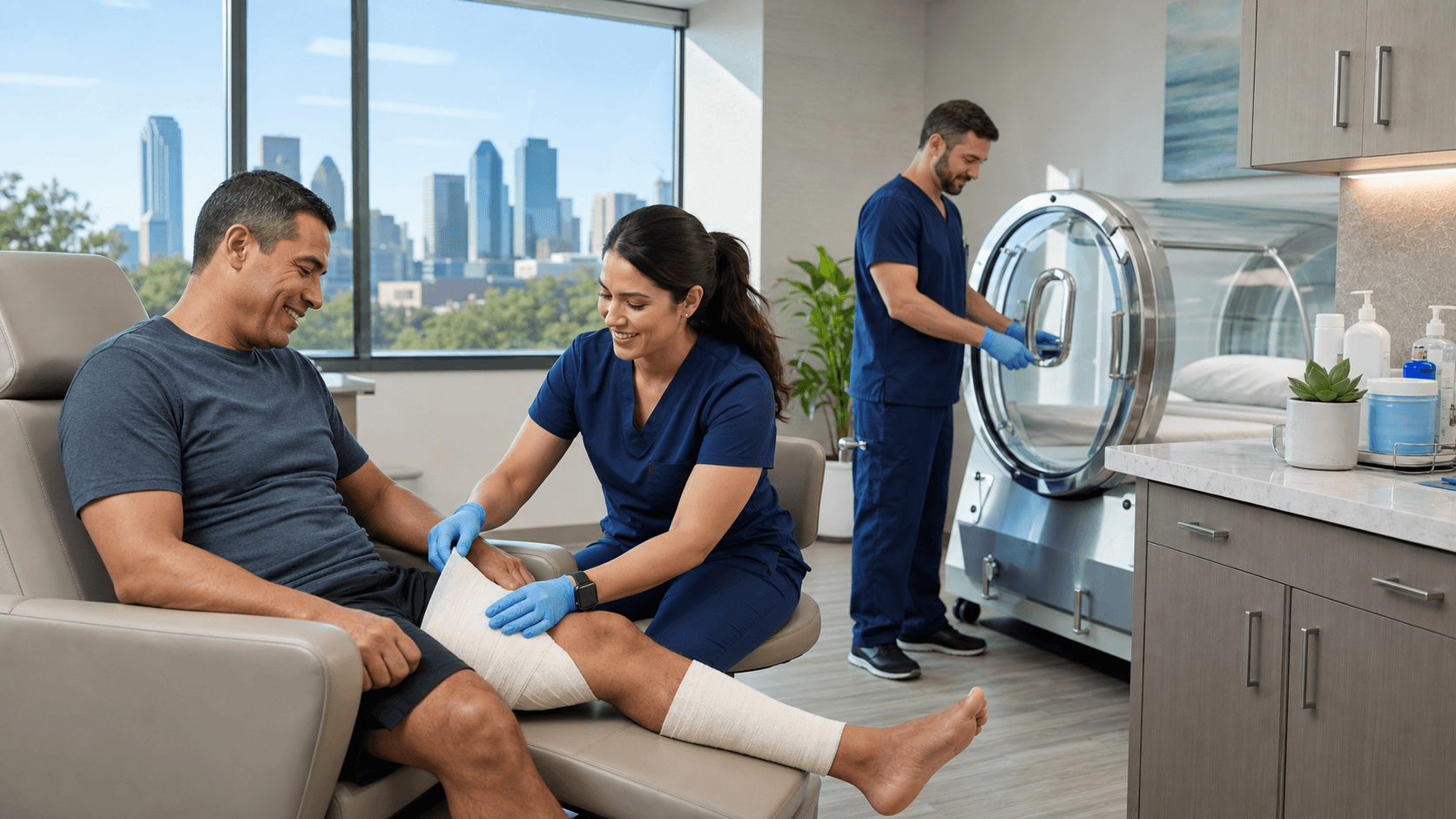
During treatment, you relax in a special chamber while breathing 100 percent oxygen at higher than normal pressure. This helps your blood carry more oxygen to damaged tissues, even in areas with poor circulation. Extra oxygen supports new blood vessel growth, collagen building, and the work of infection-fighting cells.
The HBOT experience in the Dallas, Fort Worth area
A typical HBOT plan may include:
- Multiple sessions per week over several weeks
- Each session lasting long enough for the oxygen to reach deep tissue
- A schedule adjusted to your wound type and overall health
Most people feel a bit of pressure in their ears, similar to being on an airplane or driving up into the hills. Many use the time to rest, nap, or watch TV. During treatment, a trained team watches for any discomfort and checks that each session is going as planned.
Connected, compassionate wound care
At a focused wound clinic, HBOT is just one part of care. The team looks at the whole person, including:
- Blood sugar control and diabetes management
- Circulation and any vascular disease
- Infection risk, current medications, and past surgeries
- Mobility, work and home demands, and daily footwear choices
HBOT is often combined with careful debridement, the right dressings, compression for lymphedema, and other advanced therapies. Education is also a big piece, such as how to protect your wound in warm, humid weather and how to stay active without causing new damage.
Take Action Before a Non-Healing Wound Gets Worse
Non-healing wounds rarely get better with time alone. They usually need more focused care, and sometimes they need advanced options like hyperbaric oxygen therapy in Dallas.
Key warning signs include:
- A wound not improving after several weeks
- Any sign of spreading infection or gangrene
- Wounds linked to diabetes, radiation injury, or poor circulation
- Drainage, odor, color changes, or pain that are getting worse
- Repeated setbacks, or a wound that reopens after minor bumps or activity
Getting evaluated sooner rather than later can lower the risk of serious complications, including amputation. It can also help shorten recovery time and improve your quality of life. As the weather warms and activity picks up, it is especially important to make sure a slow-healing wound is not quietly getting worse. At Anchor Wound Management, we focus on careful assessments, advanced options like HBOT, and personalized plans to help complex wounds finally move in the right direction.
Take the Next Step Toward Better Wound Healing Today
If you or a loved one is struggling with a hard-to-heal wound, our team at Anchor Wound Management is ready to help you explore whether Hyperbaric oxygen therapy in Dallas is the right fit. We take time to understand your medical history, current challenges, and goals so we can recommend a clear, personalized plan. Reach out today through our contact page to schedule a consultation and get straightforward answers about your options.