Telehealth wound care: Can I really be treated from home?
When you are living with a slow-healing wound, a simple question often comes up: What can my wound doctor safely do over video, and when do I need someone at my bedside? It can be hard to know when a concern can wait for a telehealth check-in and when you need hands-on care the same week. That uncertainty can add stress to an already painful situation.
Many people worry about infection, pain, and wounds that just do not seem to close. Others have trouble with transportation or feel scared of "bothering" the doctor. Telehealth can take some of that weight off, especially when it is paired with mobile wound care at your bedside and clinic visits when needed. Our team in the Dallas, Fort Worth area uses all three tools so patients can heal at home when it is safe to do so.
Key takeaways
- Many wound check-ins, medication adjustments, and dressing reviews can be handled safely through telehealth.
- In-person, same-week care is usually required for signs of severe infection, poor blood flow, or wounds that suddenly worsen.
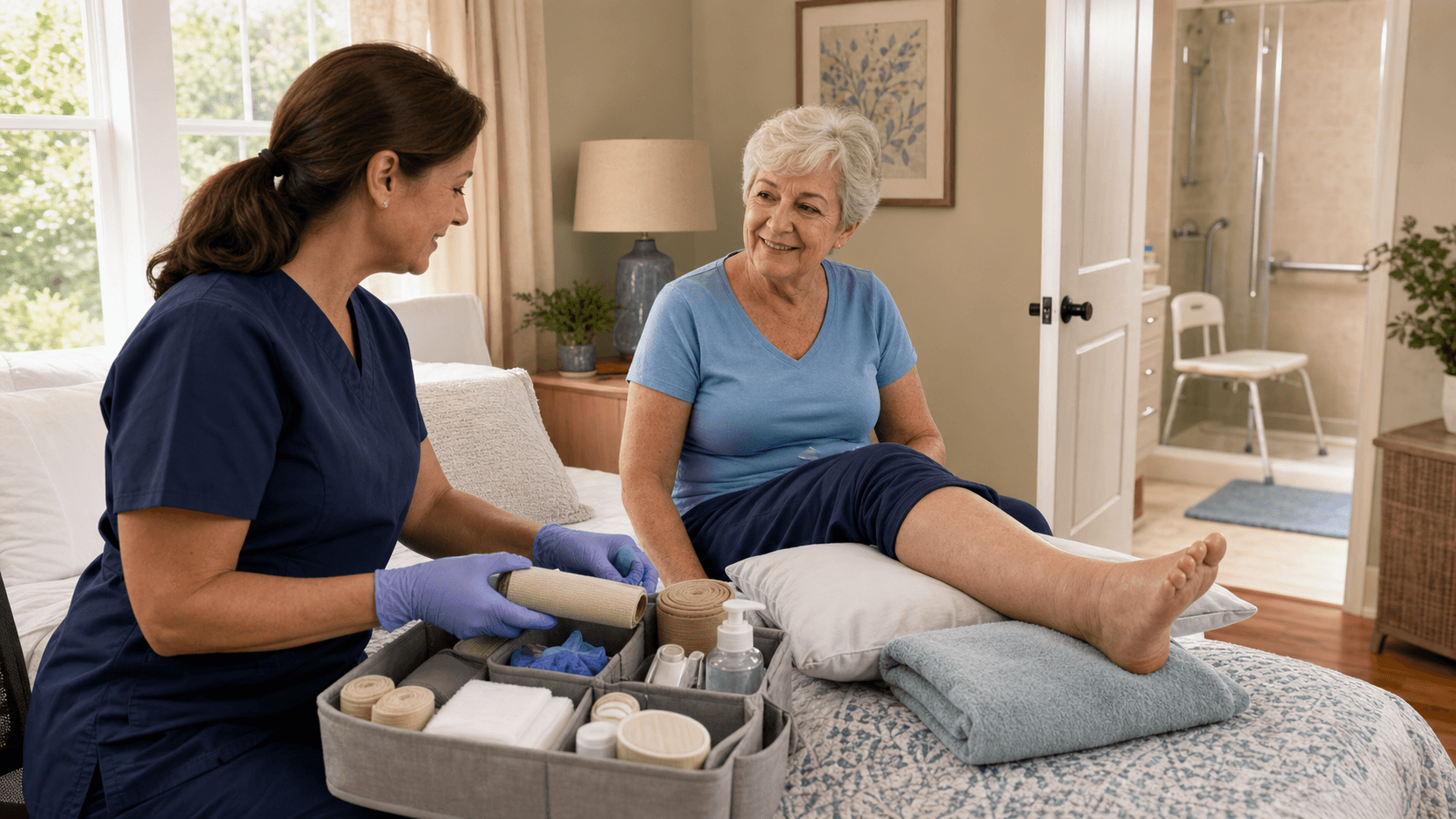
- Mobile wound care can bring a board-certified wound specialist to your bedside in Dallas, Fort Worth, so you can often avoid the ER.
- Remote wound care services work best when they are coordinated with your primary care, home health, hospice, or senior living team.
- Medicare Part B often covers both telehealth visits and medically necessary in-person wound care when criteria are met, as outlined on Medicare.gov.
What can telehealth wound care safely handle?
Telehealth works well for many stable wounds that are already under care. This can include diabetic foot ulcers, pressure injuries, venous leg ulcers, and post-surgical wounds that are healing on track. Once a wound has been examined in person, many of the follow-up visits can happen through remote wound care services.
A typical telehealth visit often includes:
- Secure video visit with a board-certified wound specialist
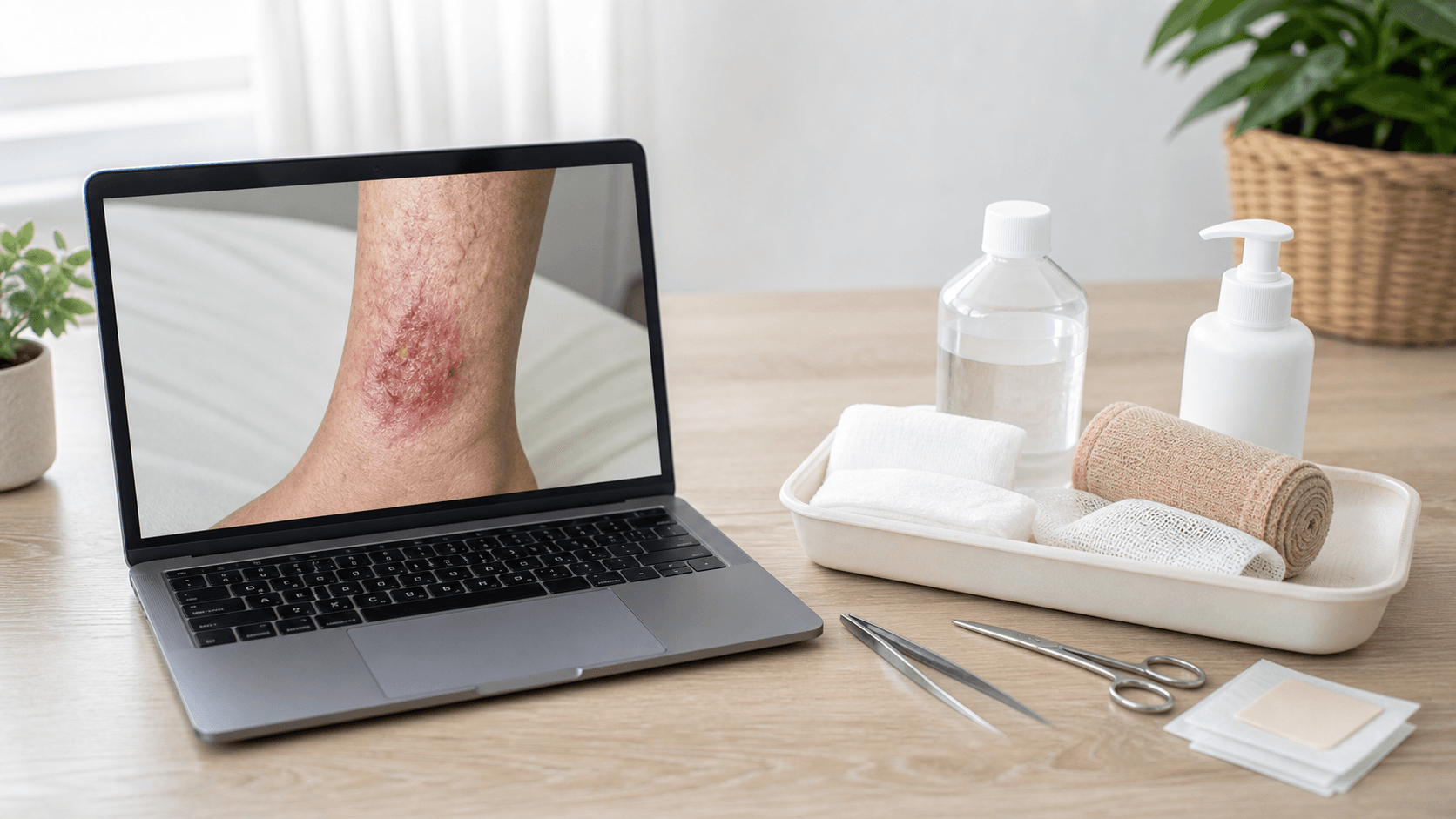
- Guided upload or live review of clear wound photos
- Review of blood sugar logs, medications, and symptoms
- Step-by-step coaching for dressing changes with a caregiver
During these visits, we can usually adjust:
- Topical treatments, such as ointments and dressings already in use
- Offloading plans, like how you rest a foot wound or pressure injury
- Compression strategies when compression has already been prescribed
- Pain management within the limits of your current treatment plan
- Orders for labs, imaging, or vascular testing when needed
On video, we can often see early warning signs like mild redness, drainage changes, or skin starting to break down. In plain language, this means we may spot trouble before it becomes an emergency, which can help you avoid a hospital stay. Telehealth works best when a caregiver, home health nurse, or senior living staff member is at your bedside to help with measurements and dressing changes.
When is an in-person wound visit not optional?
Some symptoms need a hands-on exam the same week or sooner. According to guidance from sources like the CDC and NIH, signs of serious infection should not wait. These include:
- Spreading redness or streaks around the wound
- Strong or foul odor from the wound
- Fever, chills, or feeling suddenly ill
- Sudden increase in pain or swelling
- Black or gray tissue in or near the wound
- New blisters, fluid-filled areas, or fast-growing discoloration
These problems require physical exams, pulse checks, and sometimes bedside procedures such as sharp debridement, advanced dressings, or biopsies. Those cannot be done over video and call for mobile wound care at your bedside or a clinic visit near you. Delaying hands-on care can raise the risk of hospitalization or even amputation, especially for diabetic foot ulcers and infected pressure injuries, as described in published limb salvage and diabetic foot outcome studies.
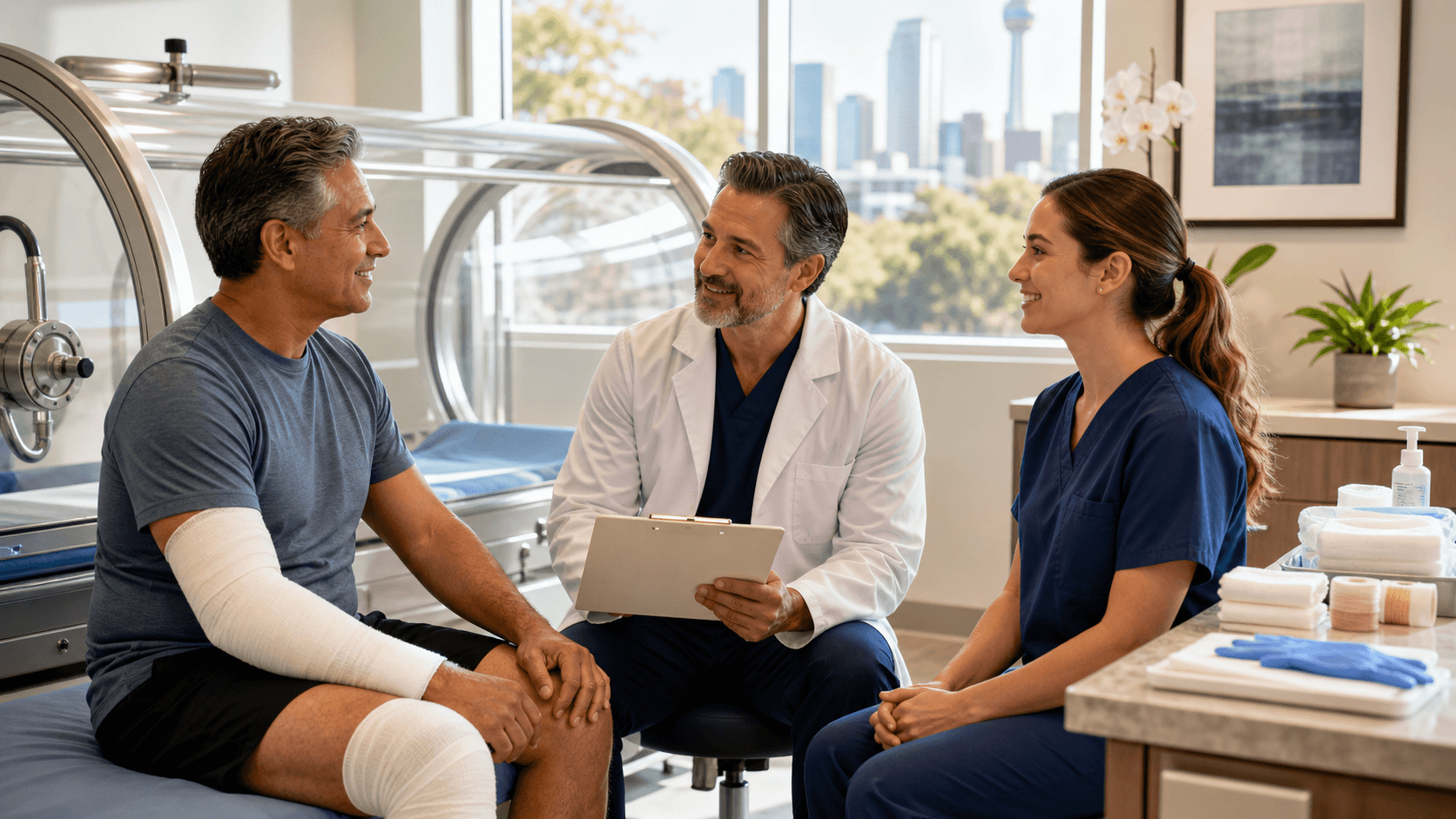
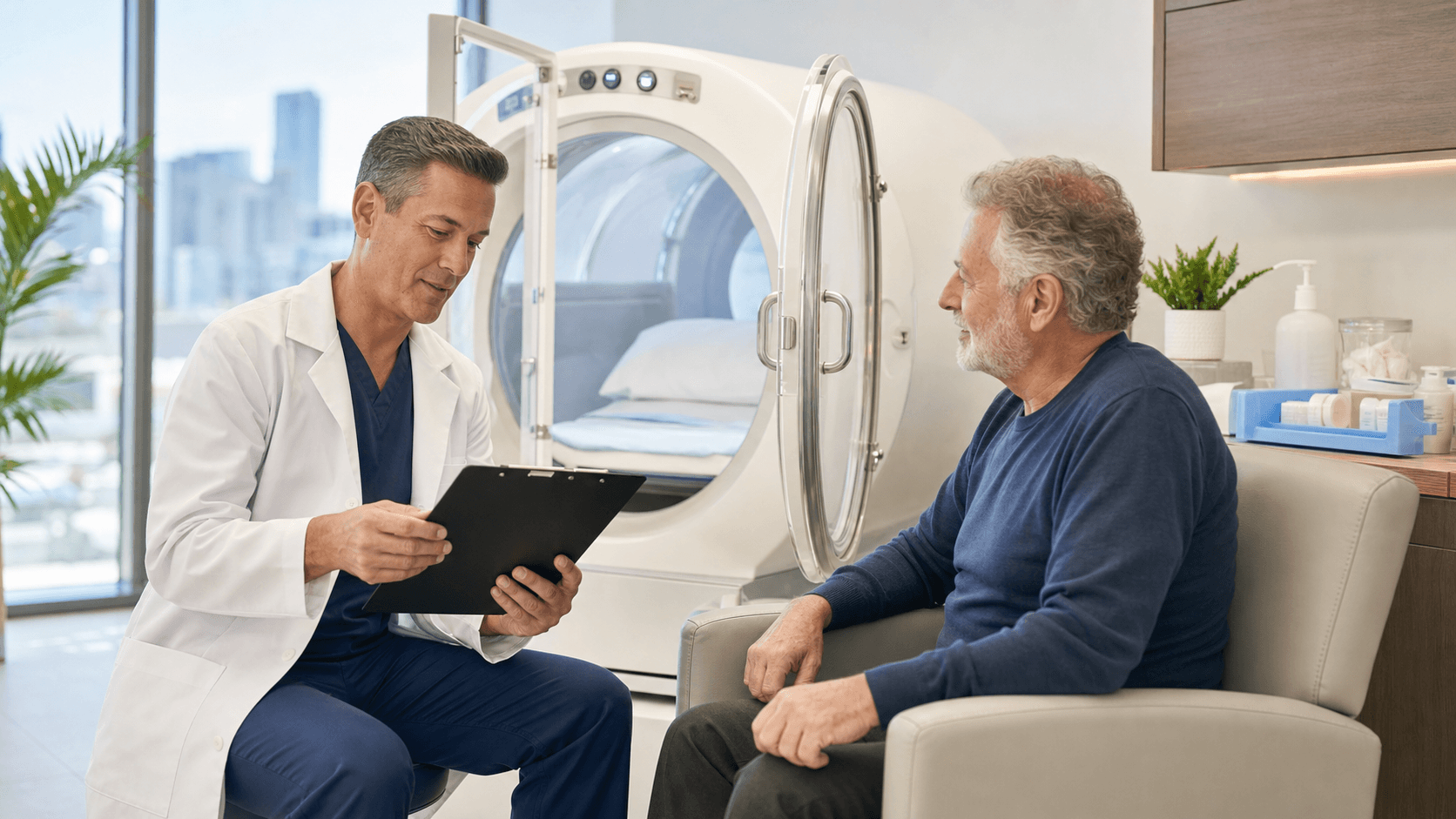
Our approach is to bring same-week in-person care across much of the Dallas, Fort Worth area whenever we see these red flags. Some patients also qualify for hyperbaric oxygen treatment in the clinic based on national guidelines, with telehealth used for certain follow-up checks between sessions.
How does telehealth compare with in-person wound visits?
| Wound care need | Telehealth appropriate | In-person required | Hybrid (telehealth + in-person) |
|----------------------------------------------------------|------------------------|-------------------|-------------------------------------------|
| Initial evaluation for a stable chronic wound | Sometimes | Often | Yes (telehealth after in-person) |
| Sudden worsening or new severe pain | No | Yes | No |
| Routine photo review and dressing change coaching | Yes | No | Sometimes |
| Sharp debridement or advanced grafts | No | Yes | No |
| Reviewing blood sugar, medications, and offloading plan | Yes | No | Yes |
| Assessing blood flow and pulses | No | Yes | No |
| Coordinating with senior living, hospice, or home health | Yes | Yes | Yes |
Clinically, this table shows which situations truly need hands-on care. In plain English, it explains when a video visit is enough and when we need to see you at your bedside or in clinic. When in doubt, call so we can triage and get you the safest option the same week.
How do remote wound care services work day to day?
Most people start with a referral from a doctor, home health agency, or senior living community, or by contacting our office directly. From there, our team checks insurance, including Medicare Part B coverage, and helps decide whether a first telehealth visit or a mobile bedside visit makes the most sense. Follow-ups are then planned as a mix of video, in-person mobile wound care, and clinic visits based on how the wound is behaving.
On the tech side, you usually need a smartphone, tablet, or computer with a camera. Clear photos are important. We may coach you or your caregiver on:
- How close to hold the camera
- How to include a ruler or tape measure in the picture
- How to use good lighting to show the wound clearly
In senior living or hospice settings, staff can often help set up the visit and hold the device. That way, we can give real-time direction while they perform dressing changes at your bedside.
Coordination is a key part of safe remote wound care services. We work with primary care doctors, podiatrists, home health agencies, hospice teams, and senior living nurses so that dressings, medications, and activity orders line up with what is happening at your bedside. The same board-certified wound specialist can see you in all three settings, which helps keep the plan steady instead of changing from visit to visit.
For veterans, older adults, and anyone with limited mobility, this approach can make it easier to heal at home while reducing strain on caregivers who might otherwise be driving across town multiple times each week.
Who is a good candidate for telehealth wound visits?
Not every wound is safe for telehealth, but many are good candidates as long as we already know the wound in person. Telehealth visits in Dallas, Fort Worth can work well for:
- Stable chronic wounds under regular care
- Pressure injuries in senior living that are not rapidly worsening
- Post-surgical wounds that are healing as expected
- People who have trouble getting to a clinic
Basic safety criteria usually include a recent in-person exam by a wound clinician, no current signs of severe infection, and a reliable caregiver or nurse who can perform dressing changes as directed.
People with diabetes, peripheral artery disease, or a past amputation can often still use telehealth frequently, but they need periodic in-person exams and vascular checks based on standard clinical practice. Dr. Brandon Elrod, DO, FAPWCA, a board-certified wound specialist and Captain, US Army (Ret.), often uses mid-week telehealth check-ins between bedside or clinic visits to keep patients on track.
As Dr. Elrod reminds patients, "Telehealth is a tool, not a replacement for hands-on wound care when you need it. The goal is to catch problems early, fine-tune treatment, and reduce hospital stays while using mobile wound care and clinic visits whenever hands-on care is needed so you can heal at home when it is safe."
How does insurance and Medicare Part B coverage work?
Many patients want to know if remote wound care services are covered. In general, Medicare Part B may cover telehealth wound care visits and in-person services when they are medically necessary and meet visit type rules described on Medicare.gov. The exact coverage can depend on your specific situation and the type of service provided.
Many commercial insurance plans also cover telehealth and in-person wound care, but details differ. Some wound supplies, compression wraps, or advanced dressings may be billed under different benefits such as durable medical equipment. There can be copays and deductibles, and it is wise to ask clear questions when you schedule.
Our team works to handle prior authorizations and documentation so you and your caregivers can focus more on healing. When appropriate, we confirm Medicare Part B coverage and other insurance details before your same-week visit.
FAQ: Telehealth and mobile wound care in Dallas, Fort Worth
Can My Wound Really Be Evaluated Safely Over Video?
In many cases, yes. With clear photos, good lighting, and accurate measurements, we can see a lot about your wound size, color, and drainage. Serious symptoms like spreading redness, fever, or black tissue still require in-person care at your bedside or in clinic.
Do I Need a Bedside Mobile Visit Instead of Telehealth?
You may need a bedside visit if you have fever, rapidly spreading redness, intense new pain, black or gray tissue, or if you or your caregiver cannot safely perform dressing changes at home. In those cases, same-week hands-on care is usually safer than waiting for a telehealth review.
Are Remote Wound Care Services Covered by Medicare Part B?
Medicare Part B may cover many telehealth and in-person wound care visits if they are medically necessary and meet program rules. For details, Medicare.gov is the best source, and our staff can help you understand how those rules apply to your situation before you schedule.
What If I Live in Senior Living or Receive Hospice Care?
We often coordinate closely with facility nurses and hospice teams. The focus may be on comfort, safety, and realistic wound goals, and telehealth lets us support the team at your bedside while still providing mobile wound care and clinic visits when appropriate.
Will Telehealth Replace My in-Person Wound Doctor Visits?
No. Telehealth is an extra tool. Most patients do best with a mix of telehealth, mobile bedside care, and clinic visits, adjusted as the wound improves or changes.
What If I Am Not Good with Technology?
You do not need to be. A family member, caregiver, or facility staff member can help with the device, photos, and logging in. Our staff can walk you through simple steps so technology does not stand between you and safer wound healing at home.
Take the next step
If you have a hard-to-heal wound and are wondering whether a telehealth visit, mobile wound care at your bedside, or an in-clinic visit is safest, call us at ()‑X or book online at [yourclinicwebsite.com]. We will review your wound, your insurance (including Medicare Part B when applicable), and handle needed pre-authorizations so you can focus on healing at home whenever it is clinically safe.
Get Personalized Remote Wound Care Support Today
If you or someone you care for needs expert wound care without leaving home, we are ready to help. Explore our remote wound care services to see how Anchor Wound Management can support safer healing and reduce unnecessary clinic visits. We work closely with patients, families, and on-site staff to create clear, practical care plans. To schedule a consultation or ask questions, please contact us.