Heal at Home in Dallas Without Losing Time or Toes
Many patients with hard-to-heal wounds ask, "Can I get the same level of wound care at my bedside as I do in a clinic?" For many people in Dallas, the answer is yes, and in some cases bedside care can actually be safer and more practical. Mobile wound care brings a board-certified wound specialist to you, often in the same week, so you can heal at home when it is medically safe.
Mobile wound care in Dallas means clinic-level wound assessment, treatment, and follow-up in your home or facility. It can be especially helpful if you have trouble walking, use oxygen, live with diabetes or circulation problems, or face a high risk of infection or amputation. Many patients are tired of long waits, hard car transfers, and the fear that one more hospital stay will lead to more problems.
We built our Dallas, Fort Worth mobile and clinic wound service around that reality. Our goal is simple: help you heal at home when possible, lower your risk of preventable amputation or hospitalization, and work within Medicare Part B covered options whenever we can.
Key Takeaways
- Mobile wound care in Dallas can bring advanced treatment to your bedside, often in the same week.
- For many people with diabetes, poor circulation, or limited mobility, bedside visits lower the chance of complications and ER trips.
- Medicare Part B covered home-based wound visits are often available when they are medically needed, and our team helps with pre-authorization.
- Early use of advanced treatments, including hyperbaric oxygen therapy for certain wounds, can help support healing and reduce amputation risk.
- Not every wound is safe to treat at home, and a board-certified wound specialist should be honest when hospital care is the safer choice.
What Is Mobile Wound Care and How Does It Work?
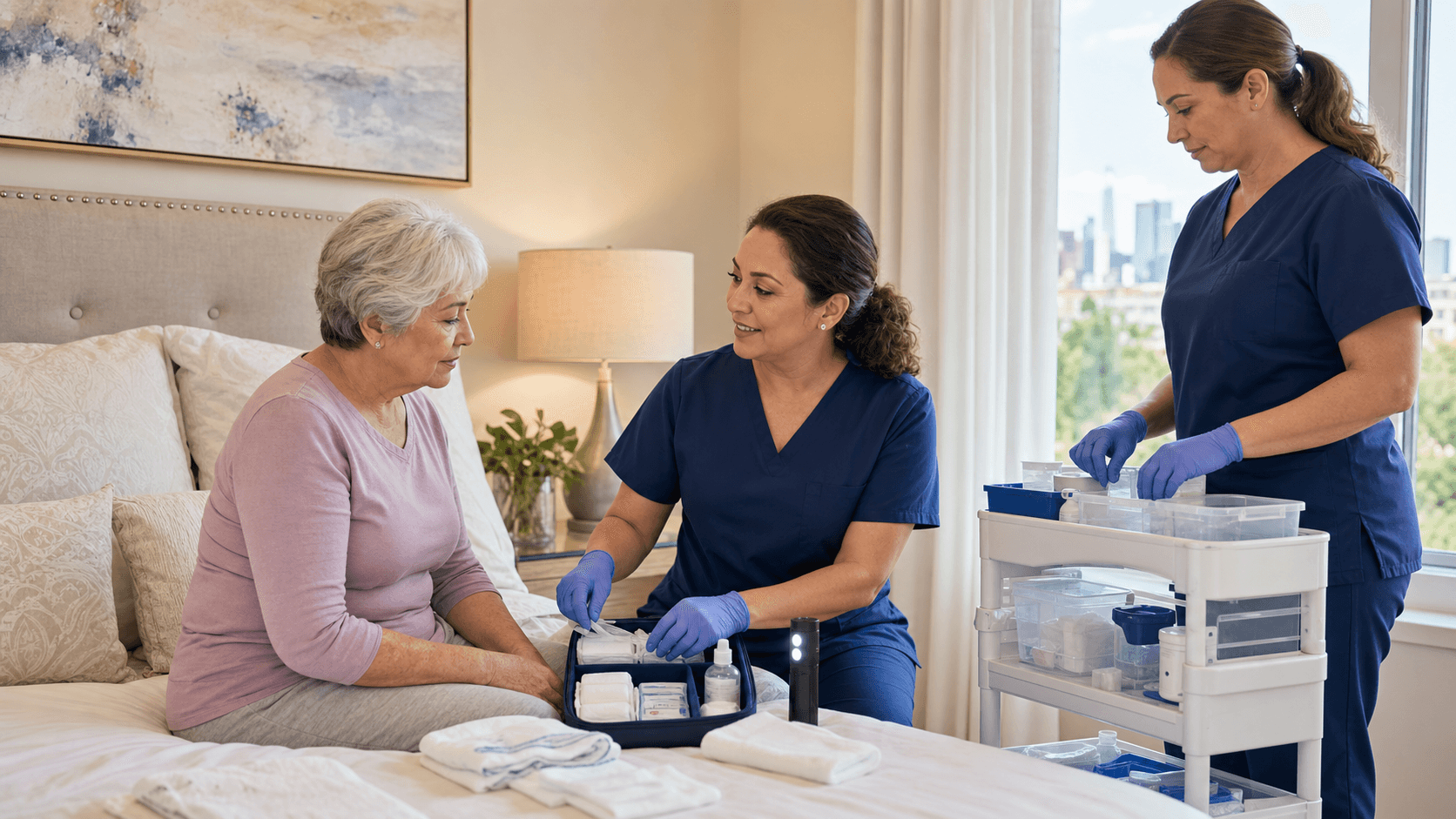
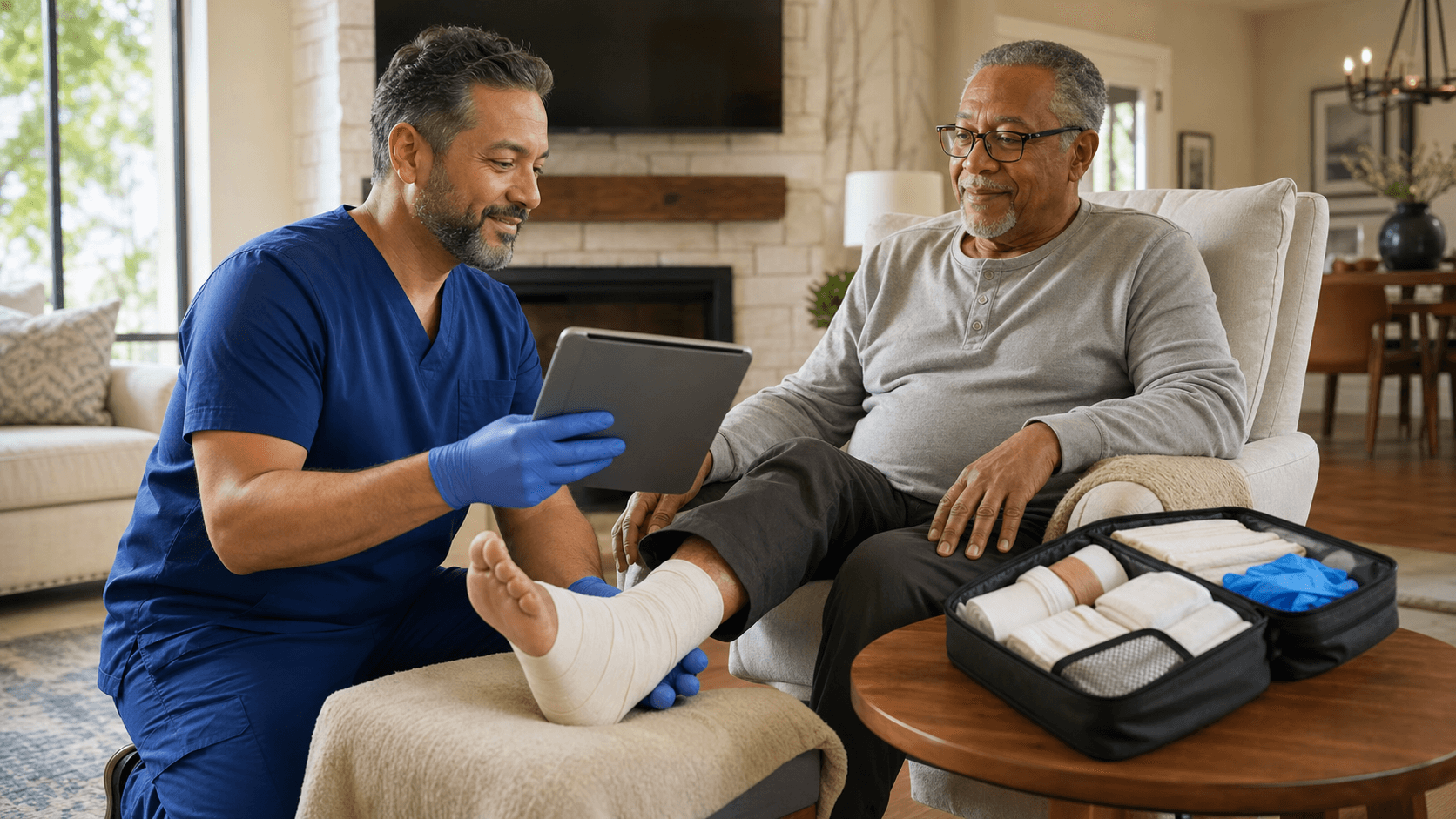
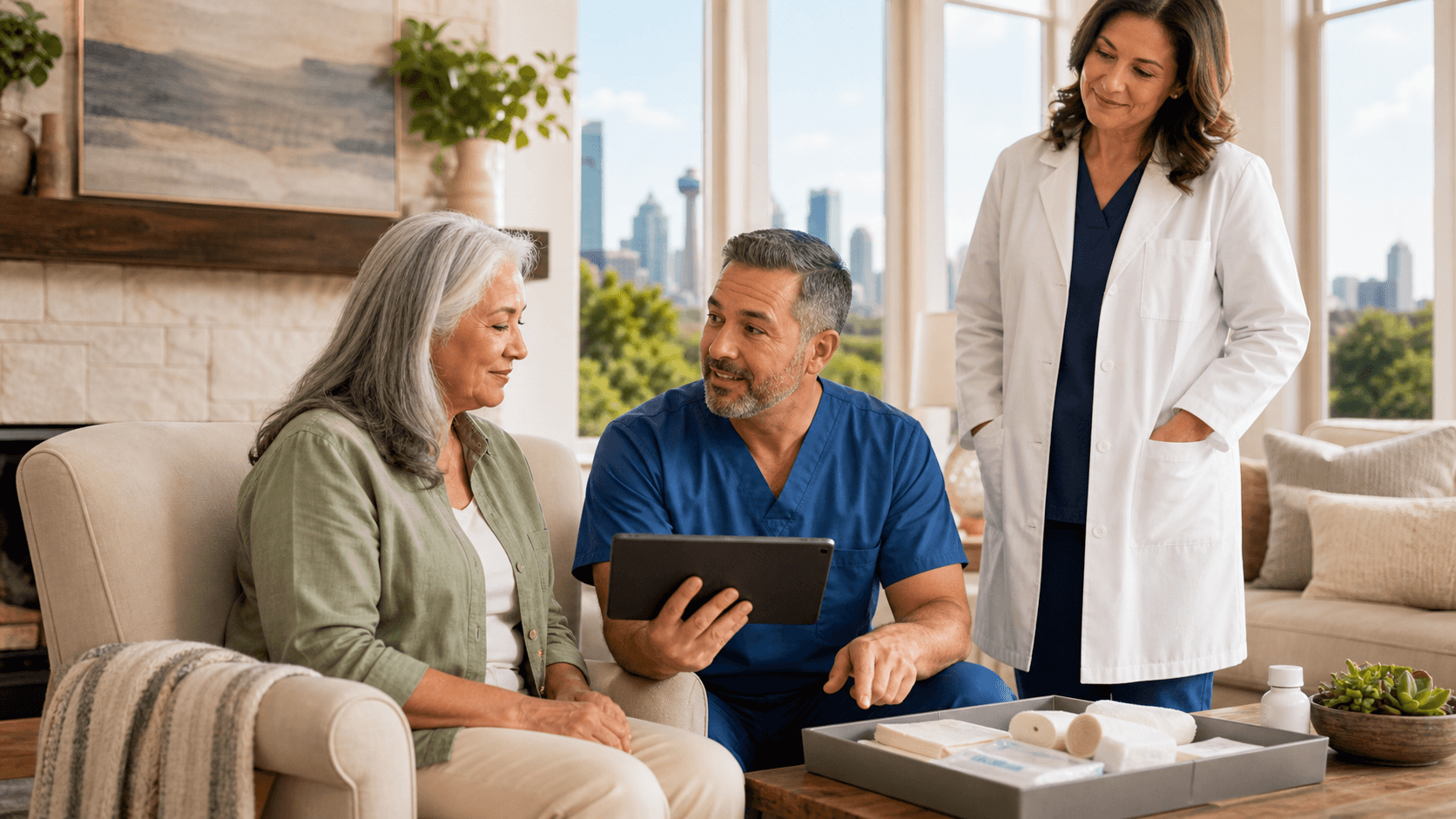
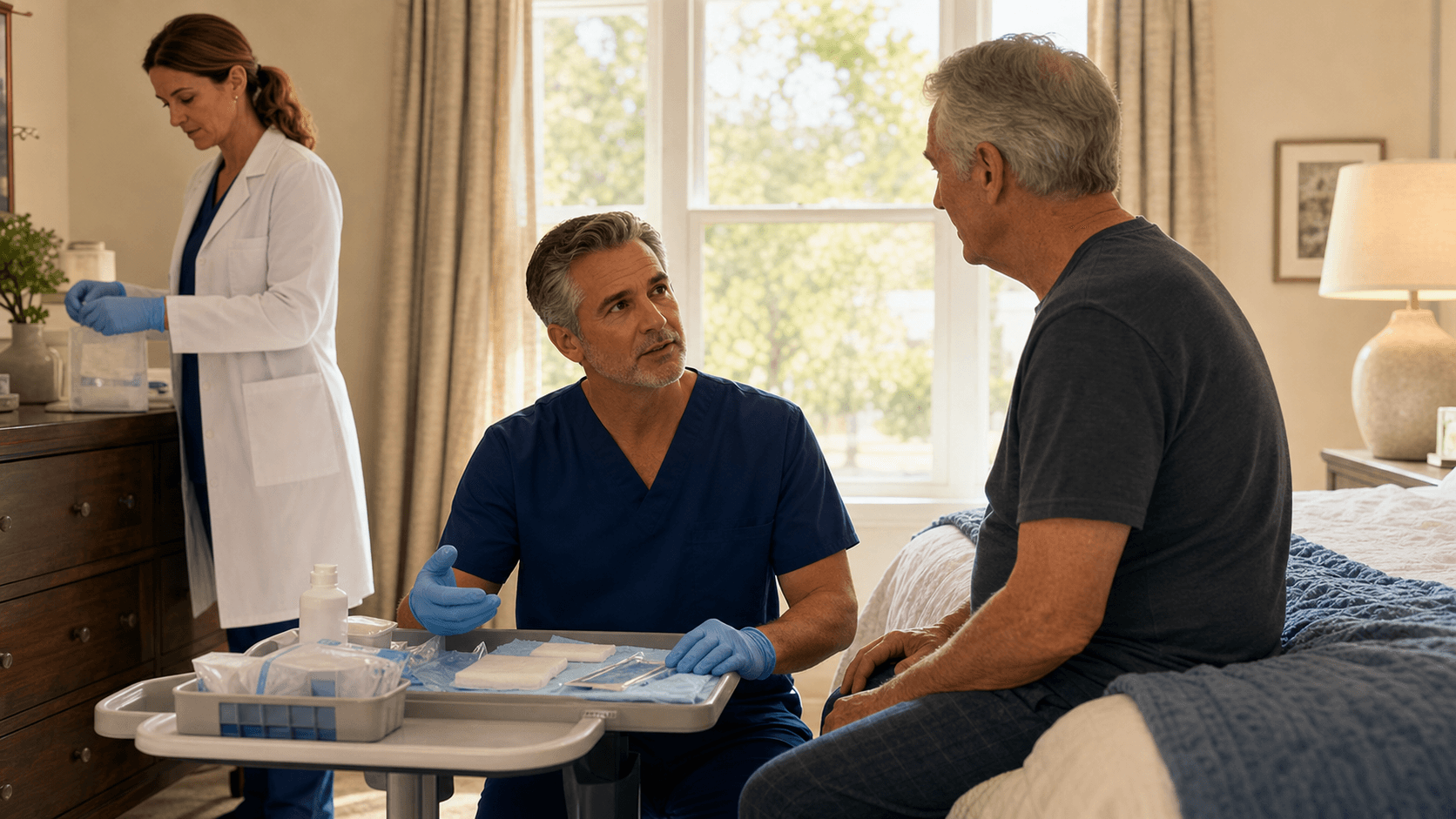
Mobile wound care is the same type of focused wound care you expect in a clinic, brought directly to where you live. A board-certified wound specialist comes to your home, assisted living, or skilled nursing facility and performs a full wound visit at your bedside.
People who often benefit include those with:
- Diabetic foot ulcers
- Venous leg ulcers or "leaky vein" wounds
- Pressure injuries from sitting or lying in one position
- Post-surgical wounds that are slow to heal
- Radiation injuries and other chronic nonhealing wounds
A typical bedside visit near you can include reviewing your medical history, checking blood flow and infection signs, cleaning and debriding dead tissue when needed, changing dressings, adjusting medicines, and laying out a clear follow-up plan. Mobile wound care in Dallas is not less care; it is the same level of clinical thinking, just delivered in a place that may be safer and less stressful for you.
Chronic wounds affect a significant share of adults in the United States, and rates go up with age according to the National Institutes of Health (NIH). Plain-English translation: you are not the only one dealing with a stubborn wound. If you are unsure where to start, ask your current doctor about mobile wound care and whether home visits fit your situation.
When Do Bedside Visits Outperform Clinic Wound Care?
For high-risk patients, every car ride is a big event. Getting from bed to chair to car can raise the chance of a fall, cause pain, and make it easier to cancel or miss visits. Bedside care takes that barrier away, which means you are more likely to keep every appointment.
Studies in wound care show that steady, week-by-week or twice-weekly treatment is linked to better healing and fewer infections (NIH, peer-reviewed wound care journals). Translation: if you can stick with the plan, your wound usually has a better chance to close. Mobile wound care helps by coming to you so a bad day with pain or fatigue does not turn into a missed visit.
Early bedside checks can also lower the chance of ER trips. When a wound doctor sees you up close, they can often spot early infection or blood flow problems before they turn into an emergency. This kind of early warning can lead to timely antibiotics, dressing changes, or referrals to a vascular or surgical team.
Mobile visits can also ease the load on family and caregivers. They may not need to arrange transport, lift a wheelchair into a car, or miss work for each clinic visit. That extra breathing room can make it easier to keep your home wound care routine on track.
There are limits. Some warning signs should send you straight to the ER or urgent care, such as rapidly spreading redness, high fever, strong odor, sudden severe pain, or signs of sepsis. In those moments, mobile wound care is not a replacement for emergency services; a good wound provider will use bedside visits to spot danger early and send you to higher care quickly when needed.
How Does Mobile Wound Care Compare to Clinic Visits?
Mobile wound care in Dallas is not in a contest with clinic care. Think of it like choosing the right tool for the right job. Some people do best with regular clinic visits, while others are safer and more consistent with care right at the bedside.
Here is a simple comparison to help you think through what fits you:
| Question | Mobile wound care (at your bedside) | Clinic wound care (in-office) |
|----------------------------------|-------------------------------------------------------------------------|------------------------------------------------------------------------|
| How fast can I be seen? | Often same week, at your bedside, with no travel or check-in line. | May have longer wait times and always requires transportation. |
| How comfortable is the visit? | Care happens where you live, helpful if you have pain or oxygen needs. | Works well if you can walk or transfer safely and like an office. |
| How is my home setup factored in? | Provider sees your home, dressings, and support in real time. | Provider relies on your description of home routines and supplies. |
| What procedures are possible? | Sharp debridement, advanced dressings, wound VAC, infection checks. | Similar services plus some on-site imaging or minor procedures. |
| When is hospital safer? | Refers you quickly for surgery, IV antibiotics, or vascular care. | Also refers quickly when clinic care is not enough. |
If getting to appointments is hard, your wounds are chronic, or you have started missing visits, that is a sign to ask whether mobile wound care in Dallas might be safer. A board-certified wound specialist can help you weigh the pros and cons for your body, your home, and your risks.
How Do Insurance, Medicare Part B, and Advanced Therapies Fit In?
Many patients worry that home-based care means more insurance confusion. Under Medicare Part B, medically necessary visits by a qualified provider for wound care are often Medicare Part B covered, with usual deductibles and coinsurance, according to Medicare.gov. That can include professional services at home when your medical condition makes it reasonable to be seen at your bedside.
It is also common to mix services. Home health agencies may help with routine dressing changes and support, while a physician-led mobile wound care team manages higher-level decisions and procedures. These are different roles, and they can work side by side.
In the Dallas, Fort Worth area, many major health plans will consider bedside wound visits when ordered the right way. Pre-authorization and detailed notes are often needed, which can slow things down if you try to handle it alone. Our team, led by Dr. Brandon Elrod, DO, FAPWCA, Captain, US Army (Ret.), takes on that documentation and pre-auth work so you do not stay stuck over paperwork while your wound waits.
Delays in wound care because of insurance questions can stretch out healing and raise the chance of problems. Translation: it pays to clear up coverage early so you can start or continue care without long gaps.
Mobile wound care also connects directly to advanced therapies. At your bedside, we may use:
- Different types of debridement to remove dead tissue
- Advanced dressings aimed at moisture balance and protection
- Growth factor or cellular products when medically appropriate
- Negative pressure therapy (wound VAC) for certain deep or draining wounds
Hyperbaric oxygen therapy, or HBOT, is another option for some people. During HBOT, you breathe pure oxygen in a pressurized chamber; research by the Undersea and Hyperbaric Medical Society and NIH has shown benefits for certain diabetic foot ulcers, radiation injuries, and compromised skin grafts (UHMS.org, NIH.gov). It is not needed or helpful for every wound, and it must be used under clear medical guidelines.
At Anchor Wound Management, we combine mobile wound care at your bedside with clinic-based hyperbaric oxygen therapy when it is appropriate. That way the same wound team can see how you live at home, manage your dressings, and guide you through advanced treatments.
As Dr. Brandon Elrod, DO, FAPWCA, puts it, "Our mission is simple: treat what we safely can at your bedside, and move fast to higher levels of care when your limb or life is at risk."
How Do I Know if Mobile Wound Care Is the Right Next Step?
Here is a quick checklist to help you decide if it is time to ask about mobile wound care in Dallas, Fort Worth:
- Your wound has not improved in 2 to 4 weeks even with regular dressing changes.
- Getting to clinic visits is painful, difficult, or often leads to missed appointments.
- You live with diabetes, poor circulation, or have a history of past amputation.
- You are in the Dallas, Fort Worth area and would like to heal at home when it is safe to do so.
Some signs should never wait for a routine bedside visit. If you notice fast-spreading redness, warmth, strong odor, new or high fever, sudden increase in pain, or black or gray tissue, you may need emergency care right away. Those can be signs that the wound or infection is threatening the limb or your overall health.
Asking "Is mobile wound care an option?" is not a promise to change everything. It is simply a conversation about safety, your goals, and realistic outcomes. The right plan might mix bedside care, clinic visits, and, when necessary, hospital or surgical treatment.
Frequently Asked Questions About Mobile Wound Care in Dallas
Q: What Types of Wounds Can Be Treated at My Bedside?
A: Common wounds include diabetic foot ulcers, venous leg ulcers, pressure injuries, post-surgical wounds, traumatic wounds, and some radiation-related wounds. If there is a rapidly spreading infection, suspected bone infection with system-wide symptoms, or critical loss of blood flow, hospital or surgical care may be needed instead of bedside care.
Q: Is Mobile Wound Care Medicare Part B Covered?
A: For many patients, yes. Medicare Part B often covers medically necessary visits by a qualified provider for wound care, which can include home visits when your condition makes that reasonable, as described by Medicare.gov. There may be limits, deductibles, and coinsurance, so our team helps check your benefits and supports the required documentation.
Q: How Soon Can I Be Seen for Mobile Wound Care in Dallas?
A: Many patients can be seen in the same week, based on referral, location, and how urgent the wound is. If you have new severe pain, fever, or fast-spreading redness, that is an emergency concern and should be seen right away in an ER or urgent care, not held for a routine visit.
Q: What Should I Expect During the First Bedside Wound Visit?
A: Expect a review of your full medical history and medicines, detailed wound measurements and photos, checks for blood flow and infection, and an initial treatment that may include debridement and dressing changes. You will end that first visit with a clear written plan, supply list, and follow-up schedule so you know what will happen next.
Q: Do I Still Need My Primary Care Doctor or Other Specialists?
A: Yes. Mobile wound care works alongside your primary care doctor, endocrinologist, vascular surgeon, podiatrist, and others. Sharing visit notes and wound photos with your broader care team helps keep everyone on the same page and supports better long-term results.
Q: Can Mobile Wound Care Help Prevent Amputation or Hospitalization?
A: Early, consistent care for wounds, especially diabetic foot ulcers, is linked in medical studies to lower risks of severe infection, sepsis, and amputation (CDC.gov, NIH.gov). No ethical provider can promise to prevent every amputation, but coordinated care at your bedside and in clinic can improve your chances of healing at home and catching problems before they turn into emergencies.
How to Schedule Mobile Wound Care
To find out if mobile wound care at your bedside is appropriate for your wound, contact Anchor Wound Management. Call us at [PHONE NUMBER] or book online at [ONLINE BOOKING LINK]; our team will verify your insurance, explain Medicare Part B covered options when available, and Dr. Elrod's team will handle needed pre-authorizations so you can focus on healing instead of paperwork.
Get Personalized Mobile Wound Care That Comes To You
If you or a loved one needs expert care without leaving home, our team at Anchor Wound Management is ready to help. Learn how our mobile wound care in Dallas can support faster healing, reduce complications, and fit your schedule. We partner closely with patients, families, and providers to create practical, evidence-based care plans at the bedside. To schedule a visit or ask questions, please contact us today.