Heal at Home: What Mobile Wound Care Can Really Do
A common question we hear is simple: "Can I get my wound treated at home, or do I still have to go into a clinic every week?" For many people, travel is painful and stressful. Using a wheelchair or oxygen, getting time off work, or arranging a ride can turn a short visit into an all-day event.
Mobile wound care in Dallas brings a Board-certified wound specialist or advanced practice clinician to your home, assisted living community, or facility. Many services can be safely done at your bedside, often covered by Medicare Part B when medically necessary. The goal is clear: help you heal at home, lower infection risk, prevent amputations when possible, and reduce ER visits and hospital stays.
Key Takeaways
Many services like assessment, debridement, dressings, negative pressure wound therapy (NPWT), and basic labs can be done at your bedside.
Some care still needs a clinic, such as advanced imaging, full vascular testing, and hyperbaric oxygen therapy.
Mobile wound care can often see you the same week, so treatment starts sooner and healing is not delayed.
A Board-certified wound specialist can coordinate home care, clinic visits, and hospital care so you only travel when it truly changes your outcome.
Coverage often falls under Medicare Part B when medical need is present, but every case should be reviewed against current Medicare rules.[1]
At Anchor Wound Management, we provide clinic-based and mobile wound care across the Dallas, Fort Worth area, with a focus on advanced and hard-to-heal wounds. As Dr. Brandon Elrod, DO, FAPWCA, and Captain, US Army (Ret.) says, "Our mission is simple: give patients disciplined, evidence-based wound care that improves function and protects limbs whenever possible." We base our recommendations on guidance from sources such as the CDC, NIH, Medicare.gov, and peer-reviewed wound care research.[1][2][3]
What Mobile Wound Care Can Safely Do at Your Bedside
A full wound assessment at home looks a lot like one in clinic. We review your medical history, medicines, and prior wound treatments, then examine the wound for size, depth, tissue type, drainage, odor, and signs of infection.[2][4] We often take measurements and photos at each visit so we can track progress over time.
Clinically, this gives us the data we need to build or adjust a plan. In plain English, your provider is asking, "Is this wound moving in the right direction or not?" When you set up mobile wound care in Dallas, it is fair to ask, "Who will see me, and what wound training do they have?"
Debridement means removing dead or unhealthy tissue so clean tissue can grow. At your bedside, we can often do:
Conservative sharp debridement with sterile tools
Enzymatic debridement using prescription creams or gels
Autolytic debridement using moisture-managing dressings
Research in major medical journals shows that appropriate debridement, done on a regular schedule, can speed wound healing for diabetic foot ulcers, venous leg ulcers, and pressure injuries.[5][6] We follow the same safety steps we use in clinic, including sterile technique, bleeding control, and pain control. Before any bedside debridement, tell your clinician about blood thinners, circulation problems, and any past bad experiences so we can plan safely.
Many advanced dressings are very suitable for home use. These may include foam dressings, alginate or hydrofiber dressings that handle drainage, antimicrobial dressings, contact layers, and compression wraps when your circulation supports it.[4][6] NPWT, often called a wound vac, can often be started and managed at your bedside so you can heal at home with fewer clinic trips.
We can place the foam, seal the drape, connect the device, change the canister, and troubleshoot alarms during a mobile wound care visit near you. It helps to keep a simple written "wound plan" near the bed that lists:
The dressing name or type
How often it should be changed
Who changes it (you, caregiver, home health, or mobile team)
What warning signs to watch for between visits
Basic diagnostics can also be done at home. We can order blood draws, point-of-care tests, and wound cultures if we need to check for infection.[2][4] When you need imaging like X-ray, MRI, or arterial and venous studies, those are usually done in a clinic or hospital, but the mobile team can order and coordinate them.
Use this simple question to stay organized: "Can you order my labs and imaging so I do not bounce between offices?" That helps keep your care focused on healing rather than travel.
When Mobile Wound Care Is Enough and When It Is Not
Many wounds do well with home-based care. Examples include stable diabetic foot ulcers without deep infection, venous leg ulcers with swelling under control, pressure injuries that do not extend to bone, and clean post-surgical wounds that are just slow to close.[4][6] If your vital signs are stable, pain is manageable, and there are no signs of body-wide infection, home care is often a safe choice, based on CDC and NIH infection guidance.[2][3]
You can ask, "Do you think my wound can safely heal at home?" and expect a clear, honest answer. The goal is always to balance safety with your ability to heal at home and stay out of the hospital when it is safe to do so.
Some red flags mean you need higher-level care. Watch for:
Fever or chills
Spreading redness or streaks
Strong new odor with more drainage
Sudden jump in pain
Black tissue, exposed bone, or tendon
These signs can point to serious infection or poor blood flow.[2][4] Certain services simply must be done in a clinic or hospital, like surgical debridement in an operating room, advanced imaging, detailed vascular testing, or starting IV antibiotics.
If you notice signs of serious infection or feel very ill, go to the ER or call emergency services and do not wait for your next home visit. It is better to rule out a problem early than to wait until limb- or life-threatening infection develops.
Common Services: Home Versus Clinic
Service
Can be done at home?
Typically requires clinic
What this means for you
Comprehensive assessment
Yes
No
Same exam style as clinic, but at your bedside to help you heal at home.
Sharp debridement
Often
Sometimes
Deeper or high-risk cases go to clinic or OR for safety.
Enzymatic/autolytic debridement
Yes
No
Uses creams and dressings you or a caregiver can often manage between visits.
Advanced dressings
Yes
No
Applied and changed at your bedside to reduce clinic travel.
NPWT start/management
Often
Sometimes
Complex cases may start in clinic, but many are managed at home.
Basic labs
Yes
No
Blood draw at home when ordered, so you stay near your usual supports.
Wound cultures
Yes
No
Swabs or small tissue samples help target antibiotics if needed.
X-rays/MRI
No
Yes
Done at imaging centers or hospitals; mobile team coordinates orders.
Arterial/venous Doppler
No
Yes
Vascular lab studies help decide if more blood flow work is needed.
Hyperbaric oxygen therapy (HBOT)
No
Yes
Requires a supervised chamber; cannot be done at home.
Surgical debridement
No
Yes
Operating room procedure for deep or complex wounds.
IV antibiotic initiation
Rarely
Yes
Often started in the hospital or infusion center for safety.
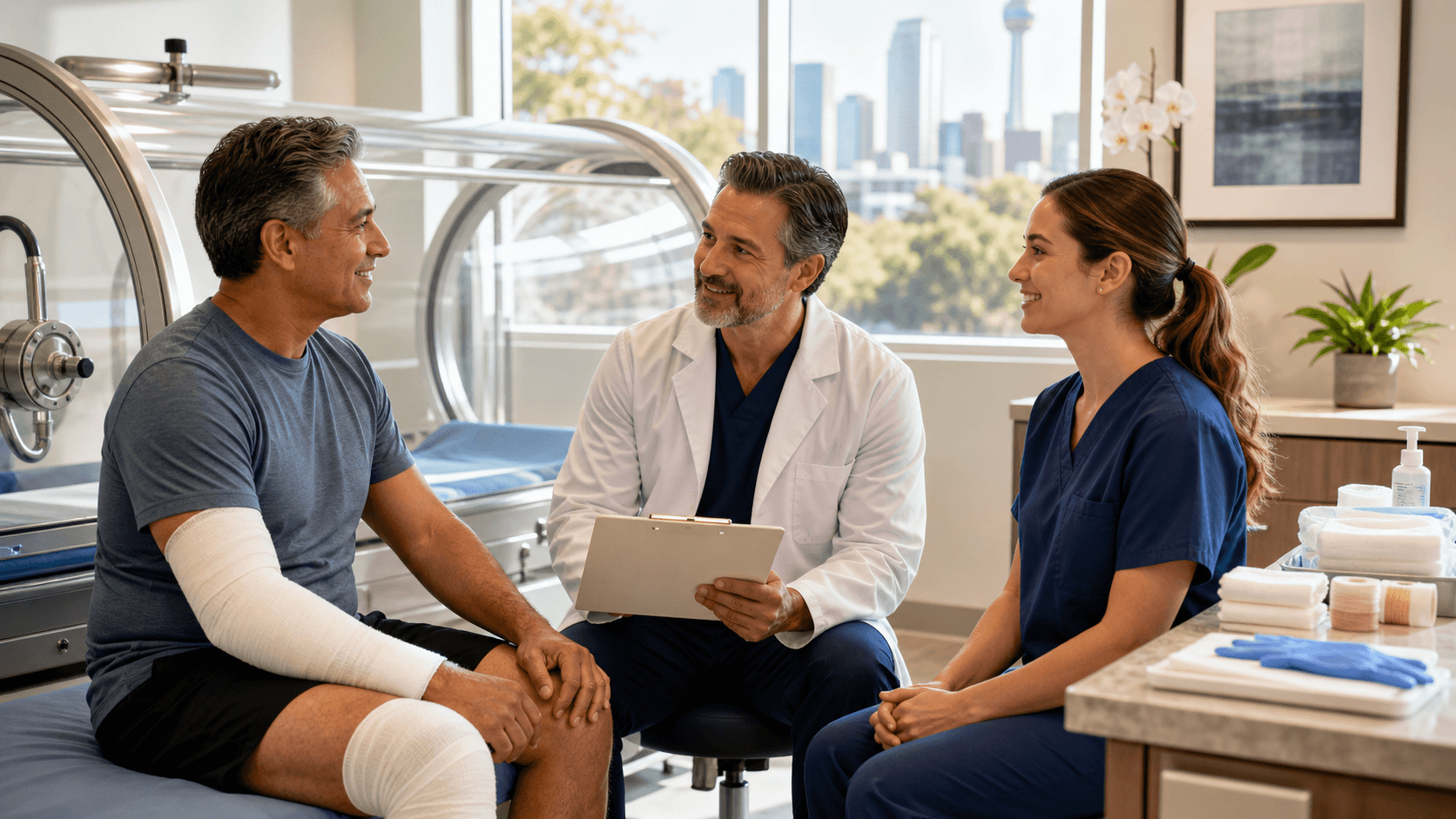
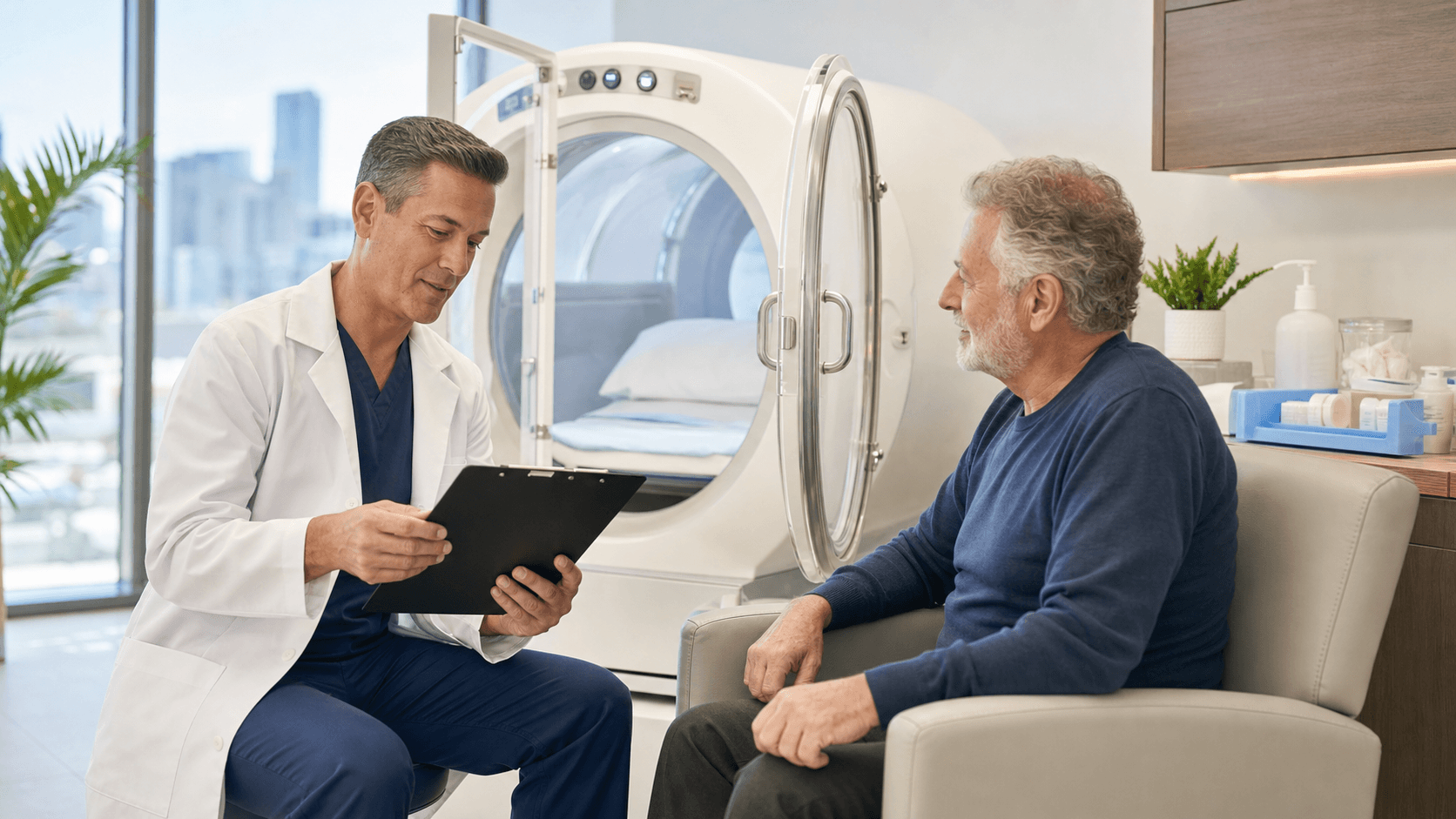
Hyperbaric oxygen therapy, or HBOT, is a clinic-based treatment where you breathe high levels of oxygen in a pressurized chamber.[7] It may be considered for certain diabetic foot ulcers, chronic bone infections, or radiation-related wounds based on specialty guidelines and Medicare rules.[1][7] It cannot be done at home because it needs controlled pressure, close oxygen monitoring, and emergency readiness.
If HBOT is discussed, ask, "Is this truly needed for my wound, and how will my home visits fit between sessions?" That helps you understand whether the added travel is likely to improve your outcome.
How Mobile Wound Care Fits Your Life, Home, and Insurance
Many mobile wound care visits are billed under Medicare Part B in a way that is similar to an outpatient clinic visit when there is medical need, according to Medicare.gov.[1] Covered items may include provider visits, some types of debridement, dressing management, NPWT management, and certain lab work. Deductibles and coinsurance can still apply, so it is smart to have your Medicare or insurance card ready so the team can check details before a same-week visit.
Scheduling usually looks like this:
Referral from a clinician or a direct call from you or your family
Intake questions about your wound, health history, and home setting
Insurance review and medical records request
First at-your-bedside visit scheduled based on urgency and location
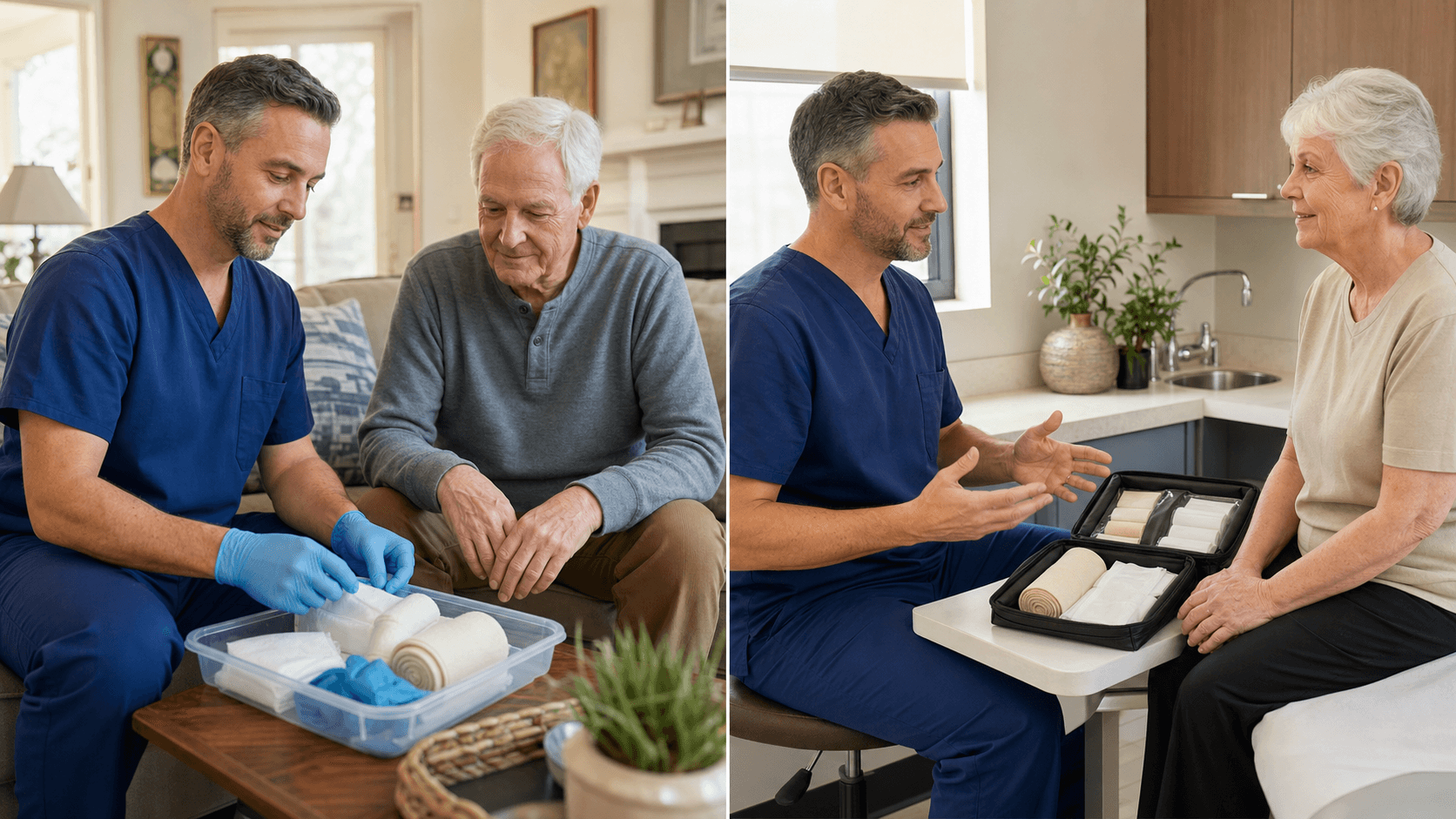
To keep things efficient, prepare a medication list, any prior wound clinic notes, and recent labs if you have them. This lets your Board-certified wound specialist move faster from "learning your story" to "treating the wound."
Mobile wound care does not replace your primary care or specialists. Instead, we act as a clinical quarterback, sharing updates with your primary care doctor, podiatrist, vascular surgeon, and home health nurses when they are involved.
Signed releases of information allow everyone to see the same reports, imaging, and orders. That cuts down on duplicated visits and missed messages and supports your goal to heal at home when it is safe.
During each home visit, you can expect vital sign checks, a focused wound exam, debridement if needed, fresh dressings, and clear teaching for you and any caregivers.[4][6] We document measurements and photos to watch trends over time so we can respond quickly if healing stalls.
If healing stalls, new infection signs appear, or blood flow looks poor, the plan is adjusted and clinic-based services may be added. Keeping a short list of questions between visits helps you get what you need every time the mobile wound care team comes near you.
Preparing Your Home and Yourself for Wound Care
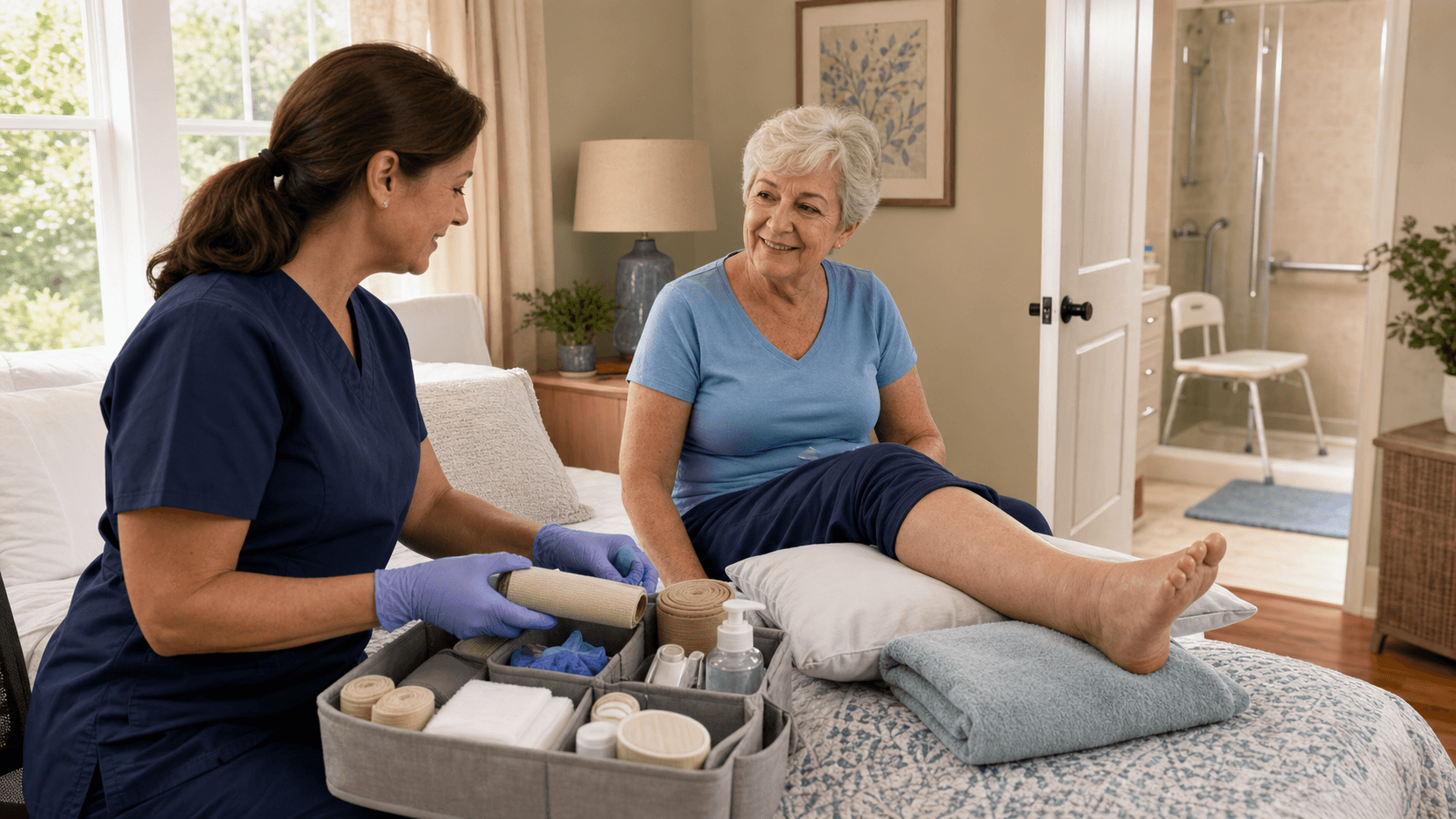
You do not need a fancy setup, but a simple "mini-clinic" space helps. Aim for:
A clean, well-lit area next to your bed or chair
A small table or surface for supplies
Easy access to an outlet if you use NPWT or oxygen
Space for the clinician to move safely around you
Good infection control matters too. That means clean hands, clean towels or pads under the area, and following your clinician's instructions about how to bag and throw out old dressings.
A short checklist before each visit, such as clearing clutter, having pets in another room, and bringing your medication list nearby, keeps things smooth and safe. These small steps make it easier for your mobile wound care team to focus on treatment rather than setup.
Pain and comfort should be part of every plan. Your clinician may ask you to take prescribed pain medicine ahead of a debridement visit, if your prescribing doctor agrees.
Positioning, extra pillows, slow breathing, and short breaks can also help. We look at how you move, turn in bed, and sit in chairs to lower the risk of new pressure injuries.
Speak up about any pain or mobility limits so we can adjust pads, cushions, or visit timing before small problems grow. Your comfort matters because it affects how consistently you can follow the plan between visits.
Between visits, your role is important. Many patients do a quick daily check:
Look at dressing edges for leaks
Notice swelling, warmth, or new redness around the wound
Pay attention to drainage amount and odor if visible
For people with diabetes, check and log blood sugars
Call your wound provider if dressings are soaked, odor is new, swelling increases quickly, or you feel generally sick. Keep a simple log of daily notes and blood sugars, then share it at each visit.
Dr. Elrod often tells patients, "Disciplined, routine care, no matter where it happens, beats crisis care every time." You are part of the team, and one of the best questions you can ask is, "Is there anything I can do differently between visits to help my wound heal faster?"
Common Questions About Mobile Wound Care in Dallas
Can Debridement Really Be Done Safely at Home?
For many wounds, yes. Conservative sharp debridement, enzymatic products, and autolytic methods can be used safely at your bedside with proper sterile technique and pain control.[4][6] Deeper, high-risk, or poorly perfused wounds may still need clinic or hospital debridement.
Is Mobile Wound Care Covered by Medicare Part B?
Often it is, when services are medically necessary and billed as outpatient care, according to Medicare.gov guidance.[1] Coverage can include provider visits and certain procedures, but deductibles and coinsurance still apply, so final details depend on your specific plan.
How Often Will the Mobile Wound Care Team Visit me?
Visit frequency depends on wound severity, infection risk, and dressing type.[4][6] Some people are seen once a week, others more often at first, then less often as healing improves.
Can I Still Get Hyperbaric Oxygen Therapy If I Prefer to Heal at Home?
Yes, these are not either-or choices. HBOT takes place in a clinic, but mobile wound care can manage dressings and watch for problems between sessions, so you heal at home as much as possible.
What If My Wound Gets Worse Between Home Visits?
If you notice fast spreading redness, fever, strong odor, sudden swelling, or feel very ill, do not wait; go to the ER or call emergency services.[2] For smaller changes or questions, call your wound provider to see if your visit should be moved sooner or if clinic care is needed.
Do I Need a Referral for Mobile Wound Care?
In many cases, a referral from your primary care or specialist is helpful and sometimes needed by insurance, but not always required to start the conversation. The wound team can help coordinate with your other clinicians so your care stays aligned.
Will Mobile Wound Care Replace My Regular Doctors?
No. Mobile wound care works alongside your primary care doctor and other specialists. Our role is to focus on the wound and communicate clearly with your existing team so your overall plan stays coordinated.
Take the Next Step: See If You Can Heal at Home
If you have a hard-to-heal wound and travel to clinic visits is slowing you down, ask your doctor or our team whether mobile wound care is appropriate for your situation. A same-week at-your-bedside assessment can help answer the most important question: "Can this wound safely heal at home, and what is the plan to get there?"
References
- Medicare.gov. What Part B covers. Available at: https://www.medicare.gov/ (accessed 2026).
- Centers for Disease Control and Prevention (CDC). Infection control basics. Available at: https://www.cdc.gov/ (accessed 2026).
- National Institutes of Health (NIH). Wound healing and infection overview. Available at: https://www.nih.gov/ (accessed 2026).
- Lipsky BA, et al. 2012 Infectious Diseases Society of America clinical practice guideline for the diagnosis and treatment of diabetic foot infections. Clin Infect Dis. 2012;54(12):e132, e173.
- Steed DL, et al. Effect of extensive debridement and treatment on the healing of diabetic foot ulcers. J Am Coll Surg. 1996;183(1):61, 64.
- O'Meara S, et al. Systematic reviews of wound care management: (3) antimicrobial agents for chronic wounds; (4) diabetic foot ulceration. Health Technol Assess. 2000;4(21):1, 237.
- Undersea and Hyperbaric Medical Society. Hyperbaric oxygen therapy indications. 14th ed. (Latest guidance).
Get Personalized Mobile Wound Care Support Today
If you or a loved one needs expert wound care without leaving home, we are ready to come to you. Learn how our mobile wound care in Dallas brings advanced treatment and compassionate support right to your bedside. At Anchor Wound Management, we tailor every care plan to your specific medical needs and goals. Have questions or want to schedule a visit? Simply contact us to get started.