Lymphedema Therapy in Dallas: How It Helps Chronic Wounds Heal
Key takeaways
- Lymphedema is uncontrolled swelling caused by lymph fluid that does not drain properly. It often follows surgery, cancer treatment, vein disease, or injury.
- Untreated swelling damages the skin and creates conditions for chronic, non-healing wounds — especially on the lower legs.
- Complete decongestive therapy (CDT) is the gold-standard treatment. It combines manual lymphatic drainage, compression, exercise, and skin care.
- Most patients begin with an intensive phase of two to four weeks of frequent visits, followed by a maintenance phase managed mostly at home.
- For patients with limited mobility, Anchor Wound Management offers bedside lymphedema and wound care across Dallas, Plano, Irving, and the wider DFW area.
Lymphedema happens when lymph fluid builds up in an arm, leg, or other body area and does not drain the way it should. It can show up after surgery, cancer treatment, vein problems, or an injury. Many adults around Dallas and the wider DFW area notice swelling, heaviness, and tight skin that get slowly worse over months or years.
When that fluid sits in the tissues, it presses on the tiny blood vessels that bring oxygen and nutrients to the skin. The skin gets dry, thick, and fragile. That sets the stage for chronic wounds that are slow to heal, repeated skin infections, and recurring breakdown in the same spots.
Targeted lymphedema therapy moves the fluid out of the swollen area and keeps it from building back up. With less swelling, the skin gets better blood flow and a cleaner environment for healing — which lets chronic wounds close faster and lowers the chance of new wounds forming in the same place.
What lymphedema therapy in Dallas actually involves
Comprehensive lymphedema therapy is more than a compression sock. The gold-standard approach is called complete decongestive therapy (CDT), and it pulls four tools together in one coordinated plan: manual lymphatic drainage, compression, exercise, and skin care.
A full CDT plan typically includes:
- Manual lymphatic drainage (MLD) — a gentle, hands-on technique that follows the natural paths of the lymph vessels
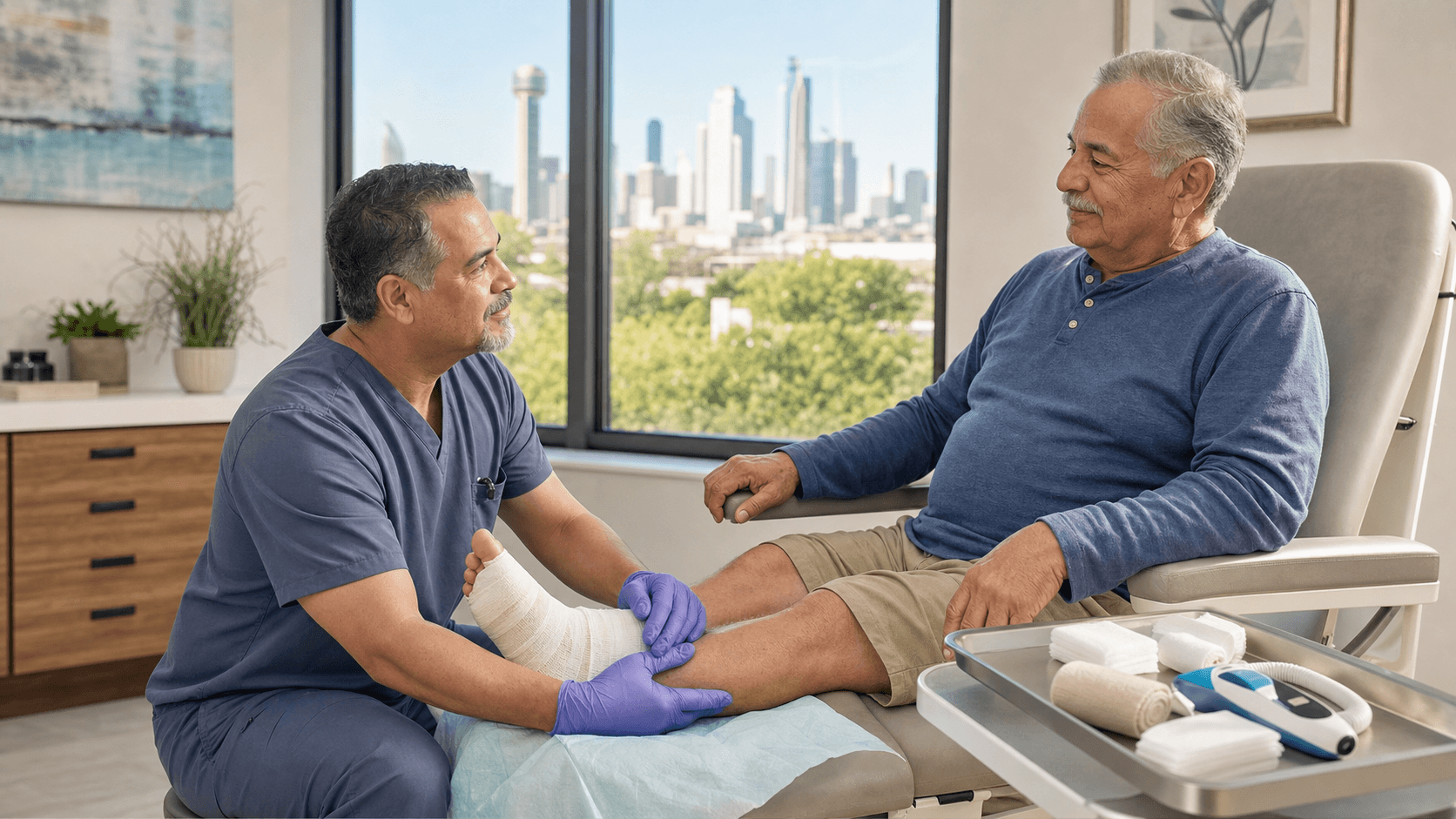
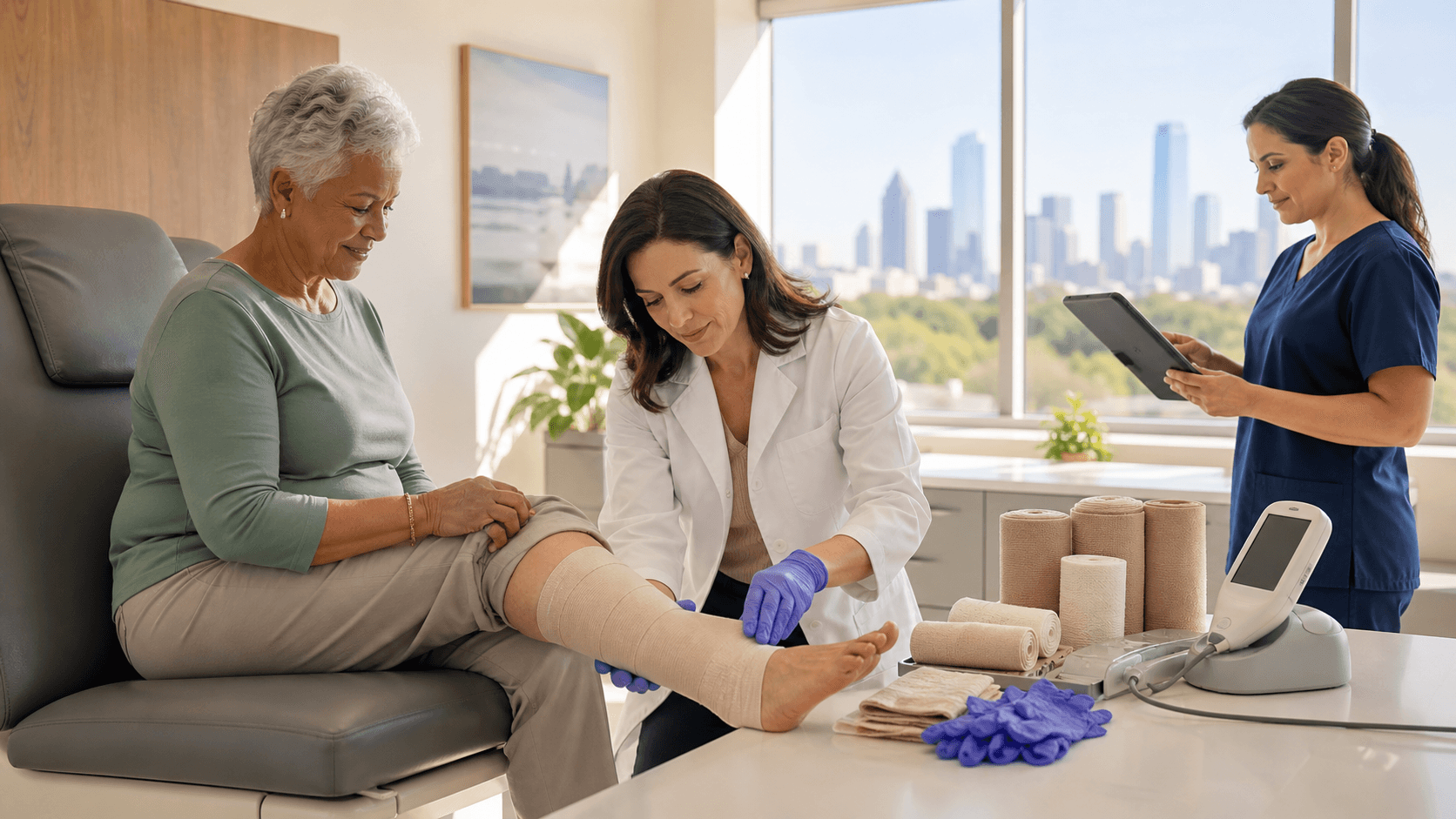
- Multilayer compression bandaging during the intensive phase, transitioning to fitted garments for maintenance
- Specific exercises that use muscle contraction to pump fluid out of the limb
- Careful skin and nail care to lower the risk of cellulitis and other infections
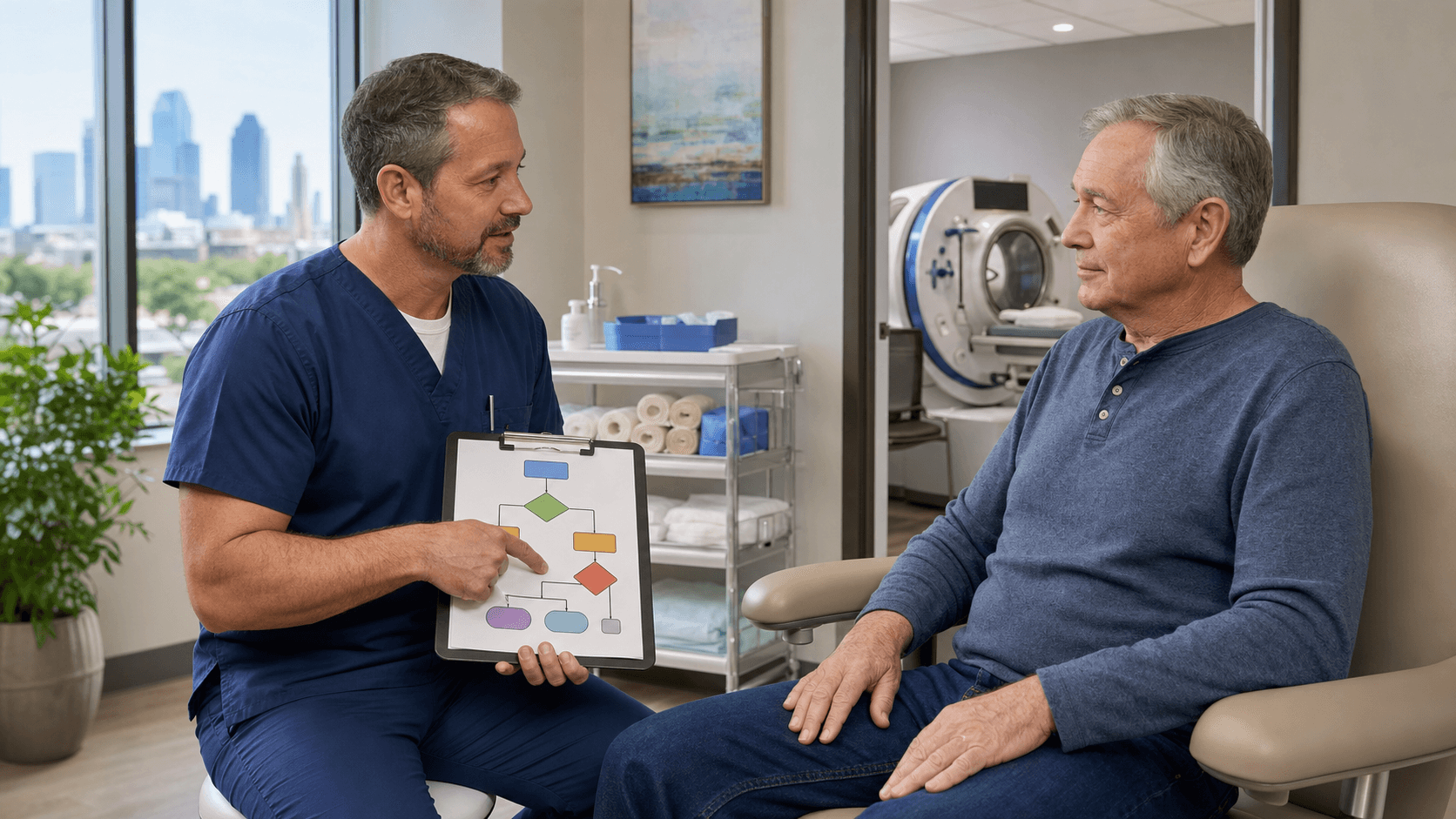
At a specialized wound care clinic in Dallas, the lymphedema plan is built around the wound — not the other way around. For someone with a fragile venous ulcer on the lower leg, the compression strategy looks different than for someone with arm swelling after breast cancer treatment. Each plan accounts for the patient's medical history, current medications, mobility, and the specific wounds involved.
How long does treatment take?
Most patients move through two phases:
- Intensive phase: two to four weeks of frequent visits (typically two to five times per week). The goal is to reduce limb volume as quickly and safely as possible.
- Maintenance phase: ongoing self-management with fitted compression garments, daily skin care, and home exercises. Follow-up visits drop to once a month or less.
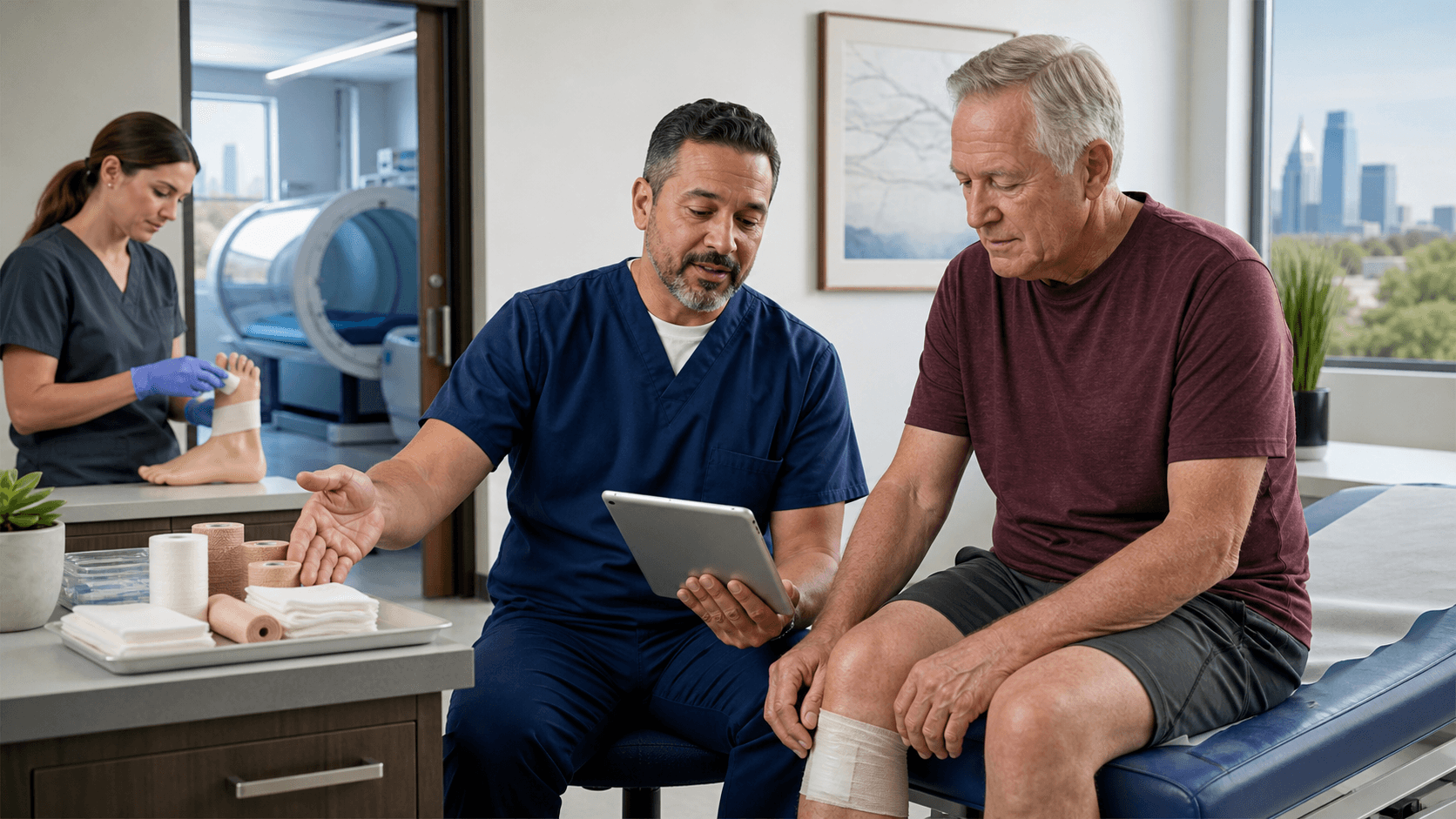
For people with complex or chronic wounds, communication between the care team matters most. Lymphedema therapists, wound care physicians, and primary care providers each see a different part of the picture. When they coordinate, they catch infections earlier, adjust compression safely around bandages and dressings, and decide when to add advanced therapies for the wounds that don't respond to standard care.
Key therapies that support chronic wound recovery
Manual lymphatic drainage
Manual lymphatic drainage is the foundation of lymphedema care. It is a gentle, skin-level technique that follows the natural paths of the lymph vessels. The touch is light — not deep like a sports massage — and it is meant to redirect trapped fluid toward areas that can absorb it. As swelling decreases, most patients notice less tightness and pressure, and the skin receives better oxygen and nutrients.
Compression therapy
Compression is the workhorse of lymphedema care. Used correctly, it pushes fluid out of the swollen limb, supports the veins and lymph vessels, and keeps swelling from rebounding after manual drainage. Compression takes different forms at different points in treatment:
- Short-stretch bandages during the intensive phase, layered over the wound dressing
- Multilayer bandage systems for limbs with active wounds
- Custom-fitted garments during maintenance, prescribed to the right pressure class for the patient
When there is an open wound, compression must be applied carefully and only after circulation is assessed. A wound care team checks pulses, skin integrity, and oxygen levels before deciding the right pressure to apply — too much pressure on a limb with poor arterial flow can make things worse.
Combining lymphedema therapy with advanced wound care
For stubborn wounds, lymphedema therapy works best alongside advanced wound treatments. AtAnchor Wound Management, we layer these therapies based on what the wound needs:
- Cellular tissue allografts to support the body's natural repair process
- Hyperbaric oxygen therapy for wounds that aren't responding to standard care (see also:HBOT in Irving: costs and coverage)
- Bedside debridement and dressing changes for patients who can't easily travel
The point is not to use every tool. The point is to match the tool to the wound.
Mobile and bedside lymphedema care across DFW
Many lymphedema patients have limited mobility — which makes repeated clinic visits exhausting and sometimes impossible. Anchor Wound Management offersmobile and bedside lymphedema and wound care across Dallas, Plano, Irving, Carrollton, Frisco, Addison, and the wider DFW area, including in senior living communities and hospice settings.
Manual lymphatic drainage, compression bandaging, skin care, and wound monitoring can all happen at the patient's bedside. Medicare Part B typically covers in-home wound care when it is medically necessary.
Anchor Wound Management was founded byDr. Brandon Elrod, DO, FAPWCA, a former US Army Captain and Field Surgeon. The team's approach is built around treating the wounds that other providers find most challenging — often the ones complicated by lymphedema, diabetes, or limited mobility.
When to seek lymphedema therapy in Dallas
Many people wait too long to ask about swelling, assuming it is part of aging or a past surgery. These warning signs are worth taking seriously, especially when they don't go away:
- Swelling that lasts more than a few weeks, or keeps returning
- Heaviness, tightness, or stiffness in a limb
- Skin that looks thick, bumpy, or leathery
- Repeated episodes of cellulitis or skin infections
- Clear or yellow fluid leaking from the skin
- Wounds that heal slowly — or not at all — with basic care
Some risk factors are common across the DFW community: diabetes, obesity, chronic venous disease, prior cancer treatment, major surgery, and reduced mobility. Anyone with these conditions and ongoing swelling has a higher risk of lymphedema and the chronic wounds that follow it.
Early evaluation at a specialized wound center catches problems while they are still manageable. When swelling is addressed sooner, the skin stays healthier, infection risk drops, and minor wounds stay from turning into long-lasting ulcers that are much harder to treat.
Self-care between visits
Patients with lymphedema do most of the work at home. A few practices make a meaningful difference between clinic visits:
- Wear compression garments as prescribed, every day, including in warm weather
- Elevate the limb when sitting or resting
- Keep skin clean, moisturized, and protected from cuts and burns
- Stay hydrated (unless your provider has given fluid limits)
- Walk regularly — even short walks help the muscle pump move fluid
- Report any new redness, warmth, or pain right away (these can signal cellulitis)
In hotter months, switching to a breathable compression fabric and avoiding direct sun on fragile skin can help prevent flare-ups. The compression itself stays on year-round — skipping it during warm weather almost always causes the swelling to rebound.
Frequently asked questions
What is the difference between lymphedema and regular swelling?
Regular swelling (edema) usually goes down with rest and elevation. Lymphedema is caused by a damaged or overwhelmed lymphatic system and does not fully resolve without treatment. It tends to get worse over time if it isn't addressed.
Does Medicare cover lymphedema therapy?
Yes. Medicare Part B covers complete decongestive therapy and, since 2024, also covers prescribed compression garments and bandages used to treat lymphedema. Medicare Advantage plans must cover at least the same benefits.
How is lymphatic massage different from a regular massage?
Manual lymphatic drainage uses very light pressure and follows specific patterns to move lymph fluid toward areas where it can drain. A regular massage applies deeper pressure to muscle tissue. Standard massage can actually make lymphedema worse if performed incorrectly on an affected limb.
Can lymphedema therapy really help a wound that won't heal?
For wounds caused or worsened by lymphedema, yes. Reducing swelling improves blood flow to the wound, lowers infection risk, and removes one of the biggest mechanical barriers to healing. Most patients see meaningful improvement in wound size within four to six weeks of consistent therapy combined with appropriate wound care.
How long do I have to wear compression?
For most patients, lifelong. Lymphedema is a chronic condition, and compression is what keeps swelling from coming back. Once the intensive phase reduces limb volume, the maintenance plan focuses on keeping it down — and that requires daily compression in some form.
Does Anchor Wound Management treat lymphedema at home or only in the clinic?
Both. Our team provides lymphedema and wound care at our clinic locations and at the bedside across DFW — including senior living communities and hospice settings — for patients who cannot easily travel.
Take the next step
Living with chronic swelling and slow-healing wounds is exhausting, but the right treatment plan can change the trajectory. The earlier the swelling is addressed, the better the outcome for the skin underneath.
To find out whether lymphedema therapy is right for your situation, call Anchor Wound Management at (940) 843-1455 orrequest an appointment online. Bring your medication list, any prior wound care notes, and (if available) photos of the affected limb. Our team handles insurance verification and coordinates with your other providers.
Learn more aboutlymphedema therapy at Anchor Wound Management or read aboutmobile and bedside wound care across DFW.