diabetic foot wounds in dallas: when is "" home care enough?
A new sore on a diabetic foot raises a hard question fast: do you really need a diabetic foot specialist in Dallas right away, or can you handle it with home wound care and store-bought supplies? The honest answer is in the middle. Not every wound belongs in the ER, but no diabetic foot wound is "no big deal."
Diabetes changes how feet feel, how skin heals, and how fast infection can spread. Our goal is to help you know when simple home steps are safe, when Mobile wound care at your bedside is smarter, and when you need same week help from a Board-certified wound specialist to lower the risk of infection and amputation so you can heal at home.
Key Takeaways
- Not every diabetic foot wound needs the hospital, but none should be ignored.
- Mobile wound care at your bedside can safely manage many ulcers so you can heal at home.
- A Board-certified wound specialist can sort out which wounds are stable and which are urgent.
- Same week visits in Dallas Fort Worth can lower the risk of serious infection.
- Many services are Medicare Part B covered when medically necessary.
Why Do Diabetic Feet Need Faster Decisions, Not Panic?
Clinically, diabetes affects both nerves and blood vessels in the feet. The CDC and NIH explain that nerve damage can dull pain, and blood flow problems can slow healing. A small blister, callus, or nick from trimming nails can turn into a deep ulcer or bone infection in a short time if it stays under pressure and is not treated properly.
In plain English, a sore might not hurt much and might not look scary at first, but it can still be serious. The goal is not to scare you; it is to catch trouble early so treatment stays simple and you can heal at home instead of the hospital.
What you can do right now:
- Check your feet every day, including between the toes and the bottoms.
- Take clear photos if you see redness, drainage, or dark or pale patches of skin.
- If a sore lasts more than a few days or looks worse, contact a diabetic foot specialist in Dallas for guidance.
- Ask about same week, at your bedside evaluation, which can sometimes replace an ER visit.
What Can You Safely Handle with Home Wound Care?
Some problems can be managed with guided home wound care, especially when a specialist is involved from the start. These may include:
- Superficial blisters or rubbed areas without broken skin into deeper layers.
- Minor skin breakdown or callus-related rubbing without exposed tendon or bone.
- Stable, shallow ulcers without spreading redness, bad odor, or fever, when a Board-certified wound specialist is directing care.
Safe home wound care is more than putting a bandage on. It should include:
- Gentle cleansing with recommended products, not harsh scrubbing or home remedies like peroxide or alcohol.
- Offloading pressure with diabetic shoes, boots, or other devices so the sore is not bearing weight.
- Tighter blood sugar control, which affects how quickly tissue repairs itself.
- Remote guidance plus same week in-person follow up when needed so a professional can see how the wound is changing.
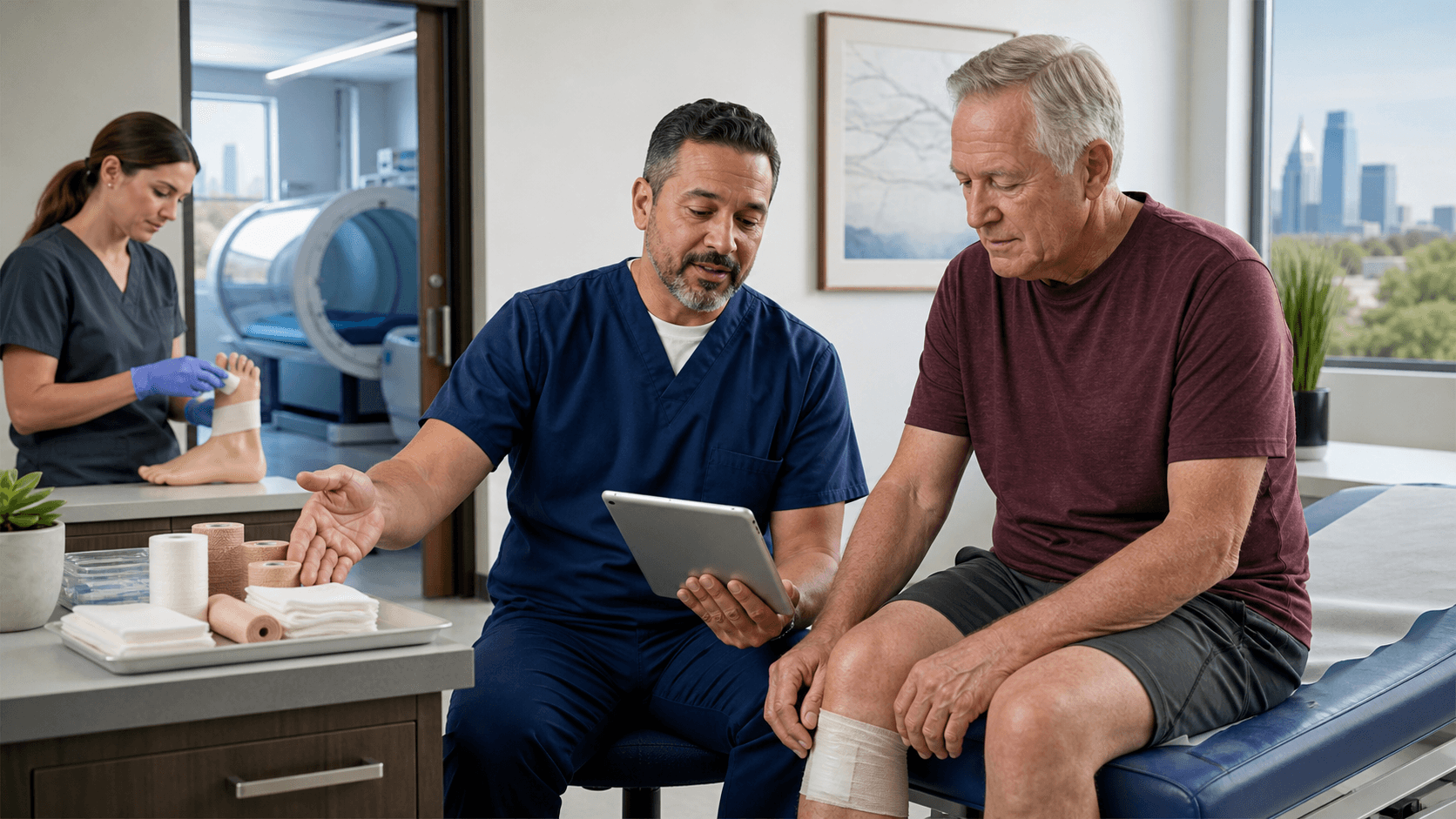
At Anchor Wound Management, Mobile wound care at your bedside in homes, senior living, and hospice settings is built around those steps. We adjust dressings, check circulation, and watch closely for signs of infection. Many patients who qualify under Medicare Part B can receive this kind of support, and our team works with primary care, endocrinology, podiatry, and facility nurses so everyone follows one clear wound plan.
When Do You Need a Diabetic Foot Specialist in Dallas?
There are clear warning signs that home-only care is unsafe. Red flags include:
- Increasing pain, swelling, or warmth around the wound, even without fever.
- Redness spreading away from the sore, black or gray tissue, foul odor, or pus.
- Visible tendon or bone, or a wound that feels deep when gently touched with a cotton swab.
You should seek same week evaluation from a diabetic foot specialist in Dallas when:
- You have any new foot wound and a history of amputation, severe neuropathy, or poor blood flow.
- A sore has not improved after 1 to 2 weeks of basic care, or worsens after nail trimming or callus shaving.
- Ulcers keep reopening in the same spot over pressure areas.
A nearby specialist changes the plan in important ways:
- We examine blood flow, infection risk, and pressure points on site, instead of guessing from photos alone.
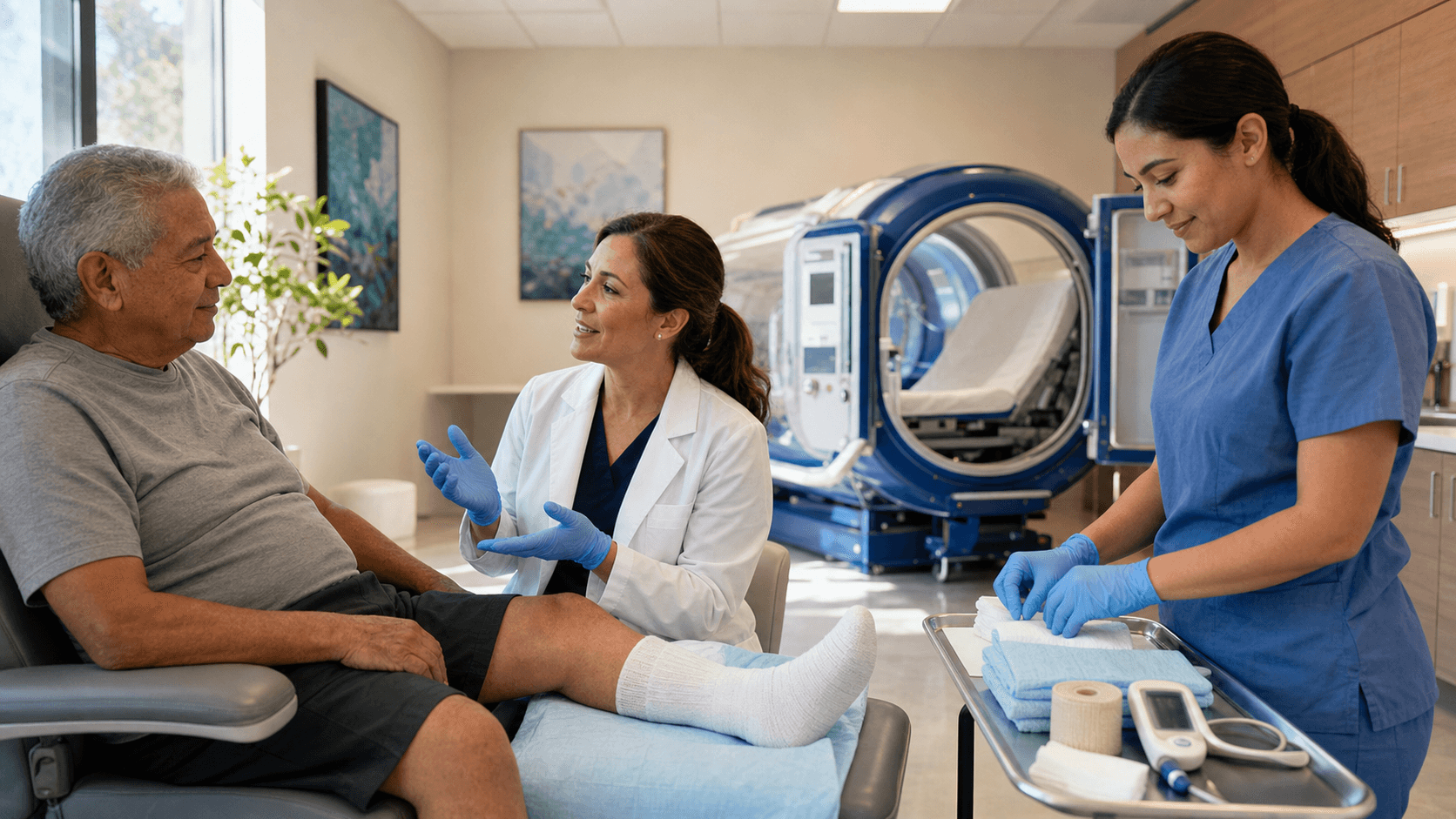
- We can offer advanced therapies like grafts and, when appropriate, hyperbaric oxygen therapy in an on-site HBOT chamber.
- As Dr. Brandon Elrod, DO, FAPWCA, often tells patients, "The question is not 'how bad does it look' but 'what will this wound do over the next two weeks if we do nothing?' That is where a focused foot exam matters."
How Do Mobile Wound Care, Clinic Visits, and Hospital Care Compare?
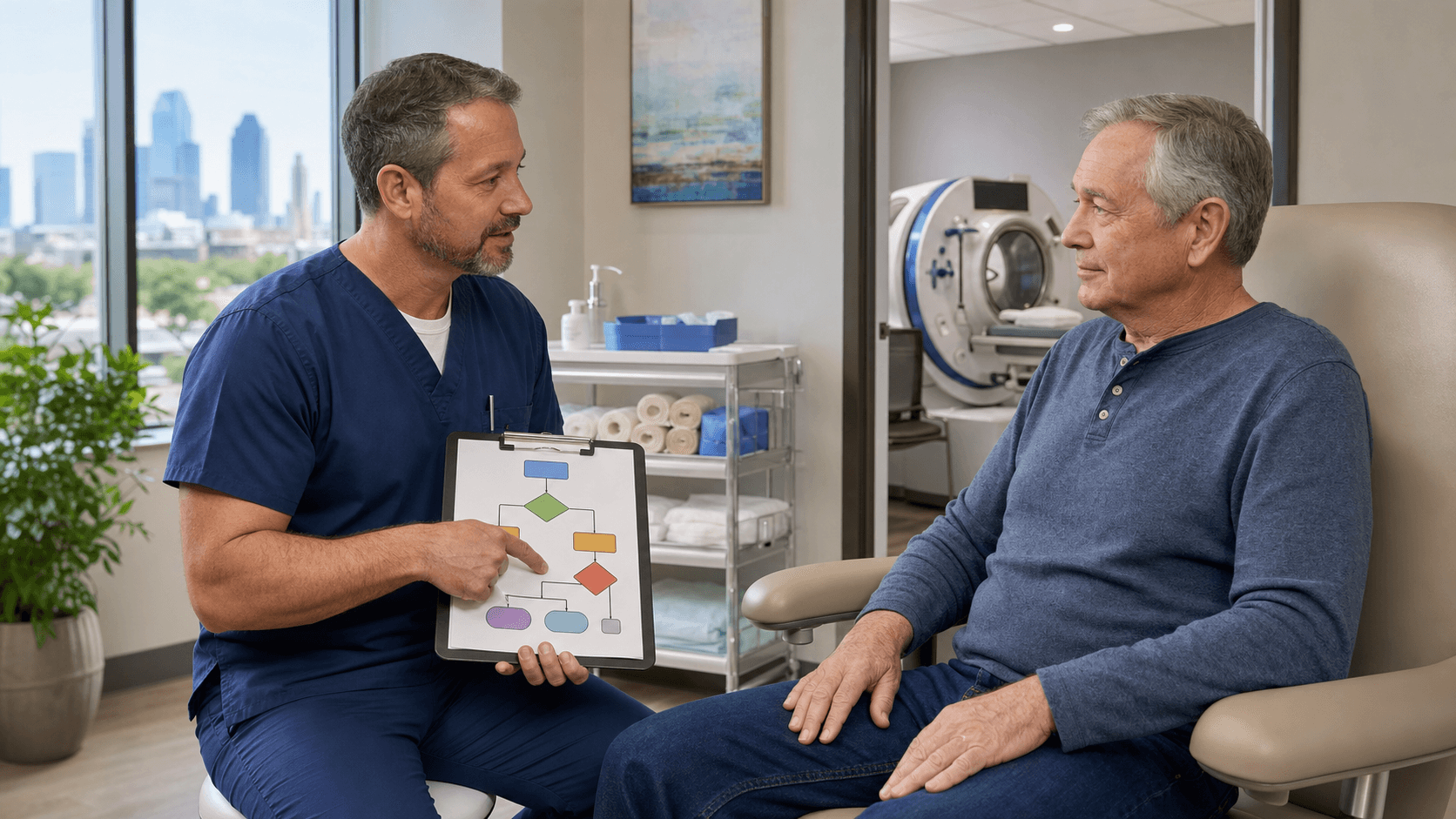
Many people believe they have only two choices: try to manage it at home or go straight to the hospital. In reality, there is a middle path that often keeps you in your own bed while still getting expert care from a Board-certified wound specialist.
Here is a simple comparison table:
Care setting
Typical reasons
Availability
What happens
Main goal
Medicare Part B covered?
Mobile wound care at your bedside
Mild to moderate ulcers, stable chronic wounds, follow up after hospital discharge
Often same week across Dallas Fort Worth
Focused exam, debridement when needed, dressing changes, offloading plans, coordination with home health or facility nurses
Help you heal at home and avoid hospital stays when safe
Many services are Medicare Part B covered when medically necessary
Clinic visit with a diabetic foot specialist
Complex ulcers, need for imaging, grafts, or HBOT evaluation
Scheduled visits with a Board-certified wound specialist
Full foot exam, circulation checks, possible advanced treatments like grafts or referral for HBOT in the on-site chamber
Control more complex wounds before they become emergencies
Typically Medicare Part B covered when criteria are met
Hospital admission
Deep infection, sepsis, critical limb ischemia, need for IV antibiotics or surgery
Urgent or emergency care
Imaging, IV medications, possible surgery, close monitoring
Control life-threatening infection or blood flow problems and protect life and limb
Usually covered under hospital and physician benefits when medically necessary
At Anchor Wound Management, our Board-certified wound specialist works across these levels. Mobile wound care and clinic-based therapies are shaped by a "field medicine" mindset, informed in part by our physician's experience as Captain, US Army (Ret.), to do as much as is safely possible at your bedside and to know exactly when higher-level care is needed. When patients do need the hospital, we help step them back down to home-based care as soon as it is safe so they can continue to heal at home.
How Do Insurance and Medicare Part B Support Healing at Home?
Medicare.gov explains that Medicare Part B covered services may include wound evaluations, debridement, many dressings, and certain offloading devices when they are medically necessary. Peer-reviewed studies and NIH guidance also describe when hyperbaric oxygen therapy is considered for diabetic foot ulcers, usually after a period of standard care with good blood flow.
In everyday terms:
- Many patients can receive same week, Mobile wound care at limited out-of-pocket cost, depending on their benefits.
- Advanced care like grafts or HBOT is not cosmetic; it can sometimes mean the difference between a wound that stays open and one that finally closes and lowers amputation risk.
- Our team reviews benefits, manages pre-authorizations, and works with senior living, skilled nursing, hospice, and primary care teams so visits and dressing changes fit into existing routines.
Frequently Asked Questions
Q: Can I treat a diabetic foot ulcer at home with over-the-counter dressings?
A: Basic dressings can protect the skin, but they are not a full treatment plan. A Board-certified wound specialist should at least examine the ulcer once and set a safe course, even if most care happens at your bedside.
Q: How fast should a diabetic foot wound improve before I worry?
A: Shallow wounds under good care usually show some early progress, like less drainage or a slightly smaller size, within 1 to 2 weeks. If you see no improvement or things look worse, it is time for a prompt reassessment by a specialist.
Q: What happens during a Mobile wound care visit at my bedside?
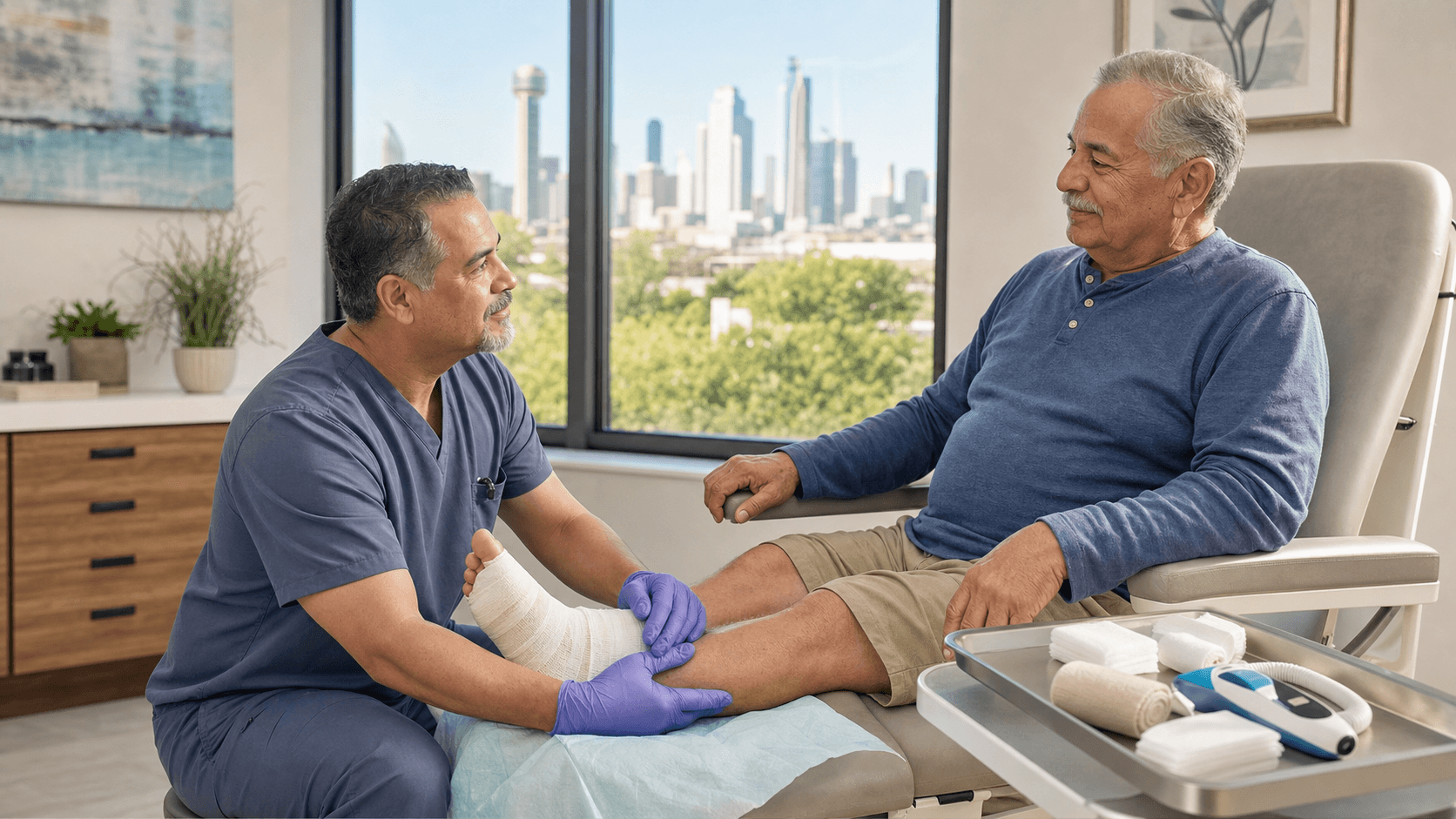
A: We perform a focused foot exam, measure and photograph the wound, gently remove dead tissue if needed, choose dressings, and give clear instructions for daily checks. We also send coordinated orders to home health or facility nurses so everyone is on the same page.
Q: When is hyperbaric oxygen therapy considered for diabetic foot ulcers?
A: HBOT is usually considered for diabetic foot ulcers that have not healed after at least several weeks of standard wound care, when blood flow is adequate and other criteria are met, following guidance from groups like the NIH and payer rules.
Q: Will my insurance or Medicare Part B cover Mobile wound care?
A: Many medically necessary wound care services are Medicare Part B covered, though coverage can vary by plan and situation. At Anchor Wound Management, we confirm benefits and handle any needed pre-authorizations before starting advanced therapies so you know what to expect.
Take the Next Step
If you have a diabetic foot wound and are unsure whether home care is enough, do not wait and hope it gets better on its own. Call our team to ask about same week Mobile wound care in Dallas Fort Worth so you can heal at home when it is safe to do so.
Phone: () -X
Book online: www.anchorwoundmanagement.com/book
Sources
- Centers for Disease Control and Prevention (CDC), Diabetes and foot complications
- National Institutes of Health (NIH), Diabetic neuropathy and wound healing
- Medicare.gov, Medicare Part B coverage for medically necessary outpatient services, including wound care and HBOT
Protect Your Feet With Specialized Diabetic Wound Care Today
If you are noticing any redness, blisters, or open sores on your feet, now is the time to take action with Anchor Wound Management. Our diabetic foot specialist in Dallas provides focused evaluation and treatment to help prevent infections and avoid complications. We will work with you to create a care plan that fits your health needs and lifestyle. To schedule an appointment or ask a question, please contact us today.