Hyperbaric Oxygen Therapy in Irving: Costs, Coverage, and What to Expect
Key takeaways
- Medicare Part B, Medicare Advantage, and most commercial plans cover HBOT for approved conditions like diabetic foot ulcers, radiation injuries, chronic bone infections, and compromised grafts.
- A typical course runs 5 sessions per week for several weeks, with each session lasting 90 to 120 minutes.
- Out-of-pocket cost depends on your plan, deductible status, and whether care is delivered in a hospital or a specialty clinic.
- Pre-authorization is almost always required. Your wound specialist's team usually handles the paperwork.
- At Anchor Wound Management in Irving, HBOT is one part of a comprehensive plan that also includes debridement, cellular tissue allografts, and lymphedema care when appropriate.
Non-healing, or chronic, wounds are sores that do not get smaller or close over several weeks. Diabetic foot ulcers, pressure injuries, radiation damage, and surgical incisions that won't close all qualify. As weeks pass, these wounds get harder to treat: tissue breaks down, circulation worsens, and the risk of infection rises.
Hyperbaric oxygen therapy (HBOT) is one of the advanced treatments that can restart stalled healing. For patients in Irving and across the Dallas–Fort Worth area, HBOT is often a turning point — but the questions most people ask first are practical ones: Is it covered? What will it cost? How do I get a referral?
This guide answers those questions and explains what to expect from a course of treatment.
How hyperbaric oxygen therapy works
HBOT means resting in a pressurized chamber while breathing 100% oxygen. Because the air pressure inside is higher than normal, far more oxygen dissolves into your blood than it would at ground level. That oxygen-rich blood reaches tissue that ordinarily gets too little flow.
For chronic wounds, that extra oxygen helps in four specific ways:
- Less swelling and inflammation at the wound site
- A stronger immune response against bacteria already in the wound
- New blood vessel growth (angiogenesis) that supports lasting healing
- Better antibiotic performance for infections that haven't cleared
These effects matter most for diabetic foot ulcers and radiation damage, where poor blood flow keeps standard care from working.
What a typical course looks like
Plans are individualized, but most patients:
- Come in 5 days per week
- Spend 90 to 120 minutes per session (including pressurization and depressurization)
- Recline in the chamber, watching TV or resting
At a specialized wound center, HBOT is always paired with hands-on wound care — never used alone. A clinician checks vital signs, reviews medications, and examines the wound on a set schedule to confirm the treatment is working.
What does insurance cover?
Medicare Part B, Medicare Advantage, and most commercial insurance plans cover HBOT when it is medically necessary for an approved indication. The most common approved conditions include:
- Diabetic foot ulcers (Wagner grade 3 or higher) that have not improved after 30 days of standard care
- Chronic refractory osteomyelitis (a bone infection that hasn't responded to other treatment)
- Compromised skin grafts or flaps
- Soft tissue or bone damage from radiation therapy
- Sudden loss of blood flow (acute peripheral arterial insufficiency)
Coverage rules are strict, which is why pre-authorization matters. Your wound specialist will:
- Confirm the diagnosis and wound stage
- Document what has already been tried (dressings, offloading, debridement)
- Explain why HBOT is the next appropriate step
- Submit records, photos, and clinical notes to your plan for review
Most patients don't need to handle this paperwork themselves. AtAnchor Wound Management, our team manages pre-authorization start to finish.
Questions to ask your insurance plan
Before treatment begins, call your insurer and confirm:
- Copay or coinsurance per visit
- Where you are on your deductible
- Annual session limits, if any
- Whether HBOT must be done at an outpatient hospital, or whether a specialty clinic is approved
- How any secondary or supplemental plans share cost
What will HBOT actually cost?
A single HBOT session is typically priced between $250 and $1,500 before insurance, depending on the facility. Hospital-based programs tend to bill at the higher end. After coverage is applied, most patients pay a much smaller share. For Medicare Part B patients, that usually means 20% of the Medicare-approved amount after the deductible is met.
Total out-of-pocket cost depends on:
- Plan type and where you are on your deductible
- Facility setting (hospital outpatient versus specialty clinic)
- Wound complexity and presence of infection
- Whether additional services are needed (debridement, cellular tissue allografts, vascular studies)
- Number of sessions required to reach healing
Planning ahead
Take these steps before treatment starts:
- Ask the clinic for a written cost estimate that lists likely services
- Confirm coverage with your insurer in writing (or save a chat transcript)
- Ask about payment plans for any uncovered services
- Clarify what happens if your wound heals sooner — or if more sessions are needed than initially planned
How do I get referred for HBOT in Irving?
Most patients don't start HBOT on their own. They are referred after another provider sees that a wound isn't healing as expected. Common referral sources around Irving include:
- Primary care doctors managing diabetes or other chronic conditions
- Podiatrists treating foot and ankle wounds
- Vascular surgeons addressing circulation problems
- Oncologists managing radiation side effects
- Hospital discharge planners arranging post-discharge wound care
If you suspect HBOT could help — or your wound has been open more than three weeks — talk with your current provider about a referral. It helps to gather:
- Photos of the wound over time, if available
- Notes from previous wound visits and any hospital stays
- Recent lab results (A1c, vascular studies, imaging)
- A complete medication list, including blood thinners and insulin
What to ask at your first wound specialist visit
- Why is my wound considered non-healing?
- Do I meet the criteria for HBOT given my diagnosis?
- What other treatments will be used alongside HBOT?
- How will we know it's working?
- What happens if HBOT isn't the right fit for me?
Mobile and bedside wound care across DFW
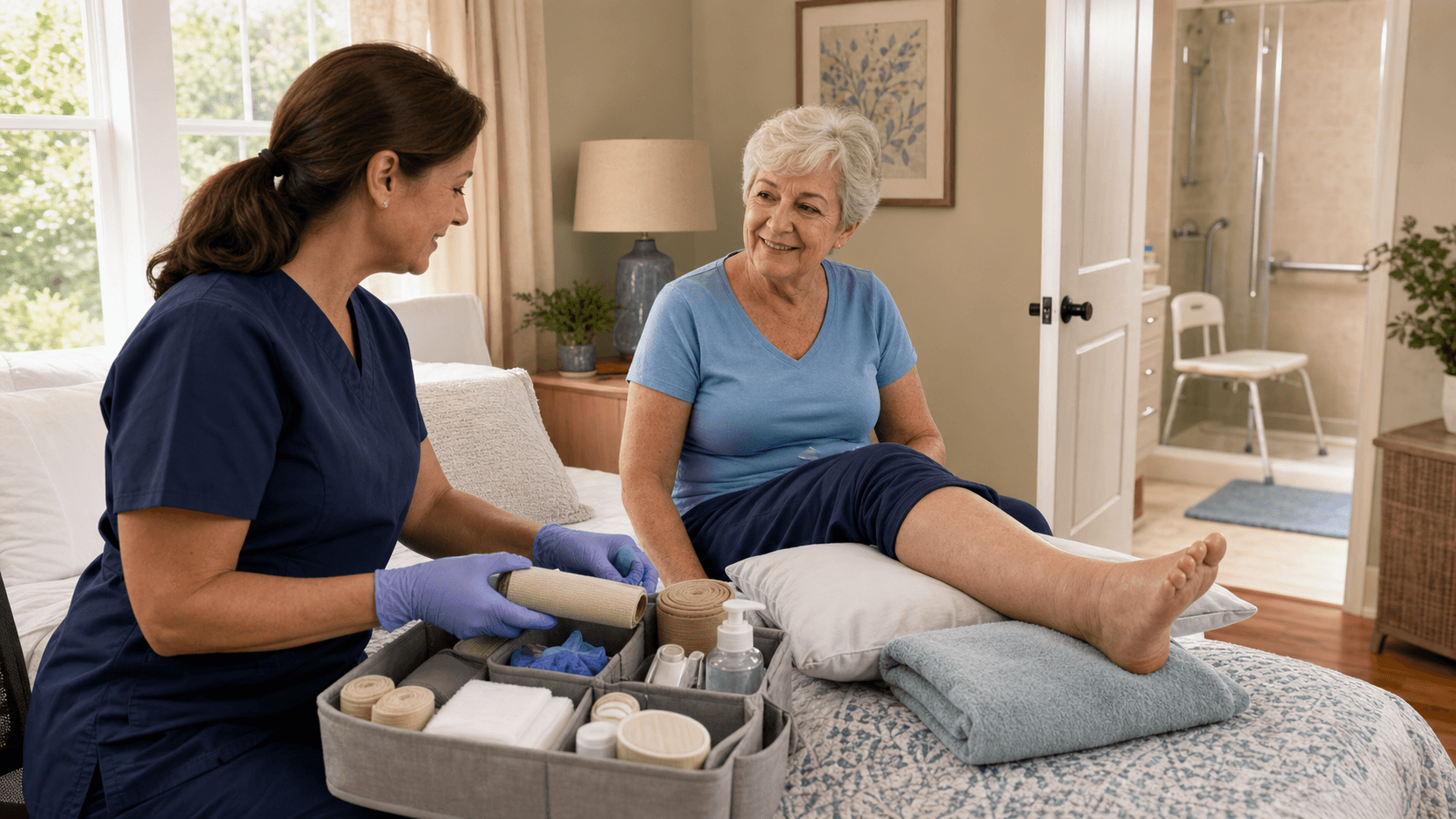
Not every patient can travel to repeated wound care appointments. Anchor Wound Management offersmobile and bedside wound care across Irving, Plano, Carrollton, Frisco, Addison, and the wider Dallas–Fort Worth area — including in senior living communities and hospice settings.
HBOT itself requires the chamber, so those sessions happen at our Irving clinic. But the rest of your wound care plan —dressings, debridement, monitoring, and coordination with your other providers — can come to you. Medicare Part B typically covers in-home wound care when it is medically necessary.
Founded byDr. Brandon Elrod, DO, FAPWCA, a former US Army Captain and Field Surgeon, Anchor Wound Management focuses on coordinated, evidence-based care for the wounds other providers find most challenging.
Frequently asked questions
Is HBOT covered by Medicare for diabetic foot ulcers?
Yes, for Wagner grade 3 or higher diabetic foot ulcers that have not responded to at least 30 days of standard wound care. Medicare Part B typically covers 80% of the approved amount after the deductible is met.
How many HBOT sessions will I need?
Most courses run 20 to 40 sessions, 5 days per week. Your wound specialist will reassess on a regular schedule to confirm the treatment is working and to adjust the plan as needed.
Are there side effects from HBOT?
HBOT is well tolerated by most patients. The most common side effect is mild ear discomfort during pressurization, similar to the feeling of taking off in an airplane. Less common effects include temporary changes in vision, which resolve after treatment ends. Your team will screen for any conditions that make HBOT inappropriate.
Can I do HBOT at home?
No. Medical-grade HBOT — the kind covered by insurance for wound healing — requires a hospital- or clinic-based chamber operated by trained staff. Soft-shell home chambers do not reach the pressures needed for approved wound indications.
Does Anchor Wound Management offer HBOT in Irving?
Yes. We provide HBOT at our Irving location as one part of a comprehensive wound care plan that may also include debridement, advanced dressings, cellular tissue allografts, and lymphedema management.
How is HBOT different from a wound vac?
A wound vac (negative pressure wound therapy) uses controlled suction to remove fluid and promote tissue growth at the wound surface. HBOT delivers oxygen system-wide through the bloodstream. They treat different aspects of healing and are sometimes used together as part of the same treatment plan.
Take the next step toward healing
If a wound has been open more than three weeks, waiting rarely improves the situation. Early evaluation gives you more treatment options while the problem is still manageable.
To find out whether HBOT is right for you, call Anchor Wound Management at (940) 843-1455 orrequest an appointment online. Bring your insurance card, medication list, and any wound history — our team handles the rest, including pre-authorization paperwork.
Learn more abouthyperbaric oxygen therapy at Anchor Wound Management or read aboutwound care in Irving, TX.