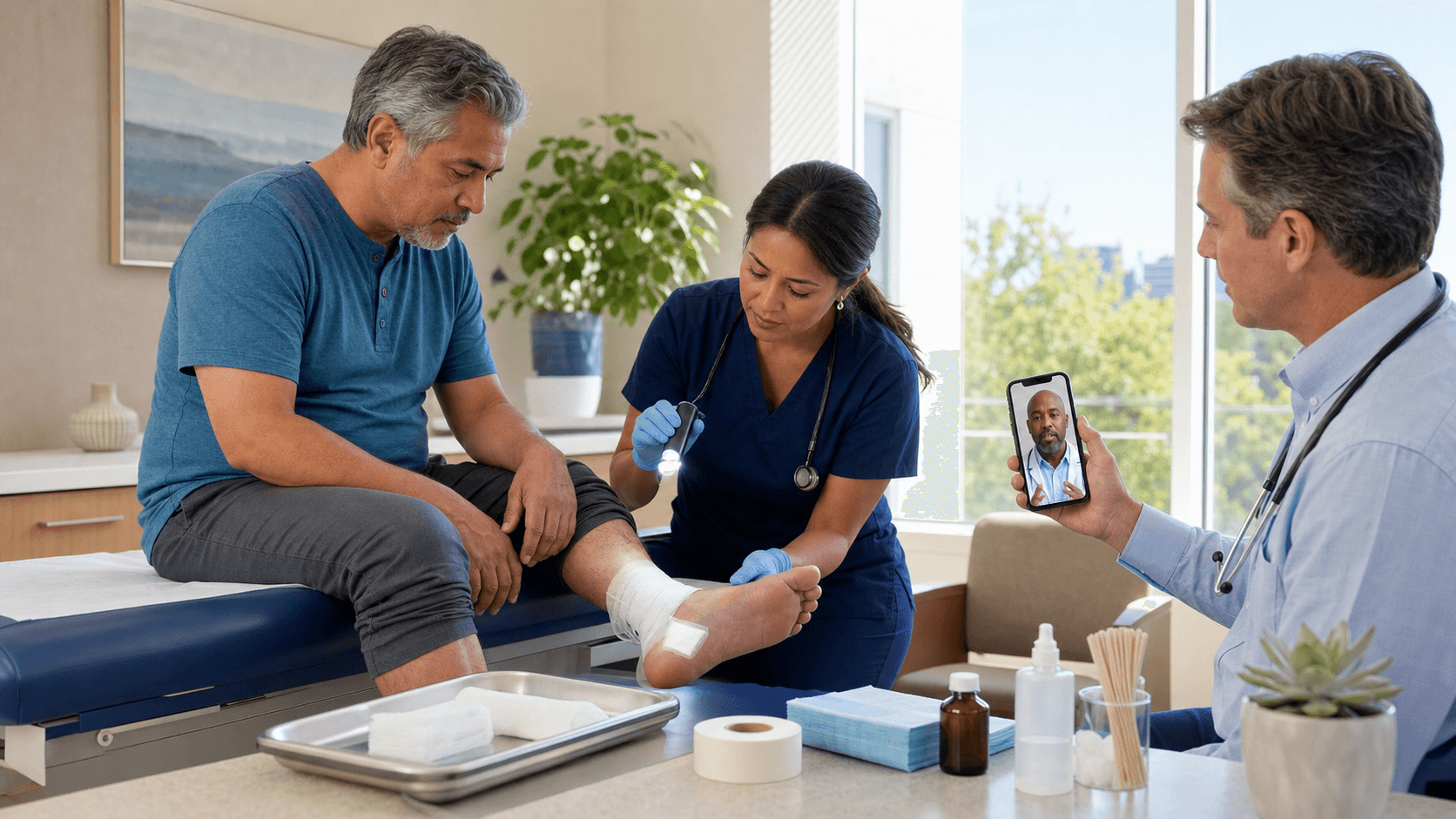
Stop Diabetic Wounds From Ruining Your Summer
A tiny blister on a toe can feel like no big deal. For someone living with diabetes, that same small spot can turn into a serious wound, an infection, and even a trip to the ER if it is ignored. On the other hand, when help is called in early and the right provider sees the wound, problems often stay small and summer plans stay on track.
As the weather warms up around Dallas, people walk more, wear sandals, and spend extra time by the pool, at parks, and on trips. That means more chances for rubbing from shoes, dry, cracked heels, and small cuts on the feet and legs. For people with diabetes, this is a high-risk time for new wounds and infections.
Our goal is to give you a clear, simple triage guide so you know when to call your primary care provider (PCP), your podiatrist, a vascular specialist, or a diabetic wound specialist in Dallas, and what each provider actually does. Getting help early is not overreacting. It is one of the best ways to avoid hospital stays, amputations, and a summer stuck indoors.
Red Flag Checklist: When Any Diabetic Wound Is an Emergency
When we say "diabetic wound," we are talking about any spot on your feet or lower legs that is slow to heal or looks worse over time. Common examples include cuts or scrapes that do not close, blisters from shoes or sandals, thick calluses that crack open, and open sores or ulcers.
People with diabetes often have nerve damage and poor blood flow, so a wound can be serious even if it looks small. Some warning signs mean you should treat the situation as an emergency, not "wait and see."
Call 911 or go to the ER right away if you notice:
Redness spreading up the foot or leg
Fever, chills, feeling very sick, or confusion
Strong foul odor from the wound
Thick pus or a lot of drainage
Skin that turns black, gray, or feels mushy
Sudden severe pain, or no pain at all in a wound that looks very bad
You should also seek urgent care or the ER when you step on a nail, glass, or an unknown object; when the wound seems deep or you can see bone or tendon; or when you have vomiting or trouble breathing along with a foot problem.
Because neuropathy can hide pain, changes in how the wound looks are often more helpful than how it feels. Watch for color changes, swelling, warmth, new drainage, or a sudden change in blood sugar control. Those clues often show up before pain.
When to Call Your PCP Versus Your Podiatrist
Your primary care provider is your main partner for long-term diabetes care. A PCP usually manages blood sugar and medicines, orders labs and basic tests, treats mild skin and soft tissue infections, and sends you to specialists like podiatrists, vascular doctors, or wound clinics when needed.
It is a good idea to contact your PCP when you notice a new minor wound without obvious infection, when you see recurring calluses or small cracks on the heels or toes, when there is mild redness or swelling but no fever or spreading streaks, or when your blood sugar suddenly becomes harder to control after a wound appears.
A podiatrist focuses on the feet and ankles and understands how pressure, bone shape, and shoes affect your skin and your risk for ulcers. A podiatrist often helps with:
Nail care and ingrown toenails
Callus trimming and corn care
Offloading, like special shoes, inserts, or boots
Minor in-office procedures such as debridement of thick or dead tissue
You should see a podiatrist in situations like:
Ingrown or thick nails that are hard to trim safely
Pressure ulcers on toes, heels, or the ball of the foot
Recurring blisters from certain shoes or activities
Foot shape changes like bunions, hammertoes, or suspected Charcot foot
Chronic calluses that keep coming back and could open into ulcers
Think of it this way: your PCP keeps your diabetes and overall health on track, while your podiatrist protects the structure and skin of your feet. They often work as a team, and both roles matter to prevent deeper diabetic wounds.
When to See a Vascular or Diabetic Wound Specialist in Dallas
Good blood flow is key for any wound to heal. A vascular specialist focuses on the arteries and veins that carry blood to your legs and feet. This type of doctor can check pulses and circulation in your legs and feet, order tests like ankle-brachial index (ABI) or ultrasounds, and perform procedures to open blocked arteries, such as angioplasty, stents, or bypass surgery.
You may need vascular care if:
A wound is not healing after weeks of good basic care
You have foot, calf, or thigh pain when walking that gets better with rest
Your feet or toes often feel cold, look pale, or have a bluish tone
Your pulses are hard to feel, or you already know you have peripheral artery disease
A diabetic wound specialist in Dallas offers focused care for complex or slow-to-heal wounds. An advanced wound clinic can provide:
Detailed wound assessment and tracking over time
Debridement to remove dead tissue so healthy tissue can grow
Specialized dressings and topical treatments
Hyperbaric oxygen therapy to support poorly healing tissue
Cellular tissue allografts to help replace or support damaged skin
Care for lymphedema and swelling that slows healing
Anchor Wound Management is an example of this kind of clinic in the Dallas, Fort Worth area. Our team works with complicated wounds that involve circulation problems, infection, neuropathy, and lymphedema all at once.
If you have a history of foot ulcers or peripheral artery disease, it can help to check in with your PCP or a wound specialist before big trips or increases in activity. Finding small problems early often prevents larger trouble later.
How a Wound Clinic Complements Your Other Doctors
A dedicated wound clinic does not replace your PCP, podiatrist, or vascular specialist. Instead, it pulls all the pieces together for wounds that are complex or slow to respond to standard care.
At a wound clinic like Anchor Wound Management, patients can expect careful wound measurements and photos over time, regular debridement when needed, thoughtful dressing choices for moisture balance and protection, hyperbaric oxygen therapy for certain non-healing wounds, cellular tissue allografts for deeper or stubborn wounds, and lymphedema care to manage swelling and fluid buildup.
Some wounds need this level of care when there is little or no improvement after 2 to 4 weeks, when the wound keeps reopening in the same spot, when you can see deeper structures such as tendon or bone, when you have already tried standard care (including basic dressings and antibiotics) without progress, or when poor circulation, swelling, or nerve problems make healing harder.
A strong wound care plan also includes close communication. A wound clinic can share notes with your PCP, podiatrist, and vascular specialist. Together, they can adjust diabetes management, protect high-pressure areas on your feet, and decide when it is safe to return to walking more, working, or enjoying outdoor activities. For many people in the Dallas, Fort Worth area, this team approach lowers the chance of hospital stays, amputations, and long breaks from normal shoes and daily routines.
Your Next Step: A Simple Triage Plan for Dallas Patients
When you spot a problem on your feet or lower legs, it helps to have a simple plan:
Emergency signs like spreading redness, fever, black or gray tissue, or feeling very sick: call 911 or go to the ER
New minor wounds without red flags: contact your PCP first, and ask whether a podiatry visit is needed
Foot deformities, nail problems, calluses, or recurrent ulcers: arrange a podiatry visit
Wounds that are not healing after 2 to 4 weeks, weak pulses, or leg pain with walking: ask your PCP about a vascular referral and a diabetic wound specialist in Dallas
At Anchor Wound Management, we see patients from across Dallas and Fort Worth with slow-to-heal wounds, especially when they already see a PCP or podiatrist but are not seeing much progress. A few simple habits can lower risk as temperatures rise:
Check your feet every day
Avoid walking barefoot even at home or around the pool
Keep blood sugar controlled
Schedule preventive care before vacations or major changes in activity
You do not have to guess alone. With this triage guide and the right team of providers, you can protect your feet, your independence, and your plans, one step at a time.
Take Control Of Your Diabetic Wound Care Today
If you or a loved one is struggling with a slow-healing foot or leg wound, our team at Anchor Wound Management is ready to help with attentive bedside care. A dedicated diabetic wound specialist in Dallas can evaluate your wound, coordinate with your existing providers, and create a treatment plan tailored to your needs. Reach out today to schedule a visit or ask questions about your specific situation through our contact page.