When a Diabetic Foot Sore Becomes an Emergency
A small sore on a foot can change very fast for someone living with diabetes, especially in the Dallas heat. What starts as a tiny blister, cut, or callus can turn into a serious wound in just a few days. Many people do not feel much pain because of nerve damage, so they do not realize how bad it is until it is already deep or infected.
Diabetes affects the nerves, the blood vessels, and the way the body fights germs. That means:
You may not feel pain or pressure on your feet
Blood may not reach the wound very well
Bacteria can grow more easily in high blood sugar
In this article, we will walk through clear red flags of infection, signs of poor circulation, and how they can overlap. We will also explain how to choose the right diabetic wound specialist in Dallas so you can get help before a small problem turns into a limb-threatening emergency.
Infection Red Flags You Should Never Ignore
Infection is one of the fastest ways a diabetic foot sore can get out of control. Germs love warm, moist areas, which is why hot, humid days around North Texas can make things worse if a wound is not protected and cleaned properly.
Watch for these changes at the wound site:
Redness that spreads outward from the sore
Skin that feels warmer than the surrounding area
Thick yellow, green, or cloudy drainage
Foul or unusual odor, even after gently cleaning
Swelling that seems to grow quickly
These signs often appear or worsen after being outdoors in late spring and early summer, when feet may sweat more, swell, or stay in damp socks and shoes.
Infection can also affect the whole body. Call for urgent medical help if you notice:
Fever or chills
Feeling very tired, weak, or confused
Blood sugars running much higher than usual without a clear reason
Red streaks moving up the foot or leg
In people with diabetes, infection tends to move faster. The immune system may not work as well, and high blood sugar can help bacteria grow. Waiting to see if it gets better on its own can be dangerous. If you see these red flags, same-day evaluation at an advanced wound clinic or an urgent care or ER is often the safest choice.
Signs Your Wound Is Starving for Blood Flow
Not every slow-healing wound is badly infected. Sometimes the main problem is poor circulation. Without enough blood flow, the tissue does not get the oxygen and nutrients it needs to repair itself.
Common signs of poor circulation in the legs and feet include:
Feet that feel cool to the touch compared to the rest of the body
Pale, bluish, or purple toes
Shiny or hairless skin on the lower legs
Pain or cramping in the calves when walking that eases with rest
Wounds linked to poor blood flow may look:
"Punched out," with clear, round edges
Dark at the edges or with black, dry areas
Very slow to build healthy pink tissue
You may also see slow or stalled healing, such as:
A sore that has not improved after 2 to 4 weeks
Scabs that keep reopening in the same spot
A wound that was filling in and then suddenly stops changing
Around Dallas, warmer weather often leads to more walking, outdoor time, and swelling in the feet and ankles. Mild dehydration can also thicken the blood and stress already narrowed arteries. When diabetes, artery disease, and heat all stack up, the risk of tissue death in toes and feet goes up. That is why any sore that stalls or looks worse should be checked for circulation problems, not just infection.
Infection vs. Poor Circulation: How to Tell the Difference
Infection and poor circulation can look different, but they can also team up. Understanding the general patterns can help you know when to seek help quickly, but it should never replace a medical exam.
Infection often brings:
Warmth and redness
Swelling and tenderness
Pus or cloudy drainage
Faster changes over hours or days
Poor circulation often brings:
Cool or cold skin
Pale, bluish, or very dark color
Pain with walking or at night, eased by hanging the foot down
Slow or no change over weeks
Sometimes, a diabetic foot wound has both problems at once. There may be pus and odor, plus black edges or very weak pulses in the foot. This mix can raise the chance of hospital stays or amputation if not treated quickly. Guessing at home is risky.
A few simple self-checks can help you decide that it is time to see a diabetic wound specialist in Dallas:
Gently compare the color and temperature of both feet
Feel for pulses on the top of each foot, if you have been taught how
Take clear photos of the wound every few days to watch for change
Keep a record of blood sugar trends
Any rapid change, new pain, or sign of infection or poor blood flow is a signal to get professional help as soon as possible.
Which Specialist to See First in Dallas and Fort Worth
It can be confusing to know which doctor to see first when you notice a stubborn sore. For many people with diabetes, an advanced wound clinic is a smart starting point.
You should see an advanced diabetic wound specialist if:
You have a wound that has not started to heal within 2 weeks
You keep getting ulcers in the same area
The sore is over a bony spot like the heel or toe tip
You have been changing dressings and caring for it at home, but it still looks the same or worse
Other experts may also be needed, such as:
A podiatrist to look at foot structure, shoes, and pressure points
A vascular surgeon to test for and treat blocked arteries
An infectious disease doctor for deep, severe, or repeat infections
Lymphedema professionals for long-term leg swelling
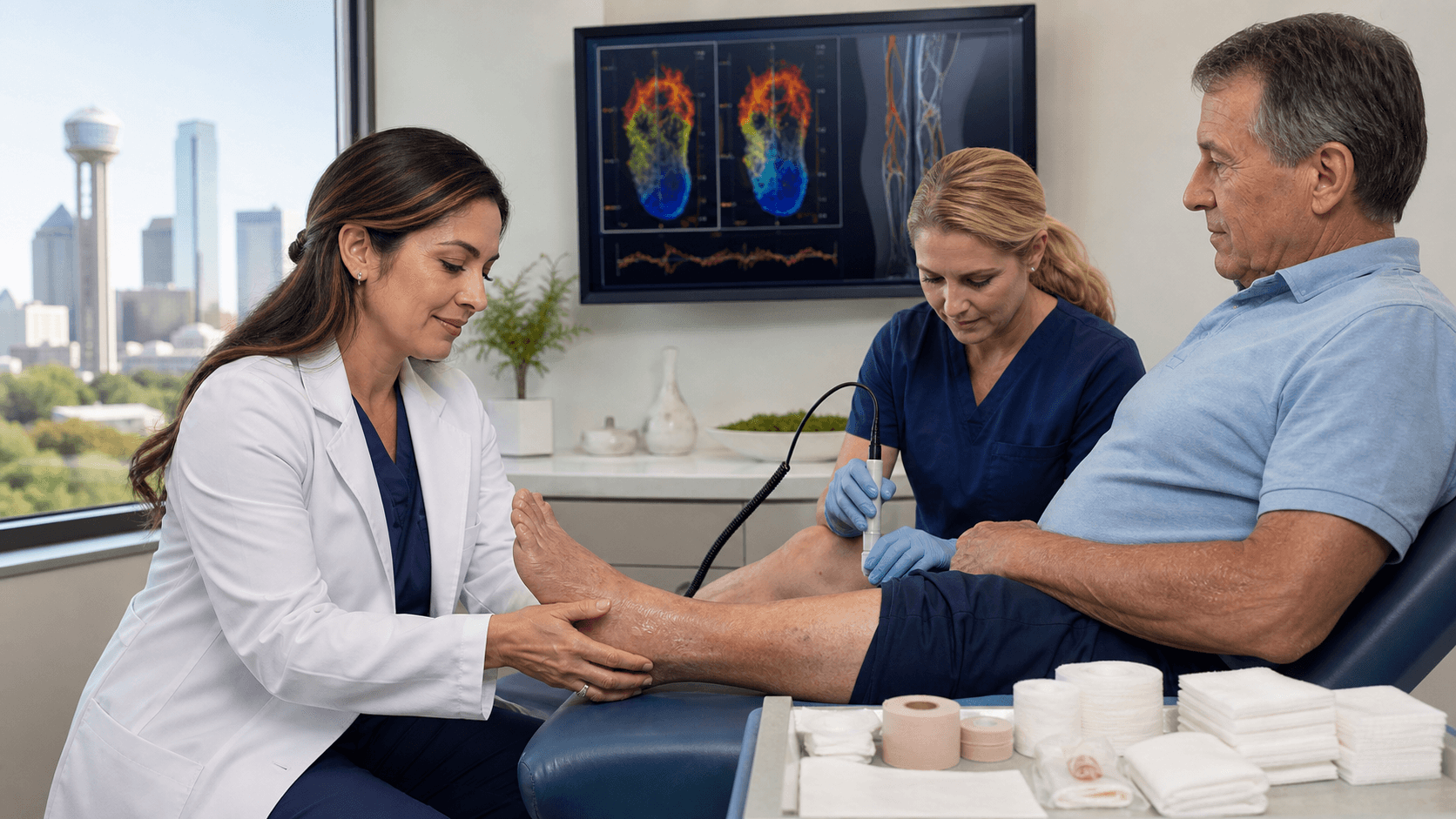
An advanced wound clinic can bring these pieces together. With careful exams, imaging, and blood flow testing, the team can help decide if infection, circulation, pressure, swelling, or a mix of all four is slowing healing. This helps you see the right specialist sooner instead of bouncing from office to office without clear answers.
How Anchor Wound Management Helps Protect Your Feet
At Anchor Wound Management in the Dallas, Fort Worth area, we focus on complex and non-healing wounds, including diabetic foot sores. When someone comes in with a diabetic wound, we work to quickly sort out how much of the problem is infection, how much is poor circulation, and what else might be standing in the way of healing.
A care plan may include:
Advanced dressings and regular wound cleaning
Offloading, which means taking pressure off the sore area
Hyperbaric oxygen therapy when extra oxygen can support healing
Cellular tissue allografts to support the body's repair process
Lymphedema care and compression for people with chronic leg swelling
As the weather warms up around North Texas, people tend to walk more, spend time outside, and deal with more sweating and swelling in their feet. That mix can turn a small blister or crack in the skin into a bigger problem, especially if you have diabetes and nerve damage.
If you notice any of the red flags we have covered, it is better to have the wound checked early instead of waiting for clear pain or a strong odor. Bringing details such as your medication list, blood sugar records, and photos of how the sore has changed over time can help your wound care team move faster to protect your feet and your health.
Take Control Of Your Diabetic Wound Care Today
If you are noticing slow-healing or worsening foot ulcers, now is the time to reach out to a trusted diabetic wound specialist in Dallas. At Anchor Wound Management, we provide advanced, personalized care to help protect your mobility and prevent serious complications. We will work with you to understand your health history, evaluate your wound, and create a focused treatment plan. Schedule an appointment today by using our contact page so we can help you heal as safely and quickly as possible.