Safety Checklist for Bedside Wound Care in Dallas, TX
Many patients ask, "How do I keep a wound clean and safe at home so I do not end up back in the ER?" That is a fair question, especially when you are tired, hurting, and trying to heal at home. Bedside wound care means your main care happens at home or in your room at a facility, instead of driving across Dallas or Fort Worth for every dressing change.
Clinically, we know that good infection control, the right supplies, and early action when things change can lower complications and help you heal faster. In plain English: clean hands, the right tools, and a clear plan keep you out of trouble and help prevent avoidable hospital stays and amputations. In this guide, we walk through infection control, supply setup, caregiver training, warning signs, and when it is time to move from bedside care to a clinic or hospital.
Our safety tips follow CDC infection control principles, NIH wound research, and real-world experience from a board-certified wound specialist and Captain, US Army (Ret.).
Key takeaways
- Clean hands and clean surfaces matter as much as the dressing.
- A simple bedside kit prevents missed steps and shortcuts.
- Caregivers need clear, written steps, not guesswork.
- New fever, odor, black tissue, or spreading redness means you should escalate care.
- Mobile wound care and clinic visits can work together so you can heal at home safely.
How do I make my bedside area safe for wound care?
Clinical fact: CDC data show that germs on bed rails, tables, and phones can move from surfaces to hands, then into wounds. In plain English: if the things around you are dirty, your dressing change is dirty too. This raises the risk of infection, ER visits, and delayed healing.
What to do:
- Before each dressing change, wipe down the bedside table, over-bed tray, and any equipment you will touch.
- Clear clutter, like food containers, tissues, and loose clothes, from the "clean zone."
- Put wound supplies on a clean, hard surface, not directly on the bed.
Keep pets out of the room during the dressing change. Pet hair and dander can carry germs that do not belong near an open wound.
Clinical fact: Hand hygiene is your first defense against infection, according to CDC guidance on handwashing. In plain English: clean hands protect your wound and help you stay out of the hospital.
What to do:
- Wash hands with soap and water for at least 20 seconds before and after wound care, as CDC recommends.
- If no sink is close, use alcohol hand gel and let it dry fully.
- Use clean, single-use gloves, and never try to wash or sanitize gloves for reuse.
Masks or a gown may be helpful if there is a chance of splashing or coughing, or if the patient has a weak immune system. In Dallas heat, rooms can feel warm and sticky, which raises skin moisture around dressings.
What to do:
- Try to keep the room cool and dry during changes.
- Protect the skin around the wound with barrier products as ordered, so the dressing does not damage healthy skin.
What supplies should always be at my bedside?
Clinical fact: Studies of home and outpatient wound care show that when people lack proper supplies, they skip steps or improvise, and infection risk goes up. In plain English: if your kit is missing things, you are more likely to cut corners, which can slow healing and increase the chance of complications.
What to do:
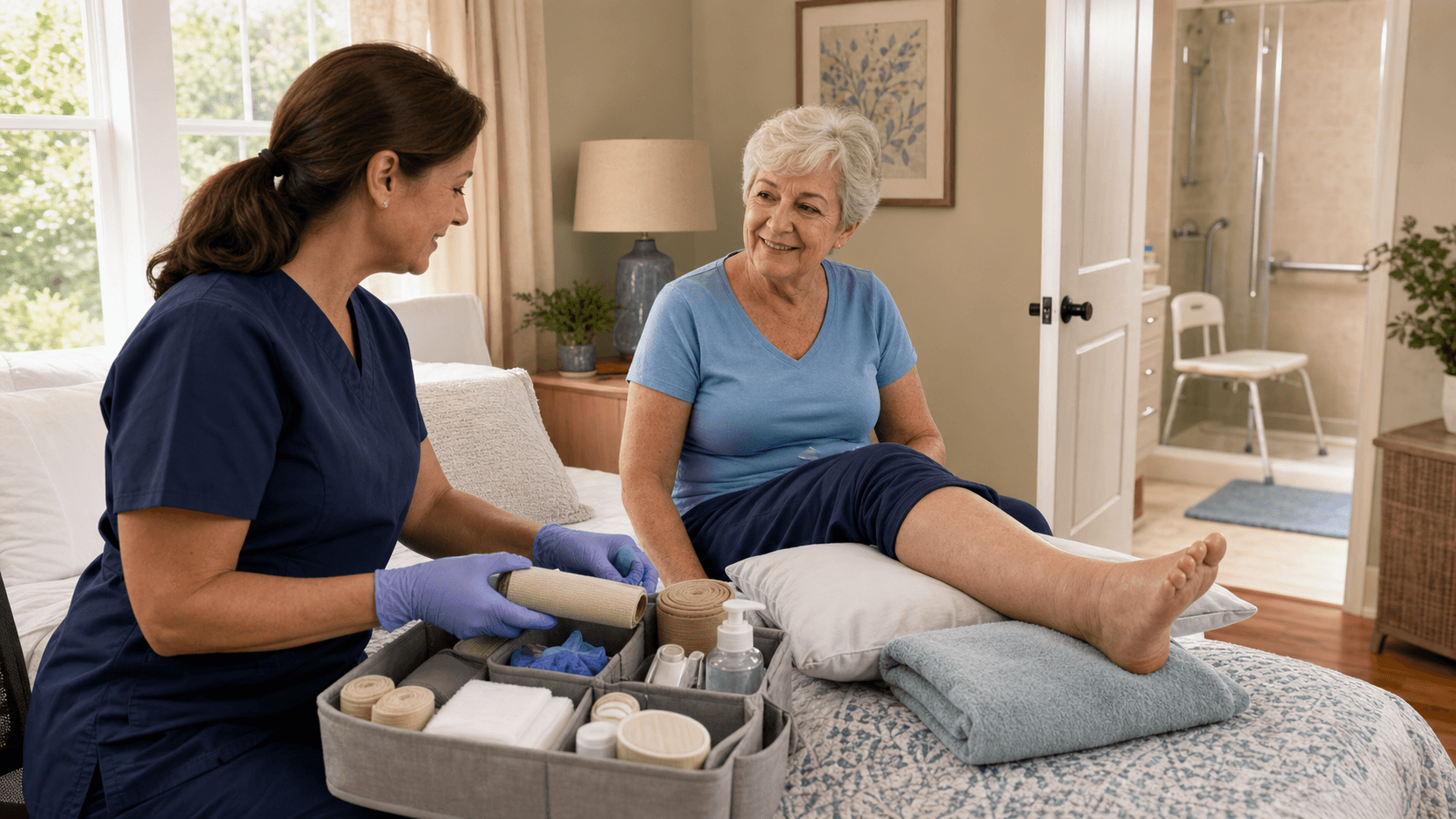
Build a simple bedside wound care kit and restock it every week. Core items often include:
- Clean, non-sterile gloves, soap or hand sanitizer, disposable underpads or clean towels.
- Ordered wound dressings (foam, alginate, hydrocolloid, or other advanced dressings), saline or prescribed cleanser, a small measuring tool, skin prep barrier.
- Tape or securement devices, scissors used only for wound supplies, small trash bags, and any prescribed topical medicines.
Keep everything in a clear bin labeled "Wound care only" at your bedside. Set a weekly "supply check" with a family member, caregiver, or mobile nurse so you do not run out.
Here is how bedside and clinic care often compare:
| | At your bedside (home/mobile) | In-clinic visit |
|--------------------------|-----------------------------------------------------|----------------------------------------------------------------------|
| Convenience and travel | No travel, care at your bedside | You travel to the clinic |
| Monitoring | Frequent, shorter visits and quick checks | Scheduled visits, often less frequent |
| Advanced tools | Basic and some advanced dressings, close follow-up | Imaging, surgical debridement, hyperbaric oxygen therapy, grafts |
| Supply setup | You and your care team maintain a home kit | Clinic staff prepares and maintains supplies |
| Payment structure | Often Medicare Part B covered home visits when medically needed, based on Medicare rules | Clinic co-pays and coverage based on Medicare.gov and your plan |
Clinical fact: Both bedside and clinic settings should follow the same infection control standards. In plain English: home care should be just as clean and structured as clinic care when done correctly.
What to do:
- Use mobile wound care for dressing changes and monitoring when travel is hard.
- Link your at-your-bedside team with clinic teams when you need advanced therapies, like imaging or grafts.
How do I train family and caregivers to help safely?
Clinical fact: Research on home care shows that poor technique by helpers can lead to preventable infections and hospital stays. In plain English: kind people can still cause problems if they guess instead of follow a plan.
What to do:
Treat caregiver training like part of the prescription. Build a one-page checklist that covers:
- Handwashing and setting up a clean field.
- Removing the old dressing and looking at the wound.
- Cleaning and drying the area.
- Placing the new dressing and securing it.
- Throwing away trash and documenting what they saw.
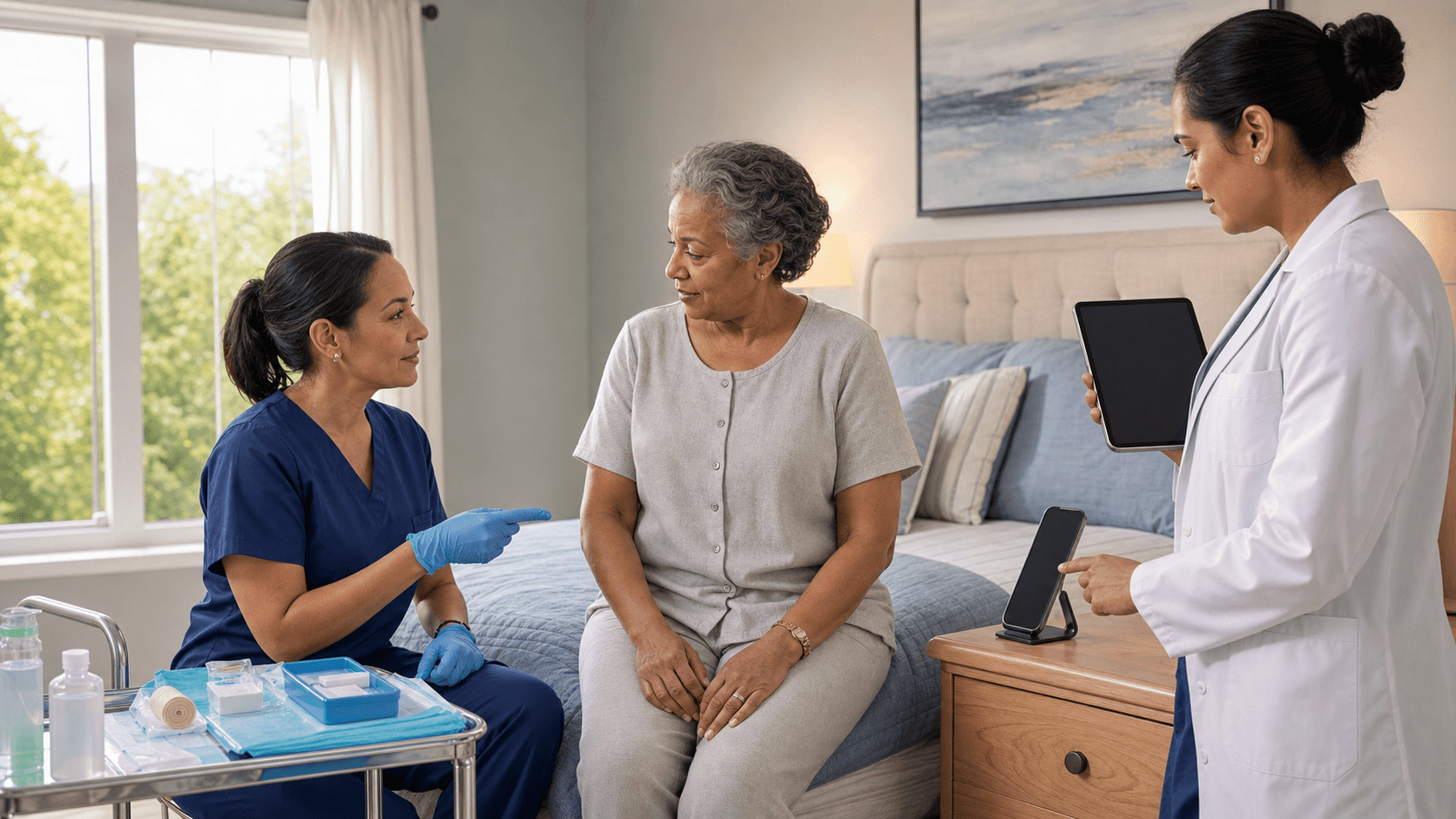
Use teach-back with your wound nurse or board-certified wound specialist. The caregiver should perform a full dressing change while the clinician watches, then explain each step in their own words.
What to do:
- Clearly mark what they may do, like trimming tape.
- Clearly mark what they must never do, like cutting away black or yellow tissue or changing compression without orders.
Keep a bedside wound log that notes:
- Date and time of each dressing change.
- Pain level, odor, drainage amount and color.
- Any new redness, swelling, or problems keeping the dressing in place.
If allowed, take clear photos at least weekly and share them by a secure method with your wound team. "The safest bedside wound care happens when families follow a clear checklist and speak up about changes early," says Dr. Brandon Elrod, DO, FAPWCA, Captain, US Army (Ret.).
How do I know when home wounds need clinic or hospital care?
Clinical fact: Data from large wound studies show that waiting too long to move a failing home wound to clinic or hospital raises the chance of serious infection, bone infection, and amputation. In plain English: "waiting a few more days" when things are getting worse can cost you more tissue and sometimes even your life.
What to do:
Use a simple red, yellow, green idea.
Green zone, safe to stay at bedside:
- Wound looks the same or smaller.
- Drainage is stable or less.
- No new odor, no fever or chills, pain is controlled.
Action: Keep current care, and share your log and photos at planned visits. This supports steady healing at home and helps your team catch slow changes early.
Yellow zone, call your wound provider the same week:
- More drainage or new odor.
- Redness spreading around the wound.
- Mild increase in pain.
- New trouble keeping the dressing in place.
Action: Contact a board-certified wound specialist for a same-week review. You may need a new dressing plan, possible antibiotics, or clinic-based options like hyperbaric oxygen therapy or graft placement.
Red zone, urgent or emergency care:
- Fever, chills, or confusion.
- Fast-spreading redness around the wound.
- Black or gray tissue, pus, red streaks up the limb, or sudden strong pain.
Action: Call 911 or go to the ER. After you are stable, your team can shift you back to safe bedside wound care if that is appropriate so you can heal at home again.
How do mobile wound care and clinics work together in Dallas?
Think of wound care as a team sport with you at the center. Bedside wound care in Dallas, TX lets you heal at home, while clinics provide advanced tools when needed.
Clinical fact: Many chronic wounds do best when home and clinic teams coordinate care instead of working separately. In plain English: you get better results when your mobile wound care and clinic providers share a plan.
What to do:
Mobile wound care at your bedside can handle:
- Routine dressing changes and supply checks.
- Frequent monitoring and photos.
- Training for family and caregivers.
Clinic teams usually handle:
- Imaging and lab tests.
- Surgical debridement.
- Hyperbaric oxygen therapy and graft placements.
Many bedside and mobile services may be Medicare Part B covered when medically necessary, based on Medicare rules and local plans. Talk with your team about transportation limits, schedule needs, and your home setup so they can decide what belongs at bedside and what belongs in clinic.
The goal is not choosing home versus clinic forever. The goal is using both wisely so you heal at home when it is safe and avoid preventable amputations and hospital stays.
FAQ
Q: Is Bedside Wound Care as Safe as Clinic Care?
A: With good infection control, complete supplies, and oversight by a qualified wound provider, bedside care can be as safe as clinic care for many stable wounds. Some wounds still need clinic or hospital visits for imaging, surgery, or advanced treatments.
Q: How Often Should a Nurse or Wound Specialist Visit My Home?
A: It depends on the wound type, drainage, signs of infection, and your overall health. Diabetic foot ulcers or infected pressure injuries may need multiple visits per week at first, based on medical need and coverage rules.
Q: Can Family Members Safely Change My Dressings?
A: Yes, when they receive step-by-step training, written instructions, and regular check-ins from a wound professional. They should never perform debridement, adjust compression, or change orders without clear direction.
Q: What If I Run Out of Wound Supplies at Home?
A: Set a weekly supply check with minimum amounts for each item and a person who handles reordering through your wound provider, DME company, or pharmacy. Avoid substituting household items like cotton balls or paper towels because they shed lint and may carry germs.
Q: How Do I Know If My Wound Is Actually Getting Better?
A: Signs of progress include smaller measurements, less drainage, healthier red bumpy tissue, less odor, and easier pain control. Regular photos and measurements, reviewed by a wound specialist, give the best picture of healing over time.
Q: When Should I Ask About Hyperbaric Oxygen or Grafts?
A: These options are usually considered when a wound is not healing despite good basic care and when blood flow and infection are under control. Patients in the Dallas, Fort Worth area should talk with a board-certified wound specialist about whether these treatments fit their situation and Medicare Part B coverage.
Single call to action
If you or a loved one are managing a wound at home and are unsure whether bedside care is still safe, contact a board-certified wound specialist for a same-week review so you can heal at home when it is safe and avoid preventable complications.
Get Compassionate Bedside Wound Care Support Today
If you or a loved one needs expert bedside wound care in Dallas, TX, we are ready to bring experienced, patient-centered treatment directly to you. At Anchor Wound Management, we collaborate with your existing care team to create practical plans that fit your daily routine and support healing. Reach out to our team with your questions or to schedule a visit through our contact page.