Missed hyperbaric oxygen candidates in Dallas wound clinics
"Why Is My Wound Still Not Healing When I Am Doing Everything Right?"
We hear this question from people across the Dallas, Fort Worth area. You keep your dressing clean, you watch your blood sugar, you go to every wound visit, but the sore still will not close.
At some point, it is fair to ask if there is another tool that has not been tried yet, like hyperbaric oxygen therapy in Dallas. Hyperbaric oxygen therapy, or HBOT, is medical treatment in a pressurized chamber where you breathe 100 percent oxygen, usually for about two hours at a time.
In clinical terms, it raises oxygen in your blood plasma, supports new blood vessel growth, helps fight infection, and helps tissue rebuild. In plain language, it is high-pressure oxygen that can help some stubborn wounds finally heal.
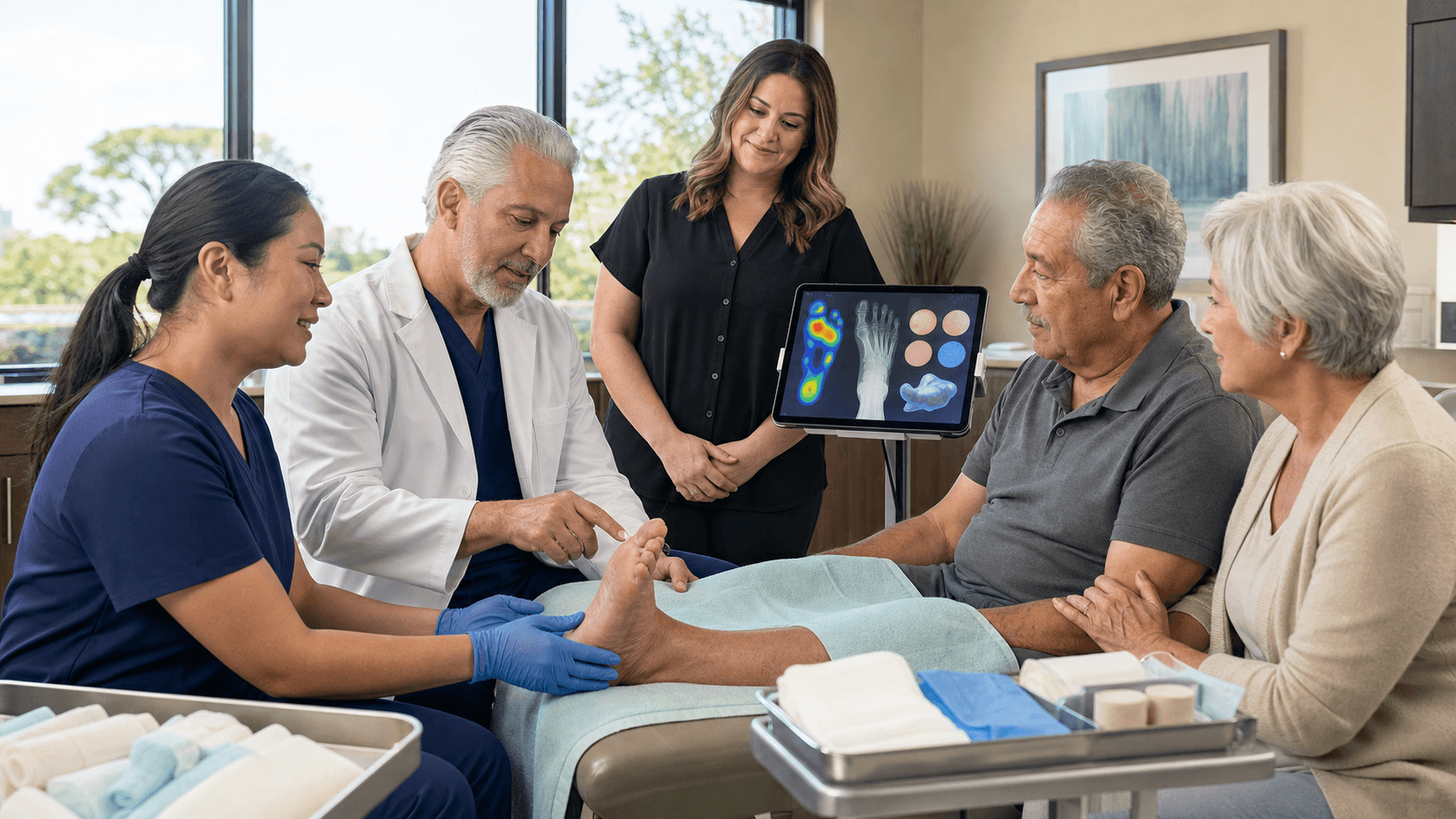
Across many Dallas wound clinics, people who meet real medical criteria for HBOT are never checked or referred. That delay can keep a wound open longer and increase the risk of amputation.
Our goal is to help you know when HBOT should be part of the conversation, what to ask your team, and how clinic HBOT can work with mobile, bedside wound care so you can heal at home whenever it is safe.
Key Takeaways
- Some people in Dallas who qualify for HBOT are never offered it, even when a wound is not healing or is infected.
- Knowing basic HBOT criteria helps you ask focused questions and avoid missed chances to heal or avoid amputation.
- Mobile wound care and clinic HBOT can work together, with care at your bedside and oxygen therapy in a hyperbaric suite when needed.
- Medicare Part B often covers HBOT for certain diagnoses when ordered and documented correctly, according to Medicare.gov and UHMS guidelines.
- A board-certified wound specialist, such as Dr. Brandon Elrod, DO, FAPWCA, can re-check HBOT candidacy if your wound has stalled for 30 days or more.
What Is Hyperbaric Oxygen Therapy and Who Usually Gets It?
In clinical terms, HBOT is treatment at about 2.0 to 2.5 atmospheres of pressure for 90 to 120 minutes, usually 5 days a week. Research from groups like the National Institutes of Health and the Undersea & Hyperbaric Medical Society (UHMS) shows that this high-pressure oxygen can:
- Increase oxygen levels in plasma
- Support new blood vessel growth
- Help white blood cells fight bacteria
- Improve collagen cross-linking so tissue is stronger
Plain-English: HBOT is like oxygen rehab for tissue that cannot get enough blood flow. It helps antibiotics work better and helps the wound rebuild from the inside out.
In the Dallas, Fort Worth area, the most common, evidence-based reasons people receive HBOT include:
- Diabetic foot ulcers that are deep or infected
- Chronic bone infections that will not clear
- Tissue flaps or grafts that look like they might fail
- Tissue injury after radiation
- Sudden lack of blood flow where tissue is at risk
Studies in journals such as *The New England Journal of Medicine* and *Diabetes Care* have reported better healing and fewer amputations for certain diabetic foot wounds when HBOT is added to good standard care (Fedorko et al., 2016; Londahl et al., 2010).
HBOT is not for every wound. It is for serious problems where lack of oxygen is a key barrier and where basic care alone has not worked.
HBOT is not a magic cure. It does not replace blood sugar control, good circulation, or proper debridement.
Common side effects can include ear pressure pain, temporary vision changes, and in rare cases oxygen-related seizures, as described by the FDA and UHMS. Trained teams follow strict safety checklists.
What to do: before you start searching for "hyperbaric oxygen therapy in Dallas," make sure your team is also checking blood flow, offloading pressure from the wound, using compression when needed, and keeping up with regular cleaning and dressings. Mobile wound care can help at your bedside if travel is hard so you can heal at home when it is safe.
Why Do Some Dallas Patients Get Missed for HBOT?
Many wound clinics focus on dressings and basic procedures but may not have a board-certified wound specialist or direct access to a hyperbaric center. Some providers are less familiar with newer evidence or with current coverage rules.
Plain-English: if no one on your team lives in wound medicine every day, HBOT may never be mentioned, even if you qualify.
Under-referral often comes from common myths, such as:
- "HBOT is only for divers with the bends."
- "Insurance will never cover it."
- "Older or frail people cannot do this safely."
In reality, Medicare Part B and many plans cover HBOT for specific conditions when criteria are met and documented, according to Medicare.gov and UHMS coverage indications. Safety screening helps many older adults complete HBOT safely.
Another reason people are missed is paperwork. To meet Medicare coverage for things like diabetic foot ulcers, the chart usually must show:
- Wound depth or Wagner grade
- At least 30 days of standard care
- Vascular testing and attempts to improve blood flow where possible
If those notes are missing, you might hear "you do not qualify," when the real issue is documentation, not your medical need.
Plain-English: sometimes the barrier is the chart, not your leg.
What to do: ask who on your team is a board-certified wound specialist and whether they routinely review HBOT indications.
If you are homebound or in a facility, ask about mobile wound care near you that can coordinate with a hyperbaric center, manage bedside care, and help gather the records Medicare needs.
If HBOT has been ruled out, ask, "Is this because I do not meet medical criteria, or because we are missing documentation that could be fixed?"
How Can I Tell If I Might Be a Candidate?
For diabetic foot ulcers, common clinical features that trigger an HBOT review include:
- Wound present for 30 days or more
- Deep ulcer, often Wagner grade 3 or higher
- Standard therapy tried and not working
- Blood flow checked and improved when possible
- Infection under active treatment and smoking addressed
Plain-English: if you have a deep diabetic foot wound that has not changed in a month, despite regular care and good circulation, HBOT may move from "extra" to "necessary."
Red flags that should prompt an HBOT discussion include:
- Bone or tendon showing in the wound
- Repeated infections or need for repeat antibiotics
- New odor or drainage even with antibiotics
- Imaging showing bone infection
- Talk of partial or major amputation
Plain-English: when a wound is "losing the fight," extra oxygen sometimes helps protect tissue and avoid losing more of the limb.
HBOT can also help in some cases of radiation injury, recent flaps or grafts that look weak, or long-standing bone infections. Studies in surgical and radiation oncology journals describe better tissue survival and fewer repeat surgeries when HBOT is added in the right setting.
What to do: track the size of your wound each week and keep a simple log of treatments. Bring this, along with any surgery or radiation reports, to your visit.
That can be at a clinic or at your bedside with mobile wound care so you can heal at home when it is safe.
It gives your wound physician, such as Dr. Brandon Elrod, DO, FAPWCA, the full picture to decide if HBOT makes sense.
How Do Mobile Wound Care and HBOT Work Together?
The best limb salvage results often come from teams that combine consistent bedside care, vascular workup, and HBOT when indicated. Research on limb salvage teams shows that when wounds are cleaned, debrided, dressed well, and offloaded between HBOT sessions, healing tends to be faster.
Plain-English: HBOT adds oxygen, but if the wound is not cleaned and protected each week, gains can be lost.
Here is how clinic-based HBOT and mobile wound care near you can compare and work together:
| Aspect | Clinic-only wound care | Clinic HBOT + mobile wound care at your bedside |
|--------------------------------|-----------------------------------------------|-------------------------------------------------|
| Where most care happens | In-office visits | Dressings and debridement at your bedside; HBOT in clinic |
| Travel burden | Multiple clinic trips each week | Same-week HBOT trips; fewer other clinic visits |
| Offloading and dressings | Changed at clinic only | Changed at home to protect progress between HBOT |
| Care coordination | Separate teams for wound care and HBOT | One board-certified wound specialist coordinating both |
| Coverage | Often Medicare Part B covered for visits | HBOT and home visits often Medicare Part B covered when criteria are met |
Mobile wound care near you can:
- Change dressings at your bedside
- Perform debridement when needed
- Order labs and imaging
- Coordinate with vascular specialists
- Sync care with an HBOT center schedule
For homebound or post-hospital patients, many services can be Medicare Part B covered. One wound physician can oversee both home treatments and HBOT orders, helping keep one clear story for insurance and for the team.
Plain-English: you may only need to leave home for actual HBOT sessions, while most other wound care happens at home.
In our practice in Dallas, Fort Worth, we often meet people who have had repeated clinic dressings only. When a board-certified wound specialist reviews their history, they sometimes meet HBOT criteria and also need a fresh look at blood flow.
With coordinated mobile wound care, HBOT, and vascular support, some of these patients avoid major amputation and stay out of the hospital.
"Too often, I meet patients who were told their only option was amputation, but no one paused to ask if they met the evidence-based criteria for hyperbaric oxygen," says Dr. Brandon Elrod, DO, FAPWCA, Captain, US Army (Ret.). "My goal is not to promise miracles, but to make sure no reasonable limb-salvage tool is left on the table."
FAQs About Hyperbaric Oxygen Therapy
Q: How Long Does a Typical Course of HBOT Last for a Chronic Wound?
A: Many people receive between 20 and 40 sessions, about 5 days a week. Plain-English, plan on several weeks of steady commitment, with each visit taking about 2 hours including check-in and check-out.
Q: Is HBOT Safe If I Am Older or Have Heart or Lung Problems?
A: Safety screening includes checking for lung issues like untreated pneumothorax, reviewing COPD and heart failure, and looking for ear or sinus problems. Plain-English, many seniors complete HBOT safely, but your doctor must clear your lungs, heart, and ears first.
Q: Can HBOT Replace Surgery or Vascular Procedures?
A: No, HBOT is an add-on, not a replacement, for opening blocked arteries, removing dead tissue, or controlling infection. Plain-English, oxygen cannot push through a totally blocked artery or clean a wound by itself; those steps still matter.
Q: What If I Cannot Travel Daily to a Hyperbaric Center?
A: Mobile wound care can reduce your other clinic trips by doing dressings, assessments, and much of the follow-up at your bedside. Plain-English, you may only need to leave home for HBOT itself while the rest of your wound care stays close to home so you can heal at home whenever possible.
Q: How Do I Know If My Wound Team Is Thinking About HBOT Correctly?
A: Signs of a proactive team include regular talk about limb salvage, early vascular referrals, clear coverage conversations, and simple explanations of why you do or do not meet HBOT criteria. Plain-English, if your wound has stalled and no one mentions HBOT, limb salvage, or second opinions, it is fair to ask more questions.
Can I Get a Second Opinion on HBOT Without Changing Doctors?
A: Yes, a wound physician can review your records, assess HBOT candidacy, and share recommendations with your current podiatrist, primary care doctor, or surgeon. Plain-English, you can add a board-certified wound specialist to the team without replacing anyone.
Take the Next Step
If your wound has stalled and you are wondering whether HBOT or mobile wound care near you could help, you do not have to figure it out alone. Dr. Brandon Elrod, DO, FAPWCA, Captain, US Army (Ret.), a board-certified wound specialist, can review your case, coordinate same-week mobile wound care at your bedside when appropriate, and determine whether clinic-based HBOT meets medical and Medicare Part B criteria.
Our team can also help verify your insurance benefits and handle pre-authorization when needed, so you can focus on healing at home instead of paperwork. To schedule an evaluation, call us at [PHONE NUMBER] or book online at [BOOKING LINK].
Take The Next Step Toward Faster, Safer Healing
If you or a loved one is dealing with a stubborn or complex wound, our team at Anchor Wound Management is ready to help you explore whether hyperbaric oxygen therapy in Dallas is the right fit. We will review your medical history, answer your questions, and create a personalized treatment plan focused on improved healing and comfort. To schedule a consultation or discuss your options with a specialist, please contact us today.